Category Archives: life goals

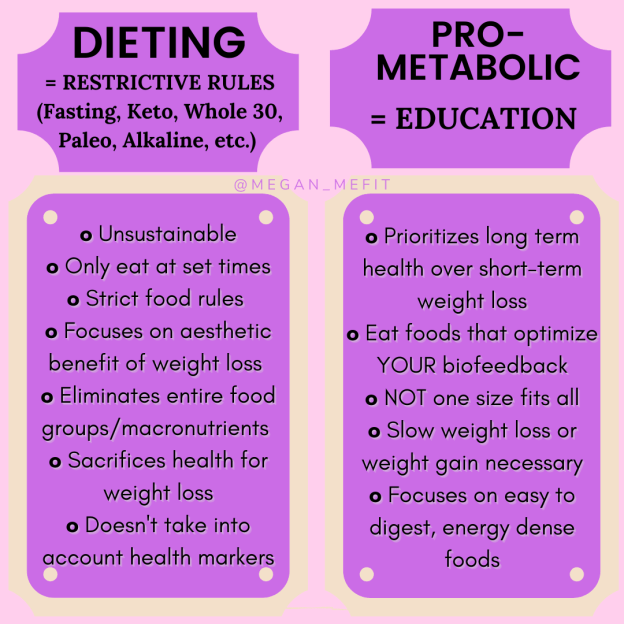
Diets vs Pro-metabolic Nutrition

Throughout my career, I’ve seen clients who have tried it all.  Weight Watchers, Fad diets, yo-yo diets resulting in irrational fears around foods, and not learning much in the process.

In the pro-metabolic community, we eat to nourish our bodies. By prioritizing your health as a means of losing weight, because a body in balance can do amazing things.  
When on-boarding new clients, a lot say:

•”What foods should I avoid? Is this food ok?”

•”I’ll do whatever you say, I’m so frustrated with how I look in the mirror” 

I get it, we all seek certainty & clarity. “Tell me the rules, I’ll be good and follow! Sell me that product- I’ll do anything BUT trust in my self and the process so I can put the work in.” 

You see, this is why diet culture fails you, These diets/approaches including harsh rules. restriction, avoiding certain foods . Not how to support and to nourish YOUR body.

Pro-metabolic community flipped my world upside down. Rather than excluding foods, it’s all about inclusion, nose-to-tail animal consumption, broths, more nutrient-dense sugars, and eating saturated fats – foods that have either been neglected or demonized by mainstream health and fitness. 

These foods have more bioavailable nutrients. They are easier to digest. And they don’t contain anti-nutrients that inhibit the processes within the body. This is how to support your metabolism. (Your metabolism is all the chemical processes that occur within your body.) And these foods enable all these processes to happen easier with less inflammation and fewer issues. They improve pulses, body temperature and biofeedback like digestion, sleep, stress, energy, mood, etc. This means your body is functioning in the best way possible 

🙌

An emphasis is placed on grass-fed, humane certified protein sources, root veggies, quality dairy, ripe fruits, and all-natural sweeteners (like raw honey).  Please, do what you can afford.

You are eating to nourish. Providing for your body out of self-respect. Pro-metabolic eating may combat the reason you may be experiencing the binge-restrict cycle. When your body gets what it needs, you don’t experience cravings anymore. 

 When working with clients, they create their own nutrition plans based on my guidance and week to week We adjust it, to improve their symptoms, ultimately to reach their goals and find their OPTIMAL – that will look different for everyone. This is why education, monitoring biofeedback and intentionally nourishing our bodies are game changer. 

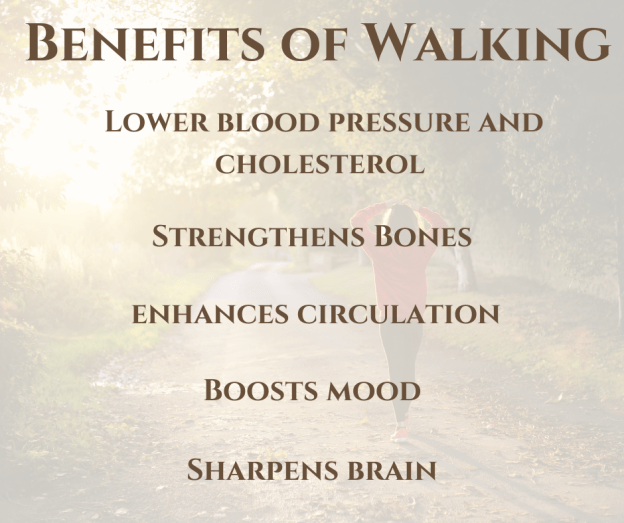
BENEFITS OF WALKING

Walking is the most underrated physical activity! Not only is it an effective cardio strategy for weight loss, it has a lot of other health benefits! 🥳

🚶🏻‍♀️LOWERS BLOOD PRESSURE & CHOLESTEROL 🩺
Regular walking was linked to a 7 percent reduced risk of high blood pressure and high cholesterol.

🚶🏻‍♀️ENHANCES CIRCULATION ♥️
Regular walking can help to lower blood pressure and reduce your risk of stroke. And it doesn’t take much: Walking briskly for just 30 minutes a day is enough to improve heart health.

🚶🏻‍♀️STRENGTHENS BONES 🦴
Walking can help strengthen bones and reduce your risk of osteoporosis. One study found that women who walked for a minimum of 4 hours a week saw a 40% reduced risk of hip fractures. While other forms of vigorous exercise such as running, jumping and weightlifting offer bone-strengthening benefits, the good news is that walking appears to do the same. That’s great news for those just starting a workout routine, people who must complete low-impact exercise due to joint issues.

🚶🏻‍♀️BOOSTS MOOD 🙌🏼
Having a rough day? Walk it off. Numerous studies have linked walking for exercise with improved mood and reduced stress levels. And it’s even better if you can take a stroll through nature — walking outdoors near greenery has been shown to help reduce feelings of frustration and may even help put your brain into a state of meditation. Walking stimulates the production of neurotransmitters in the brain (such as endorphins) that help improve your mental state. 🌳

🚶🏻SHARPENS YOUR 🧠
Walking for exercise may become increasingly important as we age and our risk for dementia and other brain disorders increases. It can even help reverse the effects of aging. One study published in the Annals of Neurology found that the 69 participants ages 55–88 who who met the exercise guidelines set by the American Heart Association showed a significantly lower risk of developing Alzheimer’s disease.

☠️ To improve your cognition even more, try walking backward. 🔙 One Dutch study found that walking backward helped subjects literally think faster on their feet. 💨

You’ve got to EARN your right to diet….

Most of new clients hire a personal trainer wanting to lose weight.

But ☝️ we usually have to enter into a different kind of diet before we can actually “diet”.⁣

Here’s why this process is important:

Most people come from a place of chronic dieting with only short periods of over eating…when they get sick of this yo yo approach to “dieting”⁣

It’s not unheard of for new clients to have been attempting a calorie deficit (and typically over-exercising) for 90% of their “fitness journey” 👉 meaning that their bodies are already in a stressed out, down-regulated state.⁣ (This was me up until May 2020. )


Instead of exacerbating this stress with MORE exercise and LOWER calories…⁣
⁣Our first goal is an optimal psychological and physiological baseline.⁣


⁣This is where you “earn the right” to diet; think of it like your buy in.

This could mean building/finding a sustainable maintenance calorie intake and amount of exercise.⁣

For others it might mean even pushing past this and eating in a small surplus to create an environment that’s extra supportive of muscle building for a period of time.⁣

*USUALLY* this looks like a progressive, structured increase in calories and revamping workout programming to be more focused on strength training instead of mostly cardio-based 🏃‍♀️⁣

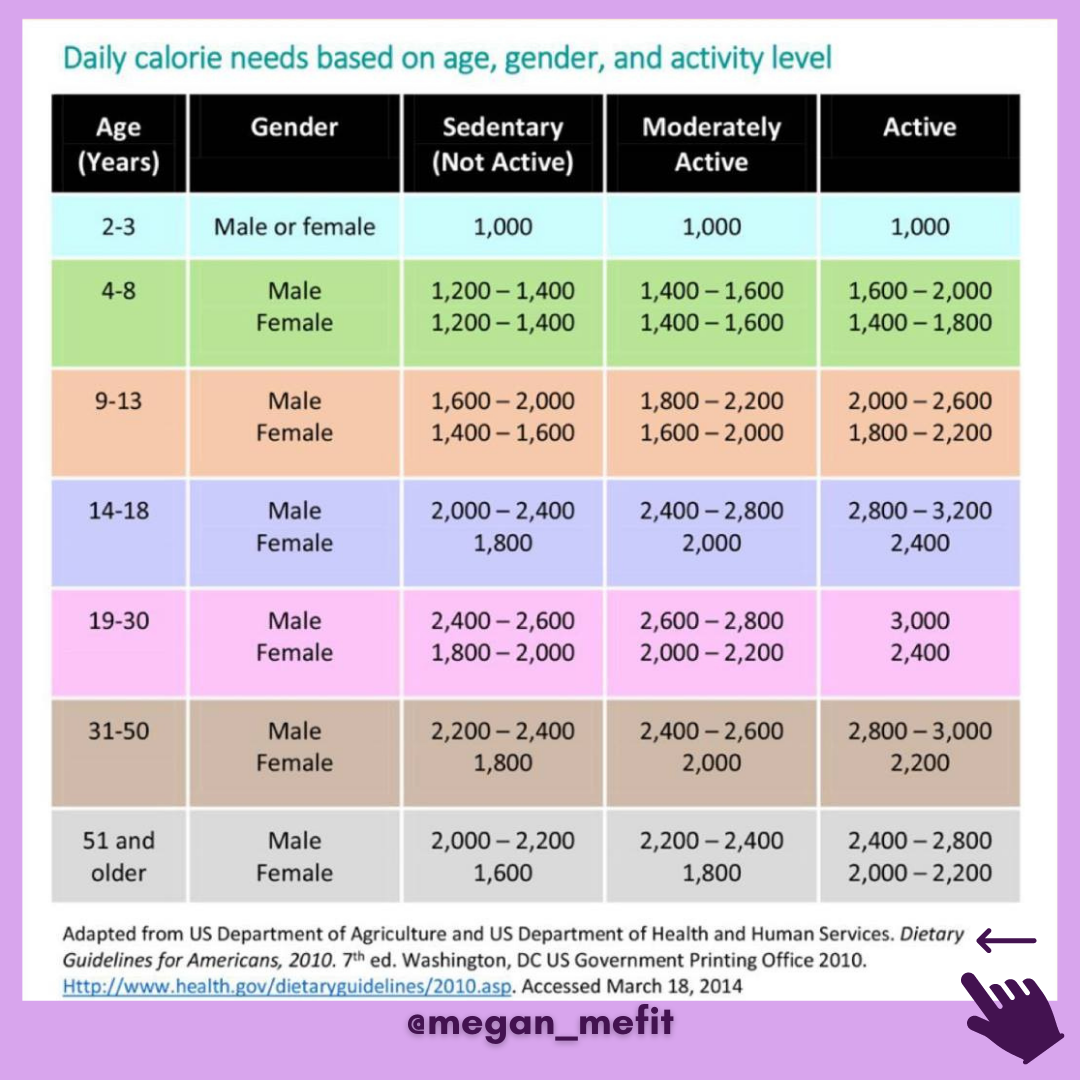
So where to start? Use the chart below to get an idea of daily calorie amounts, 1800-2100 calories per day, 25-30% coming from Protein. Focus on eating enough food, tracking your biofeedback (Sleep, Hunger, Recovery, Energy, Digestion, Stress) and see how all that improves.


Chronic dieting and over exercising often comes with the need for mindset shifts FIRST.⁣


Jumping into more dieting when you have already been dieting frequently, or if you’ve even just dieted too recently, can quickly lead to you spinning your wheels:⁣

🚫more metabolic adaptations (not good)⁣

🚫muscle loss (really not good)⁣

🚫no progress being made, even perhaps when taking things to extremes.⁣

The “diet before the diet” is just as important than the diet itself when it comes to mind & body changes over time.⁣

Please spend just as much, if not more, time optimizing your metabolism, building muscle, and living your life, so that when the time does come to diet down, things will be easier & allow for HEALTHY progress 💞⁣

Thank you Coach Kasey Jo for original post and inspiring this content.

Want more free content and support? Join my free FB support group for free resources

What cravings really mean….

▫️Cravings are how the body meets and communicates its nutrient needs.⁠

▫️The body is causing our brain to become obsessed or consumed with the need, until we seek it out, find it and meet that need.⁠

▫️Does this mean we indulge in every craving or whim? Not necessarily.⁠
But it’s in our best interests to listen.⁠👂

🧂 Salty⁠
⁠Do we need high quality sodium? Our adrenals burn through sodium when we are stressed, fasting, eating low carb, are pregnant and breastfeeding. High quality sea salt is a great place to start.⁠

🍞 Refined Breads & Baked Goods⁠
⁠Do we need more carbs? Fruits, roots, fruit juices, squashes, soaked/sprouted grains, etc.?⁠

🍰Sugary Sweets⁠
Are we providing our body with the above? Allowing honey, maple syrup, coconut sugar into the diet?⁠

💦Always Thirsty⁠
⁠If we drink plenty of water and it doesn’t quench our thirst, we should check in on if we’re getting enough minerals! Broths, coconut water, juices and milk are amazing sources of electrolytes.⁠

🍟Fatty Foods/Fried Foods⁠
⁠Are we eating high quality saturated fats? Full-fat Dairy, ghee, butter, tallow, coconut oil, high quality olive oil, etc.⁠

🍴Acidic: Vinegar or Sour⁠
How’s our stomach acid and digestion? Sometimes cravings for acidic/vinegary things can be a sign our digestion needs work⁠. Try incorporating a pre-meal ritual including breathwork and relaxation techniques, + gelatin snacks with your meals, or digestive bitters 15 min before eating.


🍩Junk Food⁠
⁠Sometimes our body just needs MORE. More energy, more calories. And sometimes, when it’s only gotten an energy rich diet through junk, it craves junk. Usually eating enough and paying attention to all the above helps with this.⁠

🙏Thank you to Jessica Ash Wellness for all she taught me in her Fully Nourished program! I am no longer struggling with cravings or binging.

🤍Listening to our bodies is huge! Intuition relies on feelings, what do I feel like? Practicing nourishing with intention goes a little bit deeper… What does my body need? What am I craving? What sounds good? It’s a fusion between body, brain and feelings all being met. 🧭

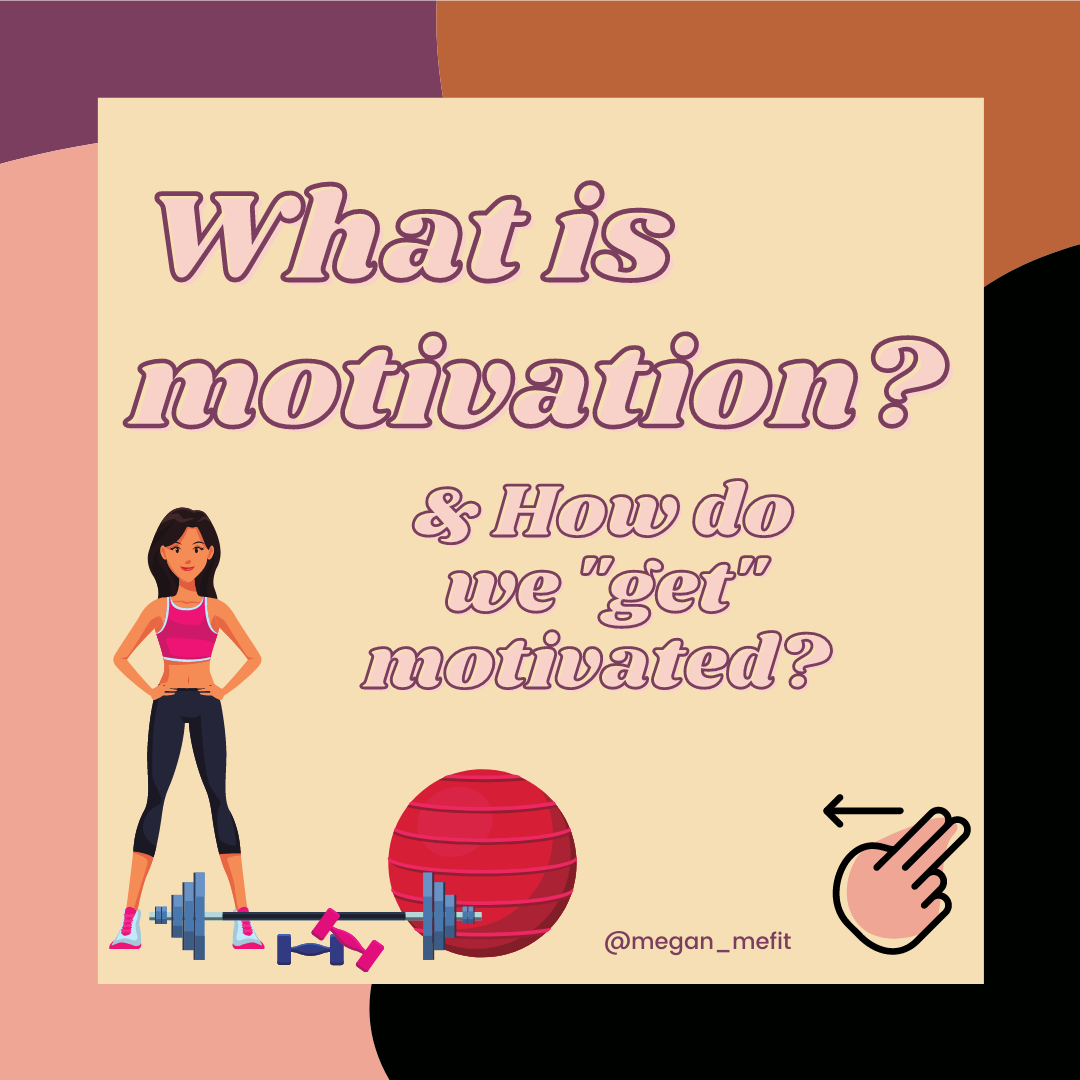
What is motivation? and How do we “get” motivated?

🔅TLTR:
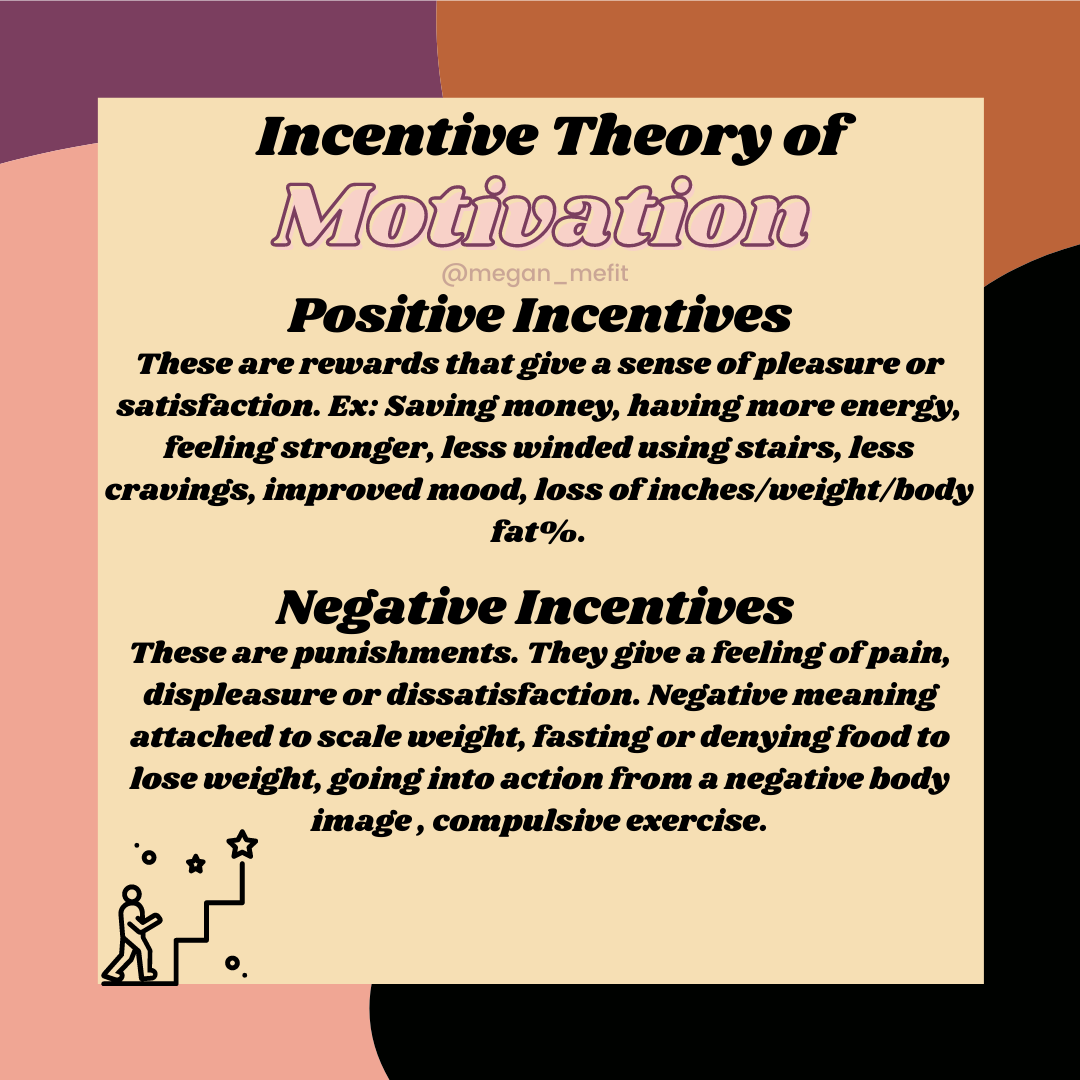
MOTIVATION is the driving force behind your actions. It isn’t something you simply have and keep forever, motivation is like campfire that you must keep stoking to benefit from the warmth
🔥

🔅SUSTAINABLE motivation comes from an intrinsic source. A place within you where you have self respect and self acceptance. You know the value of health. You believe in the power of your choices, and how they can impact your future. You chose to move your body, to nourishing your body, to prioritize your health, because of those reasons. 💛

🔆Creating motivation is the first step, and having a coach to help manage and maintain that motivation can be a crucial piece of your health and wellness journey 🧩!

🗣 Click link to set up a call to chat about how to get motivated for your goals Calendly – Megan_mefit📱 💪🏻

#onlinepersonaltrainer#onlinenutritioncoach#motivation#motivational#sundayvibes#sunday#fitnessmotivation#goals#motivationmonday#fitfam#fitness
#getfit#fitnessgoals#infographic#learnsomethingnew
#science#mindset#incentives#howtostaymotivated#getmotivate

Let’s talk about STRESS!

First what is stress? Anything that causes the body to STRAIN and use extra fuel resources while pulling those things from being used in important daily body functions.

When talking about stress in our lives, I like to think of it in these three categories. Bad stress (that is avoidable), bad stress (that is Unavoidable) and good stress which means providing something in exchange.

All stress is strain on the body, and all types of stress can break the body down.

The body can only handle a set amount of stress at one time, think about this as a stress bucket. Throughout the day-to-day you have unnecessary expectations on yourself, endless negative self talk, trippin’ over what a co-worker thinks of you, while you’re planning your wedding. And now you’re sick with a cold! That’s the body responding to the stress bucket being full.

Even if the new stress is in the good category, if the body is not resilient to stress due to lack of nutrients, lack of adequate rest, management and recovery–it will cause negative impacts on your health.

There are ways to manage the stress you feel and prevent it from growing and affecting your health. Here is some advice for more effective stress management:


-Recognize the events that cause stress. Be attentive to symptoms of stress and note the types of events that affect you most.
-Find out what the problem is exactly – this makes it easier to deal with it.
-Speak about your problems to people you trust. By expressing your feelings, you reduce the stress you feel.
-Speak with a professional if you need to do so.
-Learn about stress-management techniques, walk in nature, breathwork, yoga, hula-hooping, cuddles with pets, etc.
-Reduce tension through physical exercise.
-Don’t be too hard on yourself.
-Prioritize a consistent bedtime routine.

Stress management is a massive aspect of living and maintaining a healthy lifestyle. You cannot supplement away stress, sorry. All the herbs in the world, can’t do internal work for you. You got this. You are capable. You are amazing. I believe in you.

#onlinepersonaltrainer
#onlinehealthcoach
#stressmanagement
#stress
#healthylifestyle
#coach 

The POWER of having Belief in one’s self

Monochromatic Quinceañera Facebook Event Cover (1)

There are many reasons clients hire personal trainers. Individualized program design, accountability, to gain knowledge about specific equipment, effective workouts, injury rehabilitation or prevention are all superb reasons. But to learn how to believe in themselves is a skill that flies under the radar.

The concept of self-efficacy is central to psychologist Albert Bandura’s social cognitive theory, which emphasizes the role of observational learning, social experience, and reciprocal determinism in the development of personality. According to Bandura, a person’s attitudes, abilities, and cognitive skills comprise what is known as the self-system. This system plays a major role in how we perceive situations and how we behave in response to different situations. Self-efficacy is an essential part of this self-system.

People with a strong sense of self-efficacy:

  • View challenging problems as tasks to be mastered
  • Develop deeper interest in the activities in which they participate
  • Form a stronger sense of commitment to their interests and activities
  • Recover quickly from setbacks and disappointments

People with a weak sense of self-efficacy:

  • Avoid challenging tasks
  • Believe that difficult tasks and situations are beyond their capabilities
  • Focus on personal failings and negative outcomes
  • Quickly lose confidence in personal abilities

Self-efficacy is a concept I’ve been working on personally and with my clients for the last year. It seems to be a common theme amongst clients to want to avoid discussing nutrition or regular workout routines because it’s viewed as challenging and difficult.  The level of self efficacy reflects the confidence in the ability to exert control over one’s own motivation, behavior, and social environment.

As fitness professionals, imagine the possibilities for our clients when we focus on increasing their self confidence and improving mental attitudes! It could impact every aspect of their lives, not just fitness related goals.

So, where does self-efficacy come from?  According to Bandura, there are four major sources of self-efficacy.

1. Mastery Experiences

“The most effective way of developing a strong sense of efficacy is through mastery experiences,” Bandura explained. Performing a task successfully strengthens our sense of self-efficacy. However, failing to adequately deal with a task or challenge can undermine and weaken it.

As personal trainers, effective goal setting is a great way to

-build self-efficacy; effective meaning measurable and realistic

-carefully select short and long term goals to help establish a set path to achieve even the smallest accomplishments.

2. Social Modeling

Witnessing other people successfully completing a task is another important source of self-efficacy. According to Bandura, “Seeing people similar to oneself succeed by sustained effort raises observers’ beliefs that they too possess the capabilities to master comparable activities to succeed.”

As a personal trainer, you may help your clients select role models. Professional athletes, support groups, introducing them to past or current clients, friends and/or family that have had success in similar goals. Creative ideas like making a collage of activities and role models to put on the fridge or in their home gym. Keep in mind what works for others may not work for your client. The concept behind this is “If he/she can do it, I can do it!”

3. Social Persuasion

Bandura also asserted that people could be persuaded to believe they have the skills and capabilities to succeed. Consider a time when someone said something positive and encouraging that helped you achieve a goal. Getting verbal encouragement from others helps people overcome self-doubt and instead focus on giving their best effort to the task at hand.

As personal trainers, I believe this is the most important aspect of our interactions with our clients. Together you have set realistic and measurable goals and it’s part of our job to keep them motivated.  Increasing the awareness to their “self-talk” is key. While in session you can reinforce these beliefs by using their name and their goals while performing difficult exercises or tasks. You could try introducing the tools of positive affirmations and positive self-talk.

Examples:

“You’re doing great, Sandra! This exercise is strengthening your core and getting you in shape this upcoming summer adventures! I know it’s challenging and you’re doing it!”

I really appreciate your honesty in your food journal, Sandra. It’s important that I’m fully aware of what you’re doing on your own time so we can accomplish your goal of decreasing body fat percentage by 2% in the next 6-8 weeks. You are doing great!”

4. Psychological Responses

Our own responses and emotional reactions to situations also play an important role in self-efficacy. Moods, emotional states, physical reactions and stress levels can all impact how a person feels about their personal abilities in a particular situation. A person who becomes extremely nervous before speaking in public may develop a weak sense of self-efficacy in these situations. However, Bandura also notes “it is not the sheer intensity of emotional and physical reactions that is important but rather how they are perceived and interpreted.” By learning how to minimize stress and elevate mood when facing difficult or challenging tasks, people can improve their sense of self-efficacy.

This aspect may be the most difficult to monitor. Personal trainers face the challenge of meeting with their clients only several hours a week. This might not allow us to be aware of the situations causing our clients stress, as well as their reaction to it.

What we can do is listen carefully when we are with them. Taking notes, remembering annoying co-workers and specific situations causing stress all go a long way with clients. By offering any self-care advice that you believe to be appropriate, your client can build upon physical fitness by improving his or her mental attitude.

Self-Efficacy-Fotolia_16051214_S-570x494

Sources:

References: Bandura, A. (1977). Self-efficacy: Toward a unifying theory of behavioral change. Psychological Review, 84, 191-215.

http://psychology.about.com/od/theoriesofpersonality/a/self_efficacy.htm

https://www.acefitness.org/updateable/update_display.aspx?pageID=575

http://www.learning-theories.com/