Category Archives: challenges

Do you REALLY need the candida cleanse?

  1. Is #candida overgrowth plaguing the population? 😲 👉🏼👉🏼
    I went to the experts @vitaminphd & @andreahardyrd to bring YOU the facts!🤝

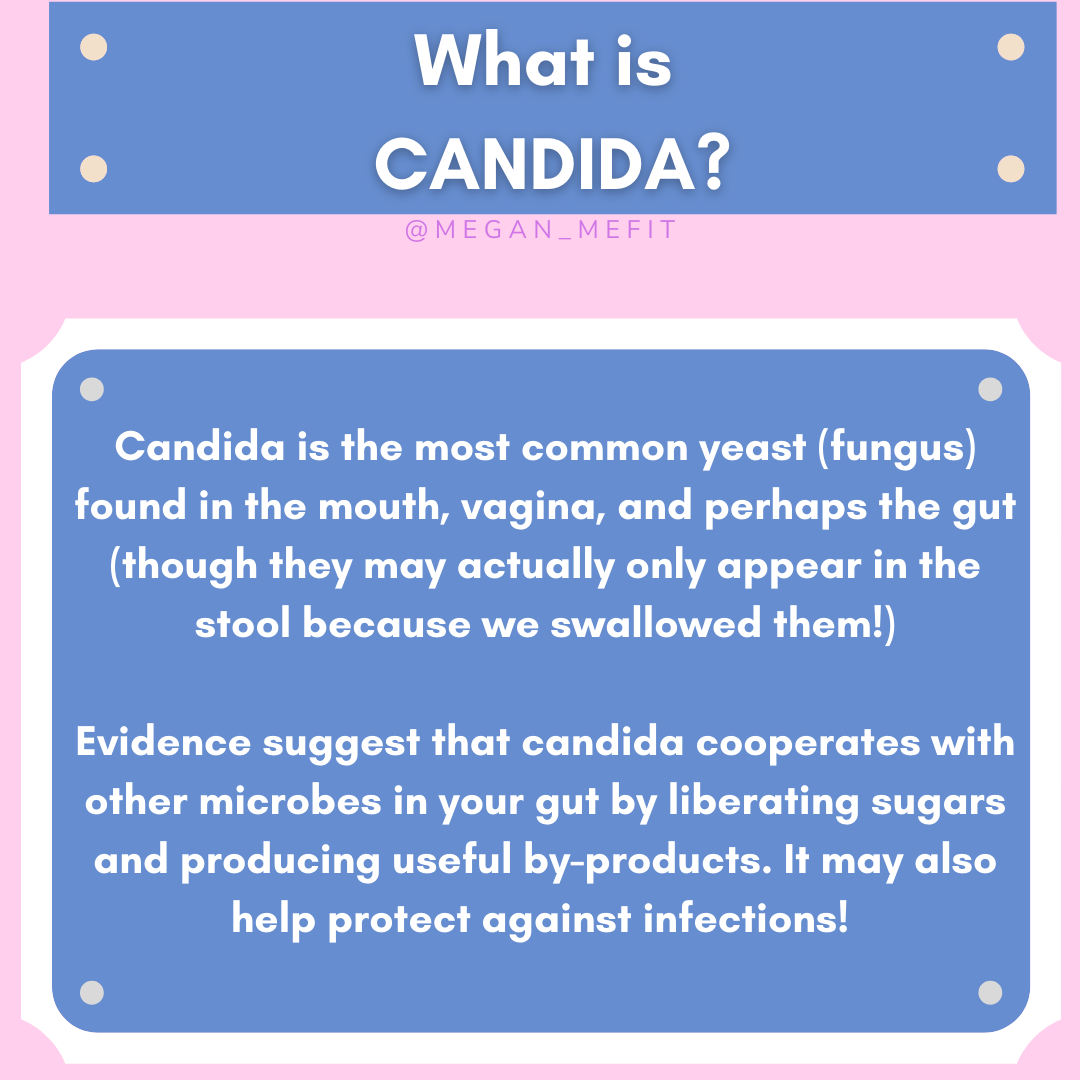
    Candida, or yeast is a fungus that naturally occurs all over our bodies – in our mouths, rectums, vaginas, and on our skin. It’s part of our ‘mycobome’ – (think microbiome but for fungus!)

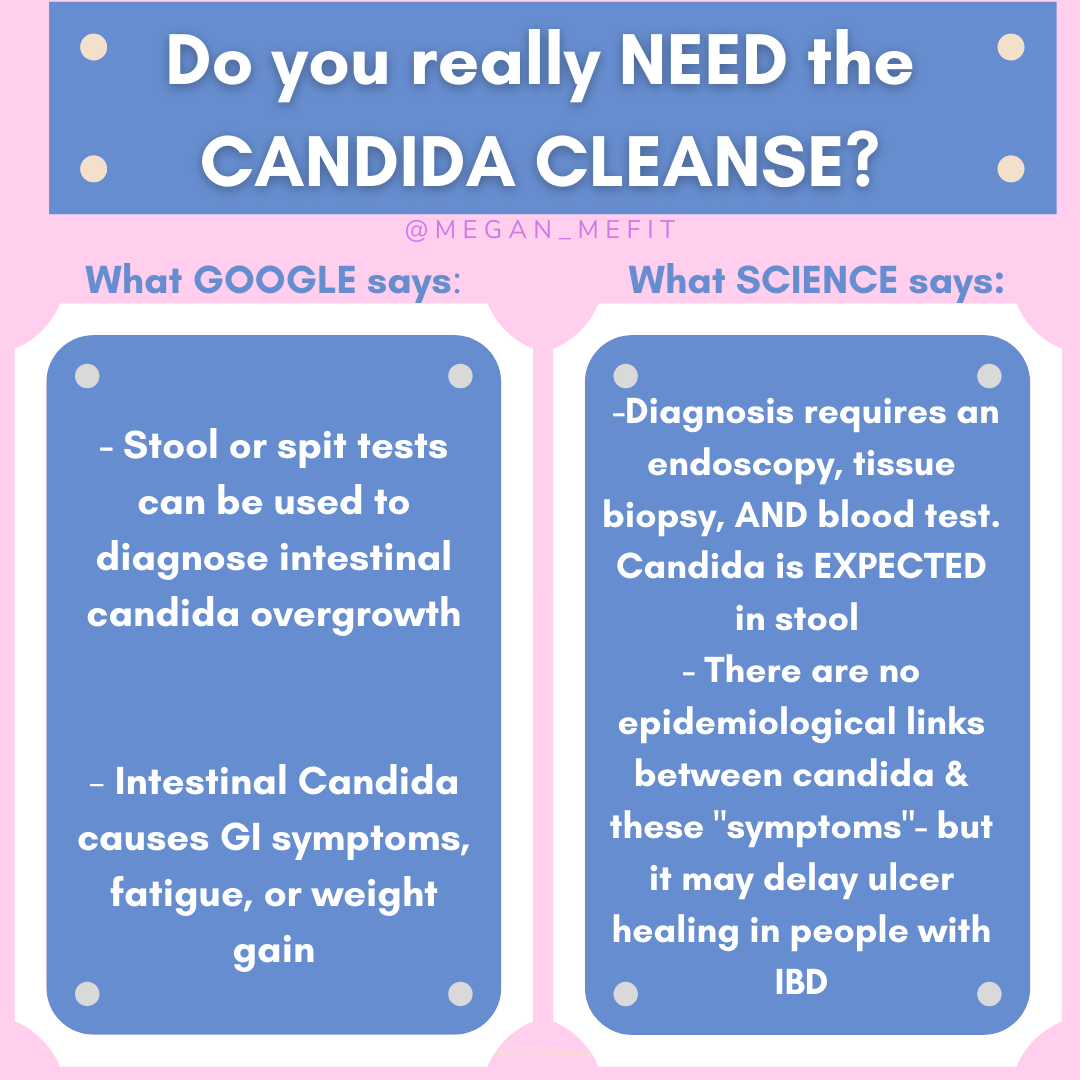
    While candida can be opportunistic, most of the time it exists in harmony with the rest of our microbes. However, there are practitioners quick to blame ‘candida overgrowth’ in anyone with gut symptoms, fatigue, and weight gain as the culprit. Followed by the prescription of dietary restrictions and a pile of supplements. But what are the facts?

    a spit test or stool test CANNOT diagnose candida – we would expect to find yeast there! Researchers are looking at small bowel cultures to diagnose fungal overgrowth in the gut, but so far, a higher level of yeast hasn’t always correlated with symptoms.

    dietary patterns do not appear to ‘cause’ candida! In fact, one well designed study found no association between refined carbohydrate intake and presence of candida.

    diet cannot ‘treat’ candida! While you might feel better on a diet lower in refined carbs, we need to ask ourselves, did improving diet quality account for symptom improvement?

    candidiasis can occur in the gut – but is typically seen in someone severely immunocompromised – for example undergoing cancer treatments or with HIV. Candidiasis needs to be treated with anti-fungals – not diet!

    many times, there are evidence based explanations for your symptoms – and ones that don’t require crazy restrictive diets. (hello – so many patients get ‘blamed’ for not following dietary protocols strictly enough and that’s why they’re not getting better? A more likely answer is, they didn’t have candida in the first place.)

    Bottom line: fungi makes up a normal part of your guts ecosystem. While it can be opportunistic, there has to be significant compromises to your gut and immune system to make space for yeast to grow. If anyone wants to do a spit or stool test to ‘diagnose’ candida or *gasp* does it based off a constellation of symptoms – you may want to question their approach. #onlinepersonaltrainer #personaltrainer #nutrition #nutritioncoach #cleanse #dietplan #diet #candida #candidadiet #detox #science #trainertips #explorepage #explore #evidencebased

How to shift from Low carb/Keto to a metabolically supportive diet

First off, YAY! honoring your physiology and your body! Keep in mind this process will look different for everyone, depending on where you are coming from.

•Were you someone that was performing HIIT workouts fasted and eating 50-100g carbs per day?
•Or someone who just cut out breads and pastas throughout the week and binged on them once and while?
•Or maybe you were eating low carb and not even meaning to! That happens too!!

☝🏼FIRST AND FOREMOST- Adding carbs back in slowly is ideal.
Because your body is experiencing insulin resistance, it will be less tolerant to utilizing glucose and starches in particular may be bothersome.

🧂 Keto and low carb are high stress in nature on the body which means rapid mineral depletion. Sodium, Potassium, Calcium and Magnesium are all necessary for proper glucose utilization and overall thyroid health.

The TYPE of carbs you eat matter: Start with raw honey, fruit, coconut water, fruit juices, dairy and see how those feel. These require less insulin.
🍯🍇🥭🥑🍉🍌
Add carbs at every other meal, and slowly increase until you are having carbs with every meal.

MOST IMPORTANT-
Steady and consistent protein consumption. Ideally coming from the most bioavailable sources (animal products).

Slowly drop your fat intake, and gradually increase your carbs. If your dietary intake shifts to high carb and high fat, this will likely cause weight gain. If you want to go ALL-IN on this process (that’s what I did–just be conscious of that fact)

For example: 1800 calories at 70% fat 140 g per day and 15 % carb at 67.5 g per day.
Start by decreasing fat by 5g and increasing carbs by 10g.
1800 daily calories= 135 g fat and 77.5 g carbs. See how your body feels. Stay there for a week at least. Slowly make adjustments so that eventually fat is more like 20-30% of overall calories and carbs are 40-60% of overall calorie intake.

Experiment and let your body lead you in this process!
IF you want more help in this–link for a consultation call is in BIO!

#onlinepersonaltrainer#personaltrainer#onlinenutritioncoach#lowcarb#keto#balanceddiet#dietplan#healthylifestyle#onlinecoach#nourish#carbscarbscarbs#carbsarelife

How Clean Eating can be Damaging to Your Mindset and Health

One of the most common phrases I hear clients use when explaining their day-to-day food intake is “I eat clean.”

This phrase brings up may feelings for me. So, be prepared for a lengthy post.

The first is confusion, because what does it even mean to eat clean? and What foods are dirty? Also, the meaning varies from person to person. The second feeling is dismissal, because “clean” eating is a flawed trend of diet culture. I believe that as health and wellness professionals our nutritional guidance should be inclusive, keeping in mind cultural background, socioeconomic status, and psychological impacts of our recommendations and programming. Here, I will unpack the key flaws that I have encountered with the “clean” eating trend.

Socioeconomic Status

A recent study by Nutrition Today identified factors associated with low fruit and vegetable intake among low income families and individuals. The most common barriers were: lack of knowledge about healthy foods, lack of availability and access to fruits and vegetables, poor produce quality, and budget constraints. Health and fitness professionals likely mean well when recommending “clean” eating in their individual nutrition protocols or incorporating “clean” eating challenges into their group training programs. The barriers listed above, which are closely correlated with socioeconomic status and geographic location, may make “clean” eating an unrealistic or unachievable goal for the client.

“Cost of fruits and vegetables and income level are particularly influential on fruit and vegetable purchases, even more so than educational level, emphasizing the importance of budget when making fruit and vegetable purchases.”

Key Take Away: BUDGET MATTERS when making fruit and Veggie purchases.

With this new found understanding, I have completely changed how I communicate produce recommendations with my clients and in my social media content. I now understand that only a small fraction of the population can afford or even access organic foods. This is an example of socioeconomic privilege, so keep these barriers in mind when creating your programs or social media content.

I personally do care deeply about organic gardening and farming practices, and choose to buy organic when it is available, but I curate my nutrition recommendations through the lens of my clients.

White-Washing of Nutrition

Cultural foods should be considered when planning a nutrition protocol. “Clean” or “Healthy” Eating trends often demonize culturally significant foods by labelling them as “unhealthy.” An example I saw recently on in Instagram post instructed readers to “Eat less rice.” Further down the caption it classified Mexican food as “a cheat meal.” Nutrition advice should never criticize a client’s identity or culture. As coaches, we should be helping our clients understand nutrition while also making room to embrace their heritage. A sound nutrition program can be applied to family meal time, and should be all-inclusive. The meals will be good for the whole family*, and will result in a higher adherence rate by the client. (*Any specific and medically indicated meal plans that may not be suitable for the entire family should be started after consultation with an appropriate medical provider.)
⠀ ⠀⠀⠀⠀⠀⠀⁠⠀
All foods can fit a meal plan, and all cultures must fit; not as “cheat meals,”⁠ but as weekly staples that provide nourishment and connection.
⠀⠀⠀ ⠀⠀⠀⠀⠀⠀⁠⠀

Orthorexia: Obsession with Eating Foods Considered “Healthy”

Eating nutritious food is good, but if you have orthorexia, you obsess about it to a degree that can damage your overall well-being. Orthorexia is not an official diagnosis, but the basic idea is that it includes eating habits that reject a variety of foods for not being “pure” enough. Eventually, people with orthorexia begin to avoid whole meals that don’t meet their standards or that they don’t make themselves.

Signs You may Have Orthorexia

  • Worry about food quality. High levels of concern about the quality and source of foods you eat could lead to anxiety.
  • Avoid going out to eat, or avoid eating food prepared by others out of fear that foods you don’t prepare yourself won’t meet your standards.
  • Fear sickness — worry about how “clean” food is, or if it’s “bad” for your health.
  • Show physical signs of malnutrition. When you limit the variety of foods you eat, you may not get all the nourishment you need. You could lose weight as a result.
  • Bury yourself in food research. It’s one thing to spend a few minutes scanning a product label or surfing the web for more information on ingredients. But with orthorexia, you may spend hours thinking about food and planning meals.
  • Refuse to eat a broad range of foods. It’s normal to pass on some foods because you don’t like the way they taste or the way they make you feel. But with orthorexia, you might decide to drop whole categories of foods from your diet — grains, for example; or any foods with preservatives, gluten, or sugar; or all foods that just don’t seem “healthy”; or all of the above.
  • Fear losing control. You feel that you’re doing the right thing by eating healthy. But you may also be afraid that eating even one meal you didn’t prepare — including dinner at a restaurant — can be disastrous.
  • Be overly critical of your friends’ food choices. At the same time, you may have no rational explanation for your own.
  • Find yourself in a vicious circle. Your preoccupation with food causes you to bounce between self-love and guilt as you change and restrict your diet.

How Clean Eating is Damaging to Female Physiology

“Clean Eating” can mean different things to different people, but here are some of the most common “Clean” eating behaviors I see among women:⠀⠀⠀⠀

1. Avoiding red meat and eating mostly chicken.⠀⠀⠀⠀⠀⠀⠀⠀⠀
2. Subscribing to a low-carb or plant-based diet.⠀⠀⠀⠀⠀⠀⠀⠀⠀
3. Prioritizing raw veggies and salads.⠀⠀⠀⠀⠀⠀⠀⠀⠀
4. Snacking on nuts in excess.⠀⠀⠀⠀⠀⠀⠀⠀
5. Eliminating dairy, gluten, or sugar.⠀⠀⠀⠀⠀⠀⠀⠀⠀
⠀⠀⠀⠀⠀⠀⠀⠀⠀
Before you feel attacked, I have done ALL of these things. My goal is not to hurt feelings, but to convey the fallacy of “clean” eating-it is just another scam perpetuated by diet culture, and WILL wreak havoc on your hormones. Here’s why:⠀⠀⠀⠀⠀⠀⠀⠀⠀
⠀⠀⠀⠀⠀⠀⠀⠀⠀
👉Poultry does not contain the same density and multitude of nutrients found in red meat (i.e., B vitamins, iron, and zinc). Moreover, eating the same food on repeat can cause food sensitivity. Variety is always better!⠀⠀⠀⠀⠀⠀⠀⠀⠀
👉 Excessive raw vegetables in the diet can negatively impact thyroid function, causing suboptimal metabolism and slowed digestion.⠀⠀⠀⠀⠀⠀⠀⠀⠀
👉 Thyroid hormone conversion requires glucose, and low-carb diets take away the body’s preferred source of energy.⠀⠀⠀⠀⠀⠀⠀⠀⠀
👉 A plant-based diet lacks bioavailable vitamins, minerals, and protein; all are required to support healthy hormones. Sorry, don’t hate the messenger!⠀⠀⠀⠀⠀⠀⠀⠀⠀
👉 Nuts and seeds are difficult to digest and can irritate the gut. Polyunsaturated Fatty Acids (PUFAs) in general are anti-metabolic and can contribute to inflammation when eaten in excess.⠀⠀⠀⠀⠀⠀⠀⠀⠀
👉 Eliminating whole food groups = less nutrient variety and less food options that can result in food sensitivities! It can also lead to issues with food restriction behaviors that are stressful on the body. (Extra stress is never good!)

I believe using the phrase “clean eating” is a damaging part of diet culture influence and as health and wellness professionals, we can and should be providing sustainable nutrition protocols that are curated to the needs of each client and are culturally inclusive, and rooted in evidence-based science.

SOURCES:

Huang, Yancui MS; Edirisinghe, Indika PhD; Burton-Freeman, Britt M. PhD, MS Low-Income Shoppers and Fruit and Vegetables, Nutrition Today: 9/10 2016 – Volume 51 – Issue 5 – p 242-250
doi: 10.1097/NT.0000000000000176

Low-Income Shoppers and Fruit and Vegetables: What Do They T… : Nutrition Today (lww.com)

Orthorexia Nervosa: Signs & Treatment (webmd.com)

How clean eating is hurting your hormones-Women’s Health Dietitian Nutritionist Amanda Montalvo, RD, FDN-P

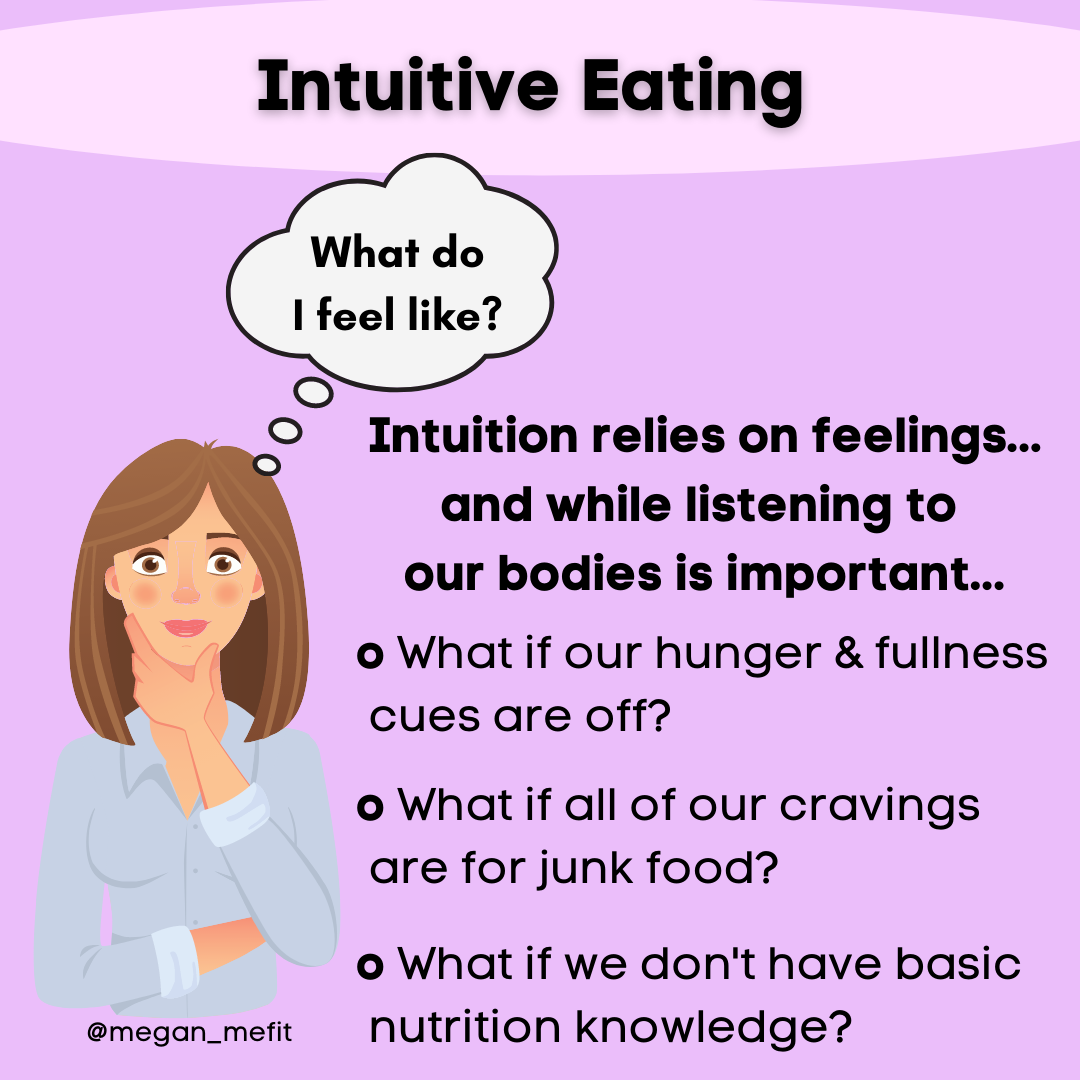
Intuitive Eating or Intentional Nourishment?

Intentional nourishment is one of the most fundamental aspects of my practice.

🙌🏼While listening to our bodies is HUGE, and listening to our feelings is an important part of mental health and healing.

⚠️What if your hunger and fullness cues are off? Most of my clients (and myself) do not always wake up hungry, or have sufficient appetites due to chronic stress & metabolic downregulation, therefore focusing on the MECHANICAL EATING side of things is important.

If you are sick? You still need to eat.
If you are stressed AF? You definitely need to eat.
Just not feeling hungry? You still need to nourish your cells.

⚠️What if we have never been taught to listen and trust our intuition? What if we have never listened or honored our biofeedback before?
What happens in times of weakness or doubt?
What prevents you from reaching out to a quick-fix diet or your old ways again?

⚠️ALL OF THESE questions are why I am not the biggest fan of intuitive eating, yet I believe the book and the principles are ground-breaking for yo-yo dieters and important to understand FOR SURE. 💯

💜Nourishing with intention takes intuitive eating much deeper, it is a fusion of body, brain and feelings. It’s creating and maintaining a balance amongst knowledge, hunger cues, feelings and cravings.

💜Practicing nourishing with intention until you find your balance and can trust your body again.

🥰Join my FB group for more support 🌀Wellness Simplified🌀 | Facebook

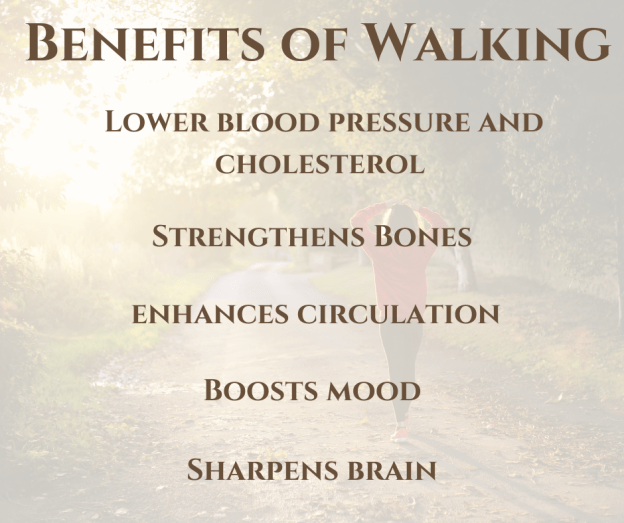
BENEFITS OF WALKING

Walking is the most underrated physical activity! Not only is it an effective cardio strategy for weight loss, it has a lot of other health benefits! 🥳

🚶🏻‍♀️LOWERS BLOOD PRESSURE & CHOLESTEROL 🩺
Regular walking was linked to a 7 percent reduced risk of high blood pressure and high cholesterol.

🚶🏻‍♀️ENHANCES CIRCULATION ♥️
Regular walking can help to lower blood pressure and reduce your risk of stroke. And it doesn’t take much: Walking briskly for just 30 minutes a day is enough to improve heart health.

🚶🏻‍♀️STRENGTHENS BONES 🦴
Walking can help strengthen bones and reduce your risk of osteoporosis. One study found that women who walked for a minimum of 4 hours a week saw a 40% reduced risk of hip fractures. While other forms of vigorous exercise such as running, jumping and weightlifting offer bone-strengthening benefits, the good news is that walking appears to do the same. That’s great news for those just starting a workout routine, people who must complete low-impact exercise due to joint issues.

🚶🏻‍♀️BOOSTS MOOD 🙌🏼
Having a rough day? Walk it off. Numerous studies have linked walking for exercise with improved mood and reduced stress levels. And it’s even better if you can take a stroll through nature — walking outdoors near greenery has been shown to help reduce feelings of frustration and may even help put your brain into a state of meditation. Walking stimulates the production of neurotransmitters in the brain (such as endorphins) that help improve your mental state. 🌳

🚶🏻SHARPENS YOUR 🧠
Walking for exercise may become increasingly important as we age and our risk for dementia and other brain disorders increases. It can even help reverse the effects of aging. One study published in the Annals of Neurology found that the 69 participants ages 55–88 who who met the exercise guidelines set by the American Heart Association showed a significantly lower risk of developing Alzheimer’s disease.

☠️ To improve your cognition even more, try walking backward. 🔙 One Dutch study found that walking backward helped subjects literally think faster on their feet. 💨

Many aspects of your workout difficulty is ON YOU!

A lot of my clients have a history of exercise programs that were actually counterproductive to their goals. They have done so much volume training over the years that they are now physically exhausted and nervous system is overwhelmed – with not much to show for it in the form of strength & muscle gains for all the hours they’ve spent training. Typically, it’s the lack of recovery and low energy availability that holding them back.

Saying a workout is too easy or not challenging enough for you based on a feeling of exhausted based on volume alone (number of exercises, sets and/or reps), is an incorrect measurement approach.

The biggest difference between a program that makes you tired & a program that actually improves & gives you results is SMART PROGRESSION.

What we are seeking is the MINIMUM EFFECTIVE DOSE.
Building muscle isn’t about doing as much as you CAN each workout. It’s about doing as much as you NEED. 💪🏼

So, let’s talk about What is under YOUR CONTROL:⁣

👉🏻The weight you choose to use to challenge yourself⁣. It takes awhile to learn how to navigate RPE and RIR scales. According to several studies, when females (trained & untrained) self-select their training loads, they’re not heavy enough to optimize strength

👉🏻How much you think about mind muscle connection, and squeezing each target muscle⁣

👉🏻The tempo you use each rep, which changes the length of the set and overall time under tension (a big contributor to hypertrophy🙌🏻)

⁣👉🏻How much you control the eccentrics, versus letting the weight control you⁣

👉🏻How much you pay attention to form, and really leading with the target muscle and avoiding using others or swinging/using momentum

👉🏻How much you truly try to hit close to your wall within the target reps (ex choosing a weight you can truly only do 10-12 reps with, not a weight you can do 30 reps with)⁣⁣ The researchers also indicated that the subjects didn’t appear to approach failure on any set & their ratings of perceived exertion (RPE) were identified as only ‘somewhat hard’ (likely not enough intensity of effort to optimize muscle hypertrophy)

The load lifted doesn’t matter as much for optimizing muscle mass as long as effort is high (each set needs to be taken to near failure)

This would suggest the RPE on each set should be interpreted as ‘very very hard’ or ‘very hard’

In these studies, the RPE was only ‘somewhat hard’. Hence, muscle hypertrophy wasn’t optimized

TLTR: Taking your workouts to 7, 8, 10+ exercises per workout still can be “too easy” if you aren’t executing your lifts correctly. Conversely, you can leave the gym crippled after just 3-4 exercises with the right intensity😳⁣⁣

And what’s more, if you start approaching your sets with the correct mindset, focus and intensity: YOU WILL SEE WAY MORE & FASTER PROGRESS🙌🏻🙌🏻🎉

Who wouldn’t want that?!⁣⁣The next time you feel like a workout isn’t hard enough, run through this list of all the elements within your control and challenge yourself with the question: Is there any more I can do here?! 💪🏻⁣

SOURCE: PMID = 15142014; 17313286; 28118310

You’ve got to EARN your right to diet….

Most of new clients hire a personal trainer wanting to lose weight.

But ☝️ we usually have to enter into a different kind of diet before we can actually “diet”.⁣

Here’s why this process is important:

Most people come from a place of chronic dieting with only short periods of over eating…when they get sick of this yo yo approach to “dieting”⁣

It’s not unheard of for new clients to have been attempting a calorie deficit (and typically over-exercising) for 90% of their “fitness journey” 👉 meaning that their bodies are already in a stressed out, down-regulated state.⁣ (This was me up until May 2020. )


Instead of exacerbating this stress with MORE exercise and LOWER calories…⁣
⁣Our first goal is an optimal psychological and physiological baseline.⁣


⁣This is where you “earn the right” to diet; think of it like your buy in.

This could mean building/finding a sustainable maintenance calorie intake and amount of exercise.⁣

For others it might mean even pushing past this and eating in a small surplus to create an environment that’s extra supportive of muscle building for a period of time.⁣

*USUALLY* this looks like a progressive, structured increase in calories and revamping workout programming to be more focused on strength training instead of mostly cardio-based 🏃‍♀️⁣

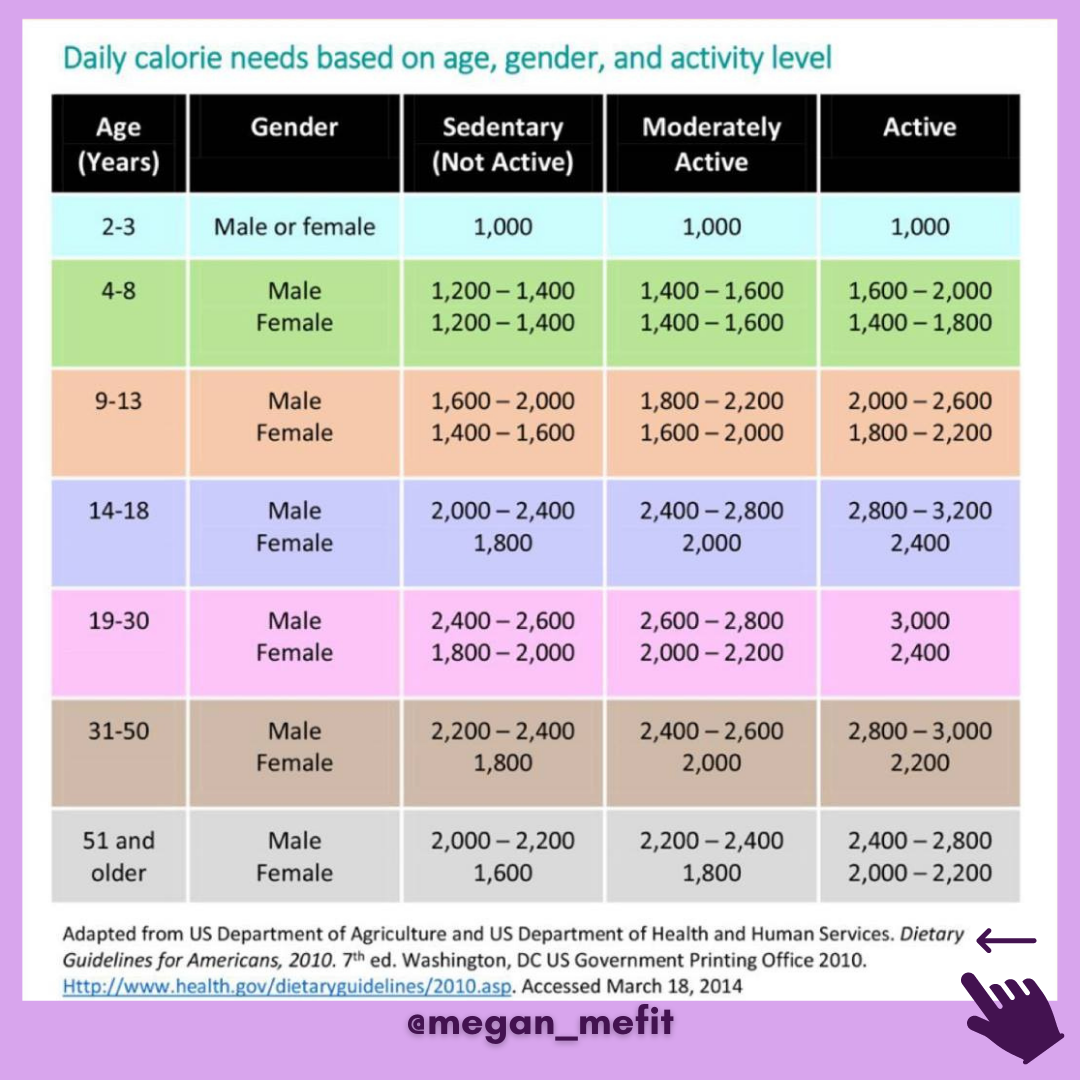
So where to start? Use the chart below to get an idea of daily calorie amounts, 1800-2100 calories per day, 25-30% coming from Protein. Focus on eating enough food, tracking your biofeedback (Sleep, Hunger, Recovery, Energy, Digestion, Stress) and see how all that improves.


Chronic dieting and over exercising often comes with the need for mindset shifts FIRST.⁣


Jumping into more dieting when you have already been dieting frequently, or if you’ve even just dieted too recently, can quickly lead to you spinning your wheels:⁣

🚫more metabolic adaptations (not good)⁣

🚫muscle loss (really not good)⁣

🚫no progress being made, even perhaps when taking things to extremes.⁣

The “diet before the diet” is just as important than the diet itself when it comes to mind & body changes over time.⁣

Please spend just as much, if not more, time optimizing your metabolism, building muscle, and living your life, so that when the time does come to diet down, things will be easier & allow for HEALTHY progress 💞⁣

Thank you Coach Kasey Jo for original post and inspiring this content.

Want more free content and support? Join my free FB support group for free resources

What is motivation? and How do we “get” motivated?

🔅TLTR:
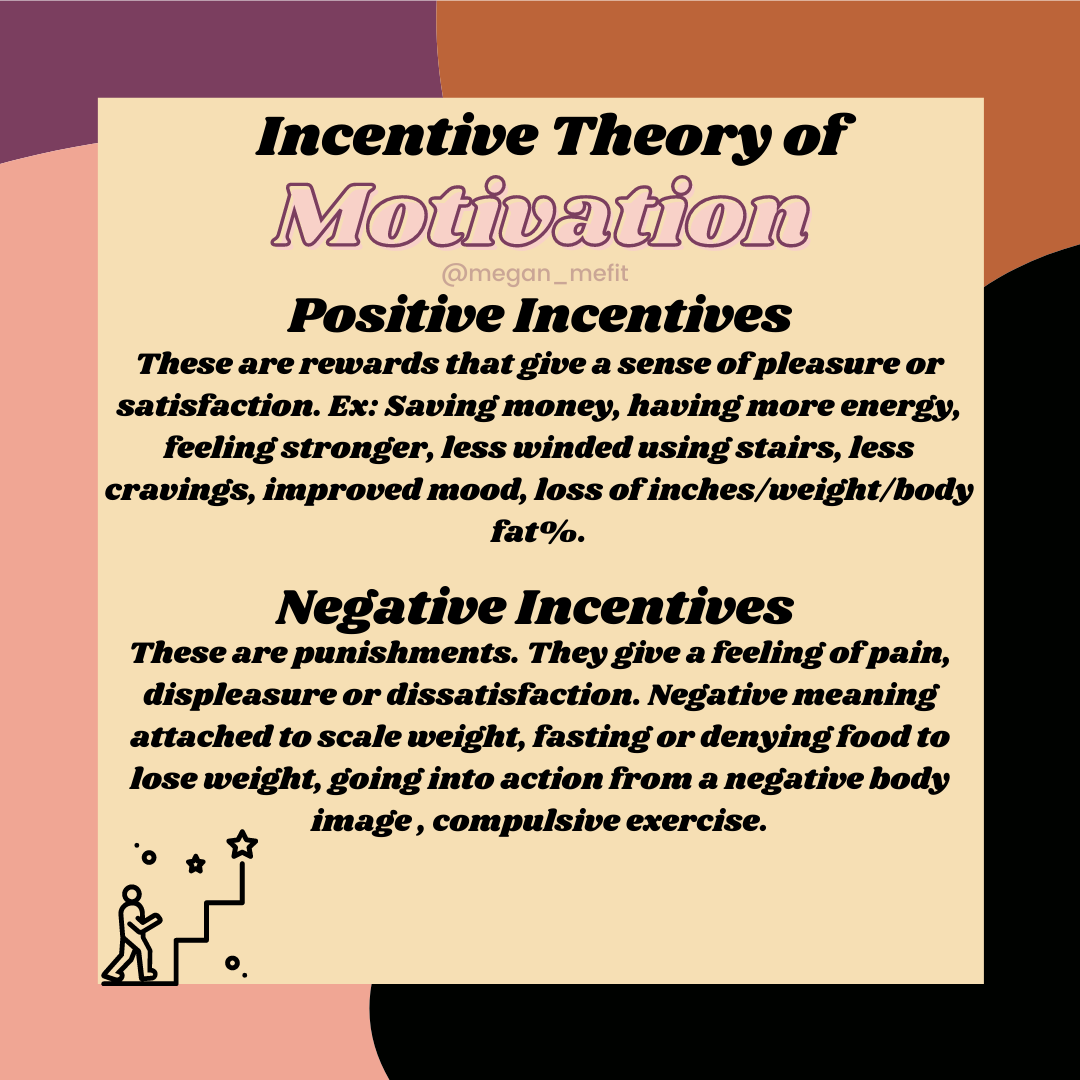
MOTIVATION is the driving force behind your actions. It isn’t something you simply have and keep forever, motivation is like campfire that you must keep stoking to benefit from the warmth
🔥

🔅SUSTAINABLE motivation comes from an intrinsic source. A place within you where you have self respect and self acceptance. You know the value of health. You believe in the power of your choices, and how they can impact your future. You chose to move your body, to nourishing your body, to prioritize your health, because of those reasons. 💛

🔆Creating motivation is the first step, and having a coach to help manage and maintain that motivation can be a crucial piece of your health and wellness journey 🧩!

🗣 Click link to set up a call to chat about how to get motivated for your goals Calendly – Megan_mefit📱 💪🏻

#onlinepersonaltrainer#onlinenutritioncoach#motivation#motivational#sundayvibes#sunday#fitnessmotivation#goals#motivationmonday#fitfam#fitness
#getfit#fitnessgoals#infographic#learnsomethingnew
#science#mindset#incentives#howtostaymotivated#getmotivate

Lacking discipline is rarely about laziness….

Lacking discipline is rarely about laziness–it’s often due to setting unrealistic goals, standards, and focusing on what others are doing instead of what you need as an individual.

Examples of a better approach:
•Workout 2x per week versus 5-6 days per week.
•Hiring a professional to help guide you versus doing what your co-worker is doing.
•Small caloric deficit versus Intermittent fasting.
•Focusing on daily protein intake versus worrying about about carbs/fat

🤍Play the long game, and make your lifestyle sustainable!
☮️Contentment will bring freedom.

#discipline#freedom#sustainable#onlinepersonaltrainer#personaltrainer#fitness#nutrition#goals#goalsetting#mealprep#workoutroutine#fitfam

Let’s talk about STRESS!

First what is stress? Anything that causes the body to STRAIN and use extra fuel resources while pulling those things from being used in important daily body functions.

When talking about stress in our lives, I like to think of it in these three categories. Bad stress (that is avoidable), bad stress (that is Unavoidable) and good stress which means providing something in exchange.

All stress is strain on the body, and all types of stress can break the body down.

The body can only handle a set amount of stress at one time, think about this as a stress bucket. Throughout the day-to-day you have unnecessary expectations on yourself, endless negative self talk, trippin’ over what a co-worker thinks of you, while you’re planning your wedding. And now you’re sick with a cold! That’s the body responding to the stress bucket being full.

Even if the new stress is in the good category, if the body is not resilient to stress due to lack of nutrients, lack of adequate rest, management and recovery–it will cause negative impacts on your health.

There are ways to manage the stress you feel and prevent it from growing and affecting your health. Here is some advice for more effective stress management:


-Recognize the events that cause stress. Be attentive to symptoms of stress and note the types of events that affect you most.
-Find out what the problem is exactly – this makes it easier to deal with it.
-Speak about your problems to people you trust. By expressing your feelings, you reduce the stress you feel.
-Speak with a professional if you need to do so.
-Learn about stress-management techniques, walk in nature, breathwork, yoga, hula-hooping, cuddles with pets, etc.
-Reduce tension through physical exercise.
-Don’t be too hard on yourself.
-Prioritize a consistent bedtime routine.

Stress management is a massive aspect of living and maintaining a healthy lifestyle. You cannot supplement away stress, sorry. All the herbs in the world, can’t do internal work for you. You got this. You are capable. You are amazing. I believe in you.

#onlinepersonaltrainer
#onlinehealthcoach
#stressmanagement
#stress
#healthylifestyle
#coach