Category Archives: fitness

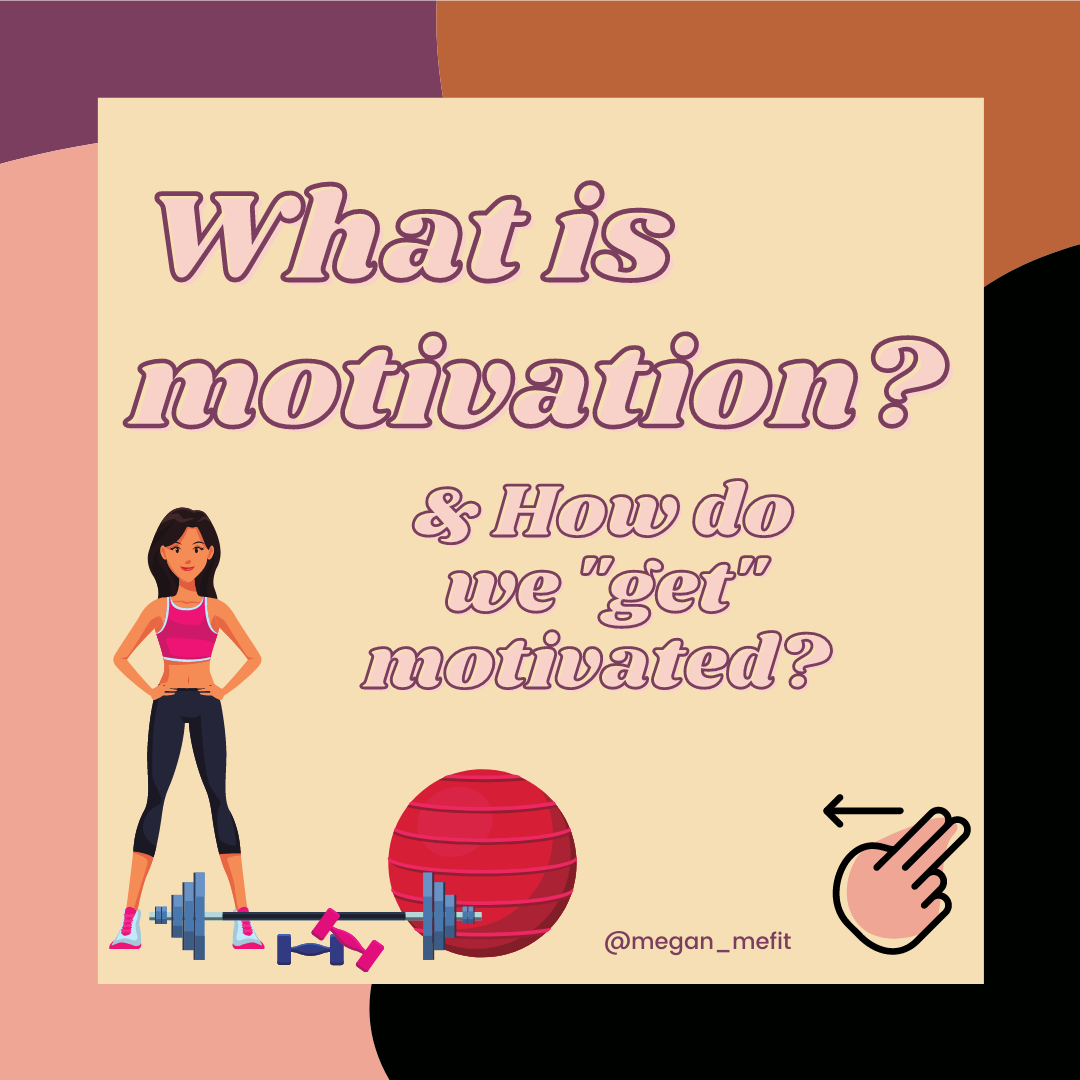
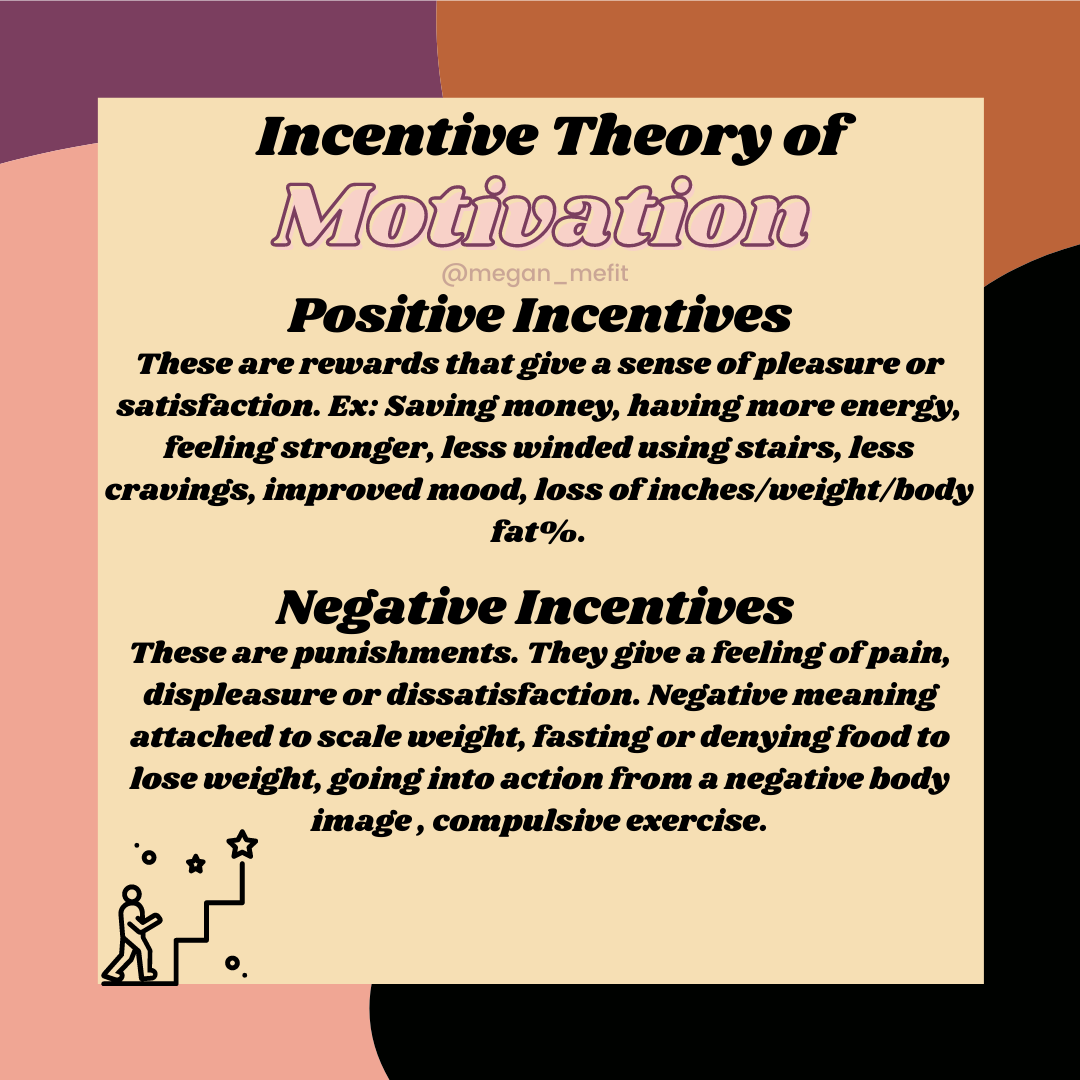
What is motivation? and How do we “get” motivated?

🔅TLTR:
MOTIVATION is the driving force behind your actions. It isn’t something you simply have and keep forever, motivation is like campfire that you must keep stoking to benefit from the warmth
🔥

🔅SUSTAINABLE motivation comes from an intrinsic source. A place within you where you have self respect and self acceptance. You know the value of health. You believe in the power of your choices, and how they can impact your future. You chose to move your body, to nourishing your body, to prioritize your health, because of those reasons. 💛

🔆Creating motivation is the first step, and having a coach to help manage and maintain that motivation can be a crucial piece of your health and wellness journey 🧩!

🗣 Click link to set up a call to chat about how to get motivated for your goals Calendly – Megan_mefit📱 💪🏻

#onlinepersonaltrainer#onlinenutritioncoach#motivation#motivational#sundayvibes#sunday#fitnessmotivation#goals#motivationmonday#fitfam#fitness
#getfit#fitnessgoals#infographic#learnsomethingnew
#science#mindset#incentives#howtostaymotivated#getmotivate

Lacking discipline is rarely about laziness….

Lacking discipline is rarely about laziness–it’s often due to setting unrealistic goals, standards, and focusing on what others are doing instead of what you need as an individual.

Examples of a better approach:
•Workout 2x per week versus 5-6 days per week.
•Hiring a professional to help guide you versus doing what your co-worker is doing.
•Small caloric deficit versus Intermittent fasting.
•Focusing on daily protein intake versus worrying about about carbs/fat

🤍Play the long game, and make your lifestyle sustainable!
☮️Contentment will bring freedom.

#discipline#freedom#sustainable#onlinepersonaltrainer#personaltrainer#fitness#nutrition#goals#goalsetting#mealprep#workoutroutine#fitfam

Let’s talk about STRESS!

First what is stress? Anything that causes the body to STRAIN and use extra fuel resources while pulling those things from being used in important daily body functions.

When talking about stress in our lives, I like to think of it in these three categories. Bad stress (that is avoidable), bad stress (that is Unavoidable) and good stress which means providing something in exchange.

All stress is strain on the body, and all types of stress can break the body down.

The body can only handle a set amount of stress at one time, think about this as a stress bucket. Throughout the day-to-day you have unnecessary expectations on yourself, endless negative self talk, trippin’ over what a co-worker thinks of you, while you’re planning your wedding. And now you’re sick with a cold! That’s the body responding to the stress bucket being full.

Even if the new stress is in the good category, if the body is not resilient to stress due to lack of nutrients, lack of adequate rest, management and recovery–it will cause negative impacts on your health.

There are ways to manage the stress you feel and prevent it from growing and affecting your health. Here is some advice for more effective stress management:


-Recognize the events that cause stress. Be attentive to symptoms of stress and note the types of events that affect you most.
-Find out what the problem is exactly – this makes it easier to deal with it.
-Speak about your problems to people you trust. By expressing your feelings, you reduce the stress you feel.
-Speak with a professional if you need to do so.
-Learn about stress-management techniques, walk in nature, breathwork, yoga, hula-hooping, cuddles with pets, etc.
-Reduce tension through physical exercise.
-Don’t be too hard on yourself.
-Prioritize a consistent bedtime routine.

Stress management is a massive aspect of living and maintaining a healthy lifestyle. You cannot supplement away stress, sorry. All the herbs in the world, can’t do internal work for you. You got this. You are capable. You are amazing. I believe in you.

#onlinepersonaltrainer
#onlinehealthcoach
#stressmanagement
#stress
#healthylifestyle
#coach 

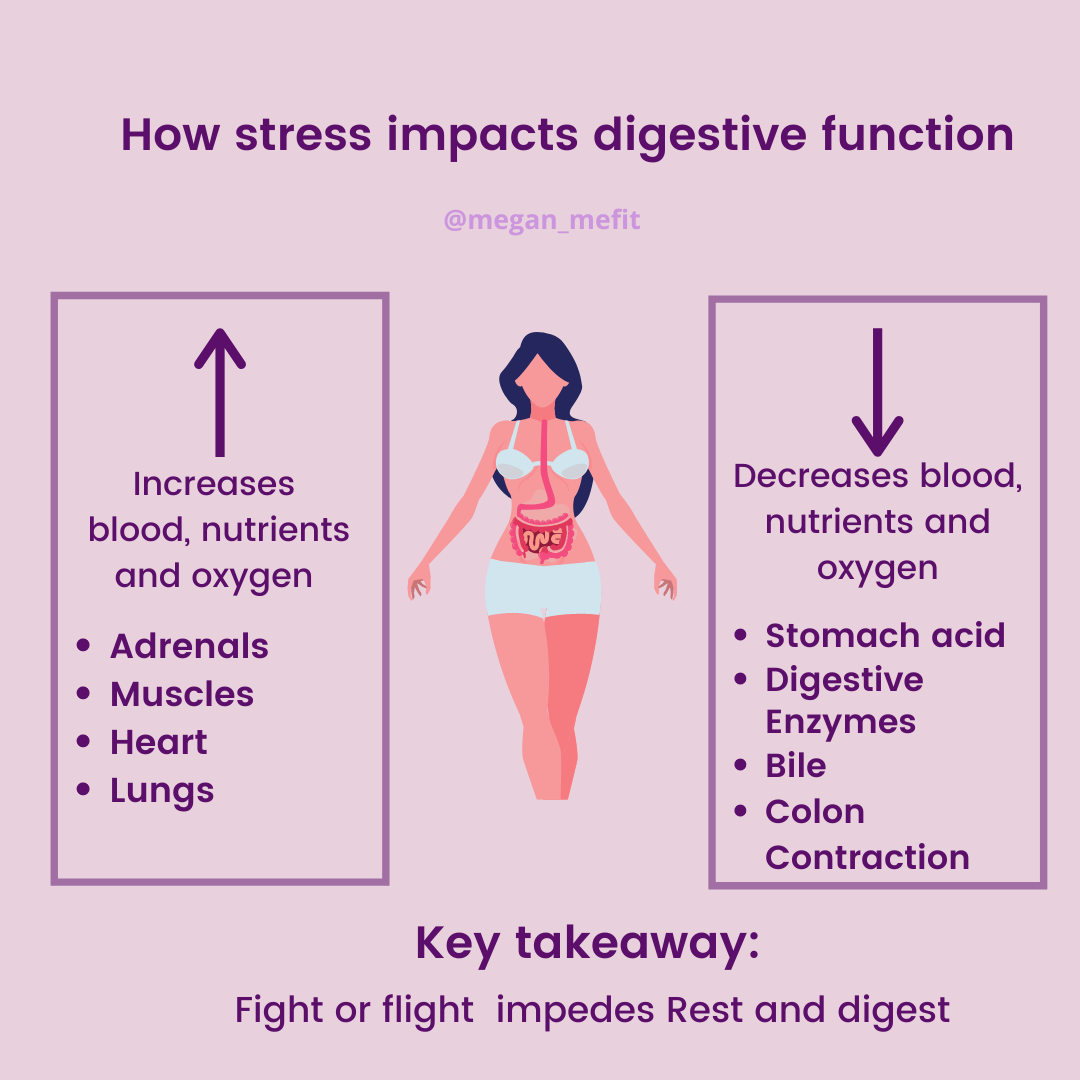
How stress impacts digestive function

The root of most gut problems, is the downgrade of metabolic health. It’s not the food honey, it’s the chronic stress.

First, what do I mean by stress? It is anything that causes the body to STRAIN and use extra fuel resources and pull those things from being used in important daily body functions.

What is digestion? The mechanical and chemical processes in which the body breaks down and absorbs nutrients from food. When we are in the fight or flight state, our body prioritizes survival, by pulling power from digestive organs and sending blood, oxygen and nutrients to the organs like heart, lunges, adrenals and muscles.

The energetic state we are in when consuming our food matters. Eating mindlessly or in a stressed out environment leads to not chewing food properly. When we swallow large chunks of food, this leads to issues in the gut. Being in a stressed state means less stomach acid, digestive enzymes, sluggish bile, and less colon contractions. Large chunks of food can lead to fermenting, rotting, irritation and feeding of bacteria.

Ideally, food is broken down into liquid before swallowed, this allows for maximal absorption later in the intestines. A good rule of thumb is count to 20-30 chews before swallowing. As long as you do this, until you lose count at least–that’s a step in the right direction. Mechanical digestion mastication and peristalsis (chewing and movement through the gut) are equally crucial as chemical digestion for absorption of nutrients.

Digestion begins in the brain and nervous system, as well as the senses. How appetizing your plate is, the smells, tastes and textures. Salvia (drool) itself contains digestive enzymes.

Creating a pre-meal ritual where you take a few deep breaths to relax your brain and body is helpful when going through stressful times. As counterintuitive as it may seem, the more you enjoy your food and incorporate mindful eating practices into the daily routines, the better your digestion, absorption and overall satisfaction will be.

#stress#digestivehealth#digestion#diet#personaltrainer#nutrition#stressmanagement#deepbreaths#vagusnerve#mindfulness#mindful#mindfuleating

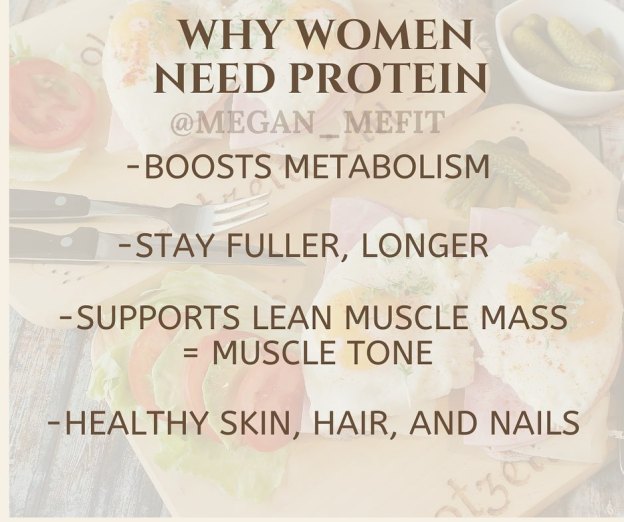
Why women need ample protein intake

When on-boarding new clients, one of the first things we focus on is daily protein intake.

  1. It boots metabolism- protein has a thermic effect upward of five times greater than carbohydrates or fat.
  2. Stay Fuller, longer- A growing body of research suggests that dietary protein specifically, can help promote satiety, facilitating weight loss when consuming as a part of a reduced energy diet.
  3. Supports lean muscle mass- Studies show that protein before and after a workout increases protein synthesis=muscle growth. It also preserves current muscle mass, which is part of a healthy aging process.
  4. Healthy skin, hair and nails- protein supplies the body with the amino acids it requires to make keratin-one of the structural proteins in our skin, hair and nails. To boost your body’s natural keratin production, you need to consume an adequate amount of protein, as well as specific vitamins and minerals that support this process.

,

What is Fasted Cardio and Does it work?

What is Fasted Cardio and Does it work?

Simply put, this involves getting your heart rate up without eating anything prior. A true fasted state starts at about 8-12 hours after your last meal. However it can happen for some people if its been 3-6 hours, but most people do fasted cardio in the morning to ensure their body is in a completely fasted state.

According to science, there can be some benefits! You can burn up to 20% more body fat by exercising in the morning on an empty stomach according to one study published in British Journal of Nutrition. Another study from University of Scranton revealed it may lead to a reduced calorie consumption in the next 24 hours that follow the fasted workout.

The idea that exercising in a fasted state burns stored energy (fat and glycogen) versus energy that you have just consumed.

What’s important to keep in mind, the intensity of the exercise should be low. Think jogging instead of a hard run or a sprint. Or slow climbing on the stair master, not attempting your Orange theory workouts.

Fasted cardio not only burns stored fat and carbs but it can also burn stored protein in the form of lean muscle–which is NOT desirable. Sipping on our amazing Recover BCAA product can alleviate some of this breakdown.

BOTTOM LINE: Fasting primes your body to take in nutrients once the effort is over, which means you should look for protein and carbohydrates to help refuel your muscles. The International Society of Sports Medicine recommends consuming .14-.23g of protein per pound of body weight very soon after a workout. That’s 20 g of protein for a 140 woman.

GOOD NEWS: There is room to experiment, feel out the right approach for you, whether or not fasting is pat of the equation.

IMG_1150

How to cut calories without starving yourself👇

Your best bet for fat-loss success is to create a modest caloric deficit and make smart food choices so you feel satisfied — not starved. One of the most common mistakes I see is athletes that are under-eating. If they aren’t seeing results, they think it means eat less. Instead of MORE! If you are wondering how much you should be eating for your goals–REACH OUT TO ME!

Cutting a ton of calories at once actually slows the metabolism and can cause the body to not want to let go of the fat stores because it believes to be in a ‘starvation state’.

Plus, it’s hard to maintain a severe caloric deficit, if you aren’t getting the energy needed to function, your body spikes your hunger hormones, causing you to seek food.

This is why fad diets and uneducated diet approaches don’t work. You are underfed and undernourished.

Three Tips for cutting calories without starving:

1) CUT GARBAGE CALORIES
A lot of today’s grab-n-go convenience foods provide very little to NO nutritional value and a ton of calories. Cut out the Alcohol, candy, soda, junk food and baked goods. Once a month, sure have an indulgence, but daily consumption is not recommended.

2)USE VEGGIES TO FILL YOU UP
“Volume foods” are a saving grace for those folks in a calorie deficit. Veggies like kale, spinach, bok choy, zucchini, cabbage, onions can help you feel full, your plate look full and provide lots of nourishment without the calories.

3)SWAP LOW-FIBER FOODS for HIGH-FIBER FOODS
If you have had a hard time adhering to more complicated diet regimens, research shows that boosting your daily fiber intake may be an effective weight-loss strategy. Foods high in fiber (apples, oats, green beans, cauliflower) tend to be fewer calories for the same volume of food and digest more slowly than low-fiber foods.

fiber

Addressing Visceral Fat

9516E825-425E-4C0A-A72A-909FED0648E6.jpegUnderstanding body composition-lean body mass, skeletal mass, body fat percentage and how it relates to optimal health and disease prevention is a fresh outlook in regards to weight wellness instead of strictly weight loss.

I believe in the importance of having body competition data to be sure we are losing body fat and gaining muscle when we see the scale shifting in either direction.

Let’s talk visceral fat:
First off there are Two types of Abdominal Fat-
Subcutaneous- the fat that is outside of your organs, can pinch with fingers
Visceral- Surrounding the organs, deadly in high amounts

What causes high visceral fat? Poor diet, lack of exercise, stress, aging, hormones and genetics.

When it comes to health, there is so much more to the picture than weight loss. Creating long term habits that build the foundation of wellness will make weight loss more sustainable and achievable.

Stress Management:
There are many easy activities you can incorporate into your daily life to help shift your focus and your mindset when you begin to feel stress. First, focus on what can you take direct control of: this may be incorporating the use of stress-modulating herbs called adaptogens into your diet, participating in an exercise program you enjoy, a spa treatment, cooking a meal you love, or simply turning off your phone for an hour.

Whatever your stress relieving activity is, schedule it into your calendar at least once a week. It is crucial to make room in your routine for important self-care tasks, like you would with a doctor or dentist appointment. Dedicating time throughout your week to self-care routines will improve the consistency of your actions.

Mindful Eating Practices:
Paying attention to the physical feelings of hunger. Are you physiologically hungry and actually in need of nutrition? How does this meal have you feeling? are you excited to prepare it? Excited to eat it? 

Identifying cravings: This is your body communicating with you and could be indicating you need a specific nutrient. Example: Craving salty foods like pickles or chips could mean you need to replenish sodium and/or electrolytes. Try adding ConcenTrace Mineral drops to your water, or make your own kale chips for a healthy snack. Craving onions could mean you need more sulfur in your diet for liver function. Chocolate cravings often indicate that your body is deficient in magnesium, which is a common deficiency. You can try adding mineral drops to your water and if you’re going to eat chocolate try adding cocoa powder to you smoothie, or dark chocolate.

Sensation of fullness: Also known as satiety. Having fiber, balanced protein and healthy fats as part of your meals and snacks will help you feel full after eating.

Taste satisfaction: Enjoying the food you eat is important for your body to get the most nutrition for your cells.  “Healthy” eating doesn’t have to be boring! Explore new spices, fresh herbs and seasonings. New recipes will excite your meal planning.

Gratitude: Take a moment before you consume your meal to think what it took to get from farm to table. It is recommended we chew our food 20-30 times before swallowing. Focus on feeling satisfied about how you have chosen to fuel your body.

New findings published in the Journal of Obesity suggest that combining a technique called mindful eating with stress management can help reduce cortisol levels and the resulting belly fat. The most effective mindful eating practices are paying attention to the physical feelings of hunger, identifying cravings, sensation of fullness, and taste satisfaction so you fully enjoy your eating experience and feel satisfied about how you have fueled your body.

Link to the Journal of obesity study: https://www.hindawi.com/journals/jobe/2011/651936/

TO Read more about stress management: https://bridgecitywellness.wordpress.com/2017/06/07/is-stress-making-us-fat/

To read more about mindful eating and quality foods over quantity: https://bridgecitywellness.wordpress.com/2017/02/13/stop-counting-calories/

Importance of Hydration in Sports Performance and Health

How much water do you consume a day? Water is the most vital nutrient to human existence. We can survive far longer without food than without water.
Sedentary women should be consuming at least 74 oz of water a day and men should be consuming 101 oz.
The body’s requirement for water varies in accordance with several factors: environment, activity level, functional losses, metabolic needs, age and other dietary factors.

Paul Chek provides a reliable calculation for meeting our body’s needs. For your minimum daily intake, one should base the calculation on one’s body weight in in kilograms, (lbs divided by 2.2) and then divide that by 0.024. This level of water intake works out at 1 liter plus 1 cup (1250ml) for each 30 kg of body weight.

Example

  • An 80 kg person would require 3 1/3 liters per day = 80 kg divided by 0.024 = 3.3 liters per day.

Drink your way to better health- Hydration changes everything!

  • Protects organs and tissues
  • Lubricates joints
  • Regulates body temperature
  • Carries nutrients and oxygen to cells
  • Helps dissolve vitamins and increases bio-availability
  • Reduces the burden on kidneys and liver
  • Moistens tissues of mouth, eyes and nose
  • Helps prevent constipation
  • Increases muscle tone
  • Reduces risk of disease-Studies have shown that an increase in daily water decreases the risk of colon cancer  up to 45%, reduces the risk of bladder cancer by 50%, and potentially reduce the risk of breast cancer. It is also believed that water may prevent kidney stones and urinary tract infection

Stay hydrated with fruits and veggies!

Cucumber, Iceberg lettuce, spinach, celery(96%), raw radish, zucchini (95%) , Watermelon, strawberries, sweet peppers, green tomato (92%) , Cauliflower, orange, raspberries, peach(87%)

Signs of Dehydration

  • Increased thirst
  • Dry mouth
  • Weakness
  • Tired or sleepy
  • Decreased urine output
  • Urine is low volume and more yellowish than normal
  • Headache
  • Dry skin-skin will “tent” when pinched
  • Dizziness

If you are thirsty, then your levels are already low. Consume small sips during physical activity to not overload the body systems. Ideally you should sip every 15 minutes.

Dehydration’s effect on Athletic Performance

  • Reduction in blood volume
  • Decreased skin blood flow
  • Decreased sweat rate
  • Decreased heat dissipation
  • Increased core temperature
  • Increased rate of muscle glycogen use

Hydration Before, During and After Exercise

Before Exercise

  • It is recommended that individuals drink about 17-22 oz. of fluid ~2 hours before exercise to promote adequate hydration and allow time for excretion of excess ingested water

During Exercise

  • Athletes should start drinking early and at regular intervals in an attempt to consume fluids at a rate sufficient to replace all the water lost through sweating (i.e. body weight loss), or consume the maximal amount that can be tolerated
  • During exercise lasting less than 1 hour, there is little evidence of physiological or physical performance differences between consuming a carbohydrate-electrolyte drink and plain water

After Exercise

  • Drink 600 ml of water for every pound of body weight lost through sweat during exercise with a natural recovery aid or suitable protein shake
  • If training for a prolonged period of time (+60 min), it is essential to have a carbohydrate intake to prevent blood glucose drops and increase glycogen stores in muscles.

Hydration in Sports Performance

Sweat losses of as little as 2% of body weight (less than 3 pounds in a 150-pound athlete) can impair performance by accelerating the onset of fatigue. This is important because some athletes can lose 5 to 8 pounds of sweat or more during practice or competition. So it’s easy for athletes to become dehydrated if they don’t drink enough to replace what is lost in sweat.

There is clear research to show that working at different intensity levels and duration will decrease blood plasma volume, but as long as you have been maintaining hydration throughout the day you will be fine to train. If you have not been drinking during the day to maintain your hydration, your body will be fighting for the use of water.

  • 15-20% decrease in 1 min bouts of exhaustive exercise
  • 7.7% decrease when training at 40% of 1 rep max
  • 13.9% decrease when training at 70% of 1 rep max
  • Sweating causes additional plasma loss
  • Reduced plasma volume will increase blood viscosity which has been linked to impeded blood flow thus limiting oxygen transport

What is Blood Plasma? Plasma is made up of water, plasma proteins, and cellular nutrients (such as electrolytes, enzymes, hormones, antibodies and waste products). Its primary role is to aid transport of the red blood cells (erythrocytes), white blood cells (leukocytes) and platelets (thrombocytes) in and around the body at rest or during exercise.

Electrolytes are minerals (calcium, chloride, magnesium, potassium, sodium ions) in your blood and other body fluids that carry an electric charge. Electrolytes  affect the amount of water in your body, the acidity of your blood (pH), your muscle function, and other important processes. The body loses electrolytes as it sweats.

SODIUM: Maintains water balance, activates thirst response, prevents water intoxication & hyponatremia, prevents cramps by enabling normal muscle contraction.  Influences performance of other minerals; enables nerve impulse transmission and maintains normal blood pressure

Potassium: Maintains water balance, stimulates metabolism of proteins & carbohydrates; helps muscles use glycogen and prevents muscle fatigue; enables normal muscle contraction.

Chloride: Maintains water balance; prevents dehydration, helps the body break down protein, absorb minerals & vitamin B12, enables normal muscle contraction, relaxation and nerve impulse transmission.

Magnesium: Participates in the conversion of ATP (adenosine triphosphate),  stimulates the metabolism of carbohydrates & fats; helps the body build proteins, decreases pain from sports-related injuries & excessive physical activity; enables normal muscle relaxation; prevents muscle cramps & spasms. Also, influences performance of other minerals; enables nerve impulse transmission; decreases vulnerability to disease; alleviates symptoms of numerous medical and psychiatric conditions

Sports Drinks are to be avoided

Do not count on sports drinks to provide you with the adequate amount of electrolytes, as most only include sodium and potassium.  Gatorade’s latest product introduction, Endurance, which claims to have five electrolytes and yet contains only a whopping 400 mg of sodium and 180 mg of potassium. What about the other electrolytes? Calcium and magnesium are mentioned; however, Endurance provides less than two percent of the Daily Value for these two critical electrolytes. A 2005 study published in General Dentistry reported that some popular sports and energy drinks destroyed tooth enamel more effectively than cola due to their high sugar content.

A balance of all electrolytes is necessary to maintain optimal hydration and endurance. Not only do you lose sodium in sweat, but you also lose other critical electrolytes like magnesium, and since most people don’t get enough magnesium, serious deficits can be occurring. The bottom line is to not count on plain water and sports drinks to meet your body’s hydration and electrolyte needs. Plain water (including bottled “mineral waters”) doesn’t contain a substantial quantity or balance of the essential electrolytes you require to stay adequately hydrated, replace electrolytes lost in sweat, and maintain optimum performance. As for sports drinks, the high-sugar content of most of these beverages often causes bloating, stomach cramps, and can impair your hard-fought training and performance at the moment when it may matter most.

  Adding electrolytes to water is a simple idea.  It provides pure electrolytes and nothing else. It powers rapid hydration and quickly replaces all lost electrolytes—not just sodium. It supports performance, stamina, and recovery, and delivers electrolytes evenly to ensure optimal hydration. And unlike sugar-loaded sports drinks, this metohd doesn’t involve calories, flavorings, sweeteners, colors or sugar, all of which hold the potential to hinder performance.  I use ConcenTrance Mineral drops in my water daily.  

Water is the most vital nutrient to human existence. Hydration is vital to any successful athlete. I hope this inspired you to tune into your daily water consumption and electrolyte balance. Cheers to H20!

References:

http://www.humankinetics.com/excerpts/excerpts/dehydration-and-its-effects-on-performance

http://www.acsm.org/

Click to access electrolytes_and_dehydration.pdf

http://www.bodybuilding.com/fun/behar12.htm

Click to access hydrationcriticaltoathleticperformance.pdf

http://www.kellygarsia.com/the-importance-of-hydration/

The POWER of having Belief in one’s self

Monochromatic Quinceañera Facebook Event Cover (1)

There are many reasons clients hire personal trainers. Individualized program design, accountability, to gain knowledge about specific equipment, effective workouts, injury rehabilitation or prevention are all superb reasons. But to learn how to believe in themselves is a skill that flies under the radar.

The concept of self-efficacy is central to psychologist Albert Bandura’s social cognitive theory, which emphasizes the role of observational learning, social experience, and reciprocal determinism in the development of personality. According to Bandura, a person’s attitudes, abilities, and cognitive skills comprise what is known as the self-system. This system plays a major role in how we perceive situations and how we behave in response to different situations. Self-efficacy is an essential part of this self-system.

People with a strong sense of self-efficacy:

  • View challenging problems as tasks to be mastered
  • Develop deeper interest in the activities in which they participate
  • Form a stronger sense of commitment to their interests and activities
  • Recover quickly from setbacks and disappointments

People with a weak sense of self-efficacy:

  • Avoid challenging tasks
  • Believe that difficult tasks and situations are beyond their capabilities
  • Focus on personal failings and negative outcomes
  • Quickly lose confidence in personal abilities

Self-efficacy is a concept I’ve been working on personally and with my clients for the last year. It seems to be a common theme amongst clients to want to avoid discussing nutrition or regular workout routines because it’s viewed as challenging and difficult.  The level of self efficacy reflects the confidence in the ability to exert control over one’s own motivation, behavior, and social environment.

As fitness professionals, imagine the possibilities for our clients when we focus on increasing their self confidence and improving mental attitudes! It could impact every aspect of their lives, not just fitness related goals.

So, where does self-efficacy come from?  According to Bandura, there are four major sources of self-efficacy.

1. Mastery Experiences

“The most effective way of developing a strong sense of efficacy is through mastery experiences,” Bandura explained. Performing a task successfully strengthens our sense of self-efficacy. However, failing to adequately deal with a task or challenge can undermine and weaken it.

As personal trainers, effective goal setting is a great way to

-build self-efficacy; effective meaning measurable and realistic

-carefully select short and long term goals to help establish a set path to achieve even the smallest accomplishments.

2. Social Modeling

Witnessing other people successfully completing a task is another important source of self-efficacy. According to Bandura, “Seeing people similar to oneself succeed by sustained effort raises observers’ beliefs that they too possess the capabilities to master comparable activities to succeed.”

As a personal trainer, you may help your clients select role models. Professional athletes, support groups, introducing them to past or current clients, friends and/or family that have had success in similar goals. Creative ideas like making a collage of activities and role models to put on the fridge or in their home gym. Keep in mind what works for others may not work for your client. The concept behind this is “If he/she can do it, I can do it!”

3. Social Persuasion

Bandura also asserted that people could be persuaded to believe they have the skills and capabilities to succeed. Consider a time when someone said something positive and encouraging that helped you achieve a goal. Getting verbal encouragement from others helps people overcome self-doubt and instead focus on giving their best effort to the task at hand.

As personal trainers, I believe this is the most important aspect of our interactions with our clients. Together you have set realistic and measurable goals and it’s part of our job to keep them motivated.  Increasing the awareness to their “self-talk” is key. While in session you can reinforce these beliefs by using their name and their goals while performing difficult exercises or tasks. You could try introducing the tools of positive affirmations and positive self-talk.

Examples:

“You’re doing great, Sandra! This exercise is strengthening your core and getting you in shape this upcoming summer adventures! I know it’s challenging and you’re doing it!”

I really appreciate your honesty in your food journal, Sandra. It’s important that I’m fully aware of what you’re doing on your own time so we can accomplish your goal of decreasing body fat percentage by 2% in the next 6-8 weeks. You are doing great!”

4. Psychological Responses

Our own responses and emotional reactions to situations also play an important role in self-efficacy. Moods, emotional states, physical reactions and stress levels can all impact how a person feels about their personal abilities in a particular situation. A person who becomes extremely nervous before speaking in public may develop a weak sense of self-efficacy in these situations. However, Bandura also notes “it is not the sheer intensity of emotional and physical reactions that is important but rather how they are perceived and interpreted.” By learning how to minimize stress and elevate mood when facing difficult or challenging tasks, people can improve their sense of self-efficacy.

This aspect may be the most difficult to monitor. Personal trainers face the challenge of meeting with their clients only several hours a week. This might not allow us to be aware of the situations causing our clients stress, as well as their reaction to it.

What we can do is listen carefully when we are with them. Taking notes, remembering annoying co-workers and specific situations causing stress all go a long way with clients. By offering any self-care advice that you believe to be appropriate, your client can build upon physical fitness by improving his or her mental attitude.

Self-Efficacy-Fotolia_16051214_S-570x494

Sources:

References: Bandura, A. (1977). Self-efficacy: Toward a unifying theory of behavioral change. Psychological Review, 84, 191-215.

http://psychology.about.com/od/theoriesofpersonality/a/self_efficacy.htm

https://www.acefitness.org/updateable/update_display.aspx?pageID=575

http://www.learning-theories.com/