Category Archives: Thyroid health

Carbs Are Life, Ladies! Why Women Need Them More Than You Think 🍞🍝✨

Carbs have been unfairly villainized for decades, but for women, they’re not just a food group—they’re vital for health, hormones, and happiness. Here’s why carbohydrates deserve a place on every woman’s plate:

1️⃣ Carbs for Peak Performance

Carbs are your workout BFF, powering your body to:

  • 💪 Train harder and reach higher intensities.
  • 🔄 Recover faster between sets and workouts.
  • 🚫 Preserve muscle (anti-catabolic) and even support muscle building (anabolic).

Without enough carbs, your body might start breaking down muscle for energy, sabotaging your fitness and strength goals.


2️⃣ Brain Power & Mood Boost

🧠 Your brain runs exclusively on glucose, the simplest form of carbohydrates. Without it, brain fog and fatigue are almost inevitable.

But carbs do more than fuel your brain—they help regulate your mood. Eating carbs signals serotonin production, the neurotransmitter responsible for happiness, calmness, and restful sleep. If you’re feeling irritable or out of balance, a lack of carbs could be the culprit.


3️⃣ Gut Health & Fiber Benefits

Fiber-rich carbs are essential for:

  • 🌱 Feeding your gut microbiome, promoting a healthy balance of good bacteria.
  • 🧬 Supporting gut health by forming short-chain fatty acids (SCFAs) that nourish your colon.
  • 🥣 Enhancing satiety, stabilizing blood sugar, and even reducing cholesterol levels.

A thriving gut contributes to better digestion, stronger immunity, and improved overall well-being.


4️⃣ Thyroid & Hormonal Health

Your thyroid, the master regulator of your metabolism, relies on glucose for optimal function. Carbs support:

  • ✅ The conversion of T4 (inactive thyroid hormone) to T3 (active hormone).
  • 🌿 Balanced cortisol levels, preventing stress overload.
  • 🔋 Steady liver glycogen stores, which fuel your body between meals.

Low-carb diets can disrupt these processes, causing hormonal imbalances, sluggish metabolism, and blood sugar crashes.


5️⃣ Sleep & Recovery 💤

Pairing carbs with tryptophan-rich foods (like fatty fish or dairy) helps your body produce serotonin and melatonin, the hormones responsible for deep, restorative sleep. Even simple changes—like adding kiwi or cherries to your evening meal—can significantly improve sleep quality.


6️⃣ Hormonal Harmony & Women’s Health

Here’s where carbs really shine for women:

  • 🍓 Low-carb diets can disrupt serotonin, progesterone, and insulin levels, which may worsen conditions like acne, PCOS, or endometriosis.
  • 🌸 During perimenopause and menopause, insufficient carbs can exacerbate cortisol spikes and hormonal fluctuations, intensifying symptoms like mood swings and hot flashes.

Women’s physiology is especially sensitive to restrictive diets, and carbs are key to maintaining hormonal balance.


7️⃣ Gender-Specific Research Gaps

Much of the research on low-carb diets and intermittent fasting has been conducted on men, leaving women’s unique needs underexplored. This is significant because:

  • Women’s metabolic and hormonal responses differ due to natural variations in estrogen, progesterone, and cortisol.
  • Studies show that over 30% of women are energy-deficient due to chronic dieting or under-eating, which can impair physical performance, reproductive health, and mental well-being.
  • Restrictive diets like keto or intermittent fasting may disrupt kisspeptin, a neuropeptide essential for reproductive health, potentially leading to menstrual irregularities, increased abdominal fat, and higher depression risk.

A Smarter Approach for Women

Instead of restrictive diets, prioritize balance and nourishment:
1️⃣ Fuel Your Body: Eat every 3-4 hours, incorporating complex carbs, quality proteins, and healthy fats like ghee, tallow, or coconut oil.
2️⃣ Support Nutrient Intake: Avoid nutrient deficiencies by choosing whole, unprocessed foods and limiting refined grains.
3️⃣ Balance Hormones Naturally: Keep carbs in your diet to support serotonin, progesterone, and insulin metabolism.
4️⃣ Exercise Over Extremes: Skip extreme fasting and focus on movement that supports autophagy, like strength training or yoga.


The Bottom Line

Carbs aren’t your enemy—they’re a critical ally for women’s health. From fueling your brain to balancing your hormones and improving gut health, carbohydrates are a key ingredient for living your best life. So, go ahead—enjoy that sourdough or bowl of oatmeal guilt-free. Your body will thank you!

Sources:

Popular trends VS Effective approach in Strength Training

It can feel overwhelming trying to navigate between the popular fitness trends and what is an effective approach—am I right? 😲

@estellecfitness and I notice there seem to be massive gaps in knowledge of how the process of getting stronger (building muscle) works, how does “toning up” work, the importance of following a program etc. With a lack of understanding, it can be easier for diet culture & gimmick tactics to pull one over on you!

That’s one of the main reasons we have teamed up to host our masterclass called Mastering Fitness & Mindset for the Pro Metabolic lifestyle which teaches you to feel empowered by your body, improve your metabolic health with weightlifting, and make exercise a natural part of your life!

𝗧𝗼𝗽𝗶𝗰𝘀 𝘄𝗲 𝗰𝗼𝘃𝗲𝗿
▪️Common things that dictate mindset⁣
▪️How you can make long-term changes⁣
▪️Priorities vs. Excuses⁣
▪️General guidelines for selecting workouts⁣
▪️Red flags in workouts⁣
▪️How to make-over a workout⁣
▪️How is put on muscle and tone up⁣
▪️What a healthy nervous system can do⁣
▪️Myths & truths about muscle growth⁣
▪️Effective reps vs. junk volume (aka effective exercise vs. being exhausted with no results)⁣
▪️How 𝗣𝗥𝗢𝗣𝗘𝗥 strength training is pro-metabolic⁣
▪️Fitness trends vs. effective fitness ⁣

⬆️ Start working SMARTER, not HARDER. You’ve put yourself through enough!⁣

⚡️ Link to grab your ticket to the replay!!

Looking for more support navigating your cycle with fitness & nutrition? Check out my FREE guide & pro-metabolic strength training guide available for purchase!

❤️

TAGS: #strengthtraining#strengthtrainingforwomen#prometabolic#prometabolicfitness#masterclass#dietculturedropout#personaltrainer#onlinefitnesscoach

Understanding Metabolic Health: The Role of Temperature and Pulse

How to use Temps & Pulses for metabolic health insights

In the summer of 2020, my health hit a major low. Years of chronic dieting, over-exercising, relentless negative self-talk, and hormonal birth control had taken their toll. I was living on the edge—eating almost no carbs, avoiding sugar, dairy, and fats, relying only on lean protein, and pushing my body through six days a week of workouts filled with hours of cardio. The result? I felt terrible physically, mentally, and emotionally.

Symptoms of hypothyroidism and adrenal dysfunction were creeping in. My metabolism seemed “broken” or “slow,” but the truth was simpler: I was undernourished and over-stressed.

My Wake-Up Call

I began tracking my basal body temperature but didn’t initially include resting pulse rates. My average waking temps hovered around 96.5°F, and my pulse was a mere 44 beats per minute. Then I discovered the work of Dr. Ray Peat and Dr. Broda Barnes through the pro-metabolic community. Their research flipped everything I thought I knew on its head.

According to Dr. Peat, a well-nourished, healthy individual should have a resting pulse of 85+ beats per minute. A high resting pulse (in the absence of stress) signals good metabolic health and strong repair capacity. This was a stark contrast to mainstream narratives touting a low heart rate as the gold standard of cardiovascular fitness.

Questioning the Mainstream Narrative

The Mayo Clinic states: “Generally, a lower heart rate at rest implies more efficient heart function and better cardiovascular fitness. For example, a well-trained athlete might have a normal resting heart rate closer to 40 beats per minute.”

But is a low resting heart rate truly beneficial? Evidence suggests otherwise. Thyroid health—the thermostat of the body—plays a crucial role in metabolism. A sluggish thyroid often correlates with lower body temperatures and slower heart rates, indicators of reduced metabolic function.

Why Temperature and Pulse Matter

Metabolism refers to the sum of all biochemical reactions in the body. It’s essentially the rate of energy production at the cellular level—the speed at which your body processes and utilizes energy. Your body temperature is a reflection of this activity. People with under-functioning thyroids tend to exhibit low basal body temperatures and slower pulses, which can indicate:

  • Low thyroid function
  • Inflammation
  • Suppressed immune function
  • High stress
  • Estrogen dominance

In contrast, a warm body is linked to better immune function, efficient digestion, reduced inflammation, and overall metabolic health.

How to Track Temperature and Pulse

Tracking these metrics throughout the day provides invaluable insights into your metabolic health:

  • Upon Waking:
    • Follicular Phase: 97.2-97.8°F
    • Luteal Phase: 98.6°F
    • Resting pulse: 75-90 bpm
  • After Breakfast:
    • Temperatures and pulse should gently rise after meals. Food lowers stress and generates heat. If your numbers drop, it may indicate falsely elevated waking temps due to stress hormones like cortisol.
  • Afternoon:
    • Temperatures should peak between 1-3 PM.

What Your Numbers Reveal

  • Higher temp and pulse (in the absence of stress): Optimal metabolic function
  • Normal temp and higher pulse: Active stress response
  • Lower temp and lower pulse: Chronic stress and metabolic suppression
  • Normal temp and lower pulse: Chronic stress or low thyroid function

How to Optimize Your Numbers

If your temperature and pulse rates aren’t within optimal ranges, consider the following steps:

  1. Prioritize bioavailable protein: Aim for at least 100 grams per day.
  2. Eat enough calories: 1,800-2,000+ per day, depending on individual needs.
  3. Include digestible carbs: At least 150 grams daily (e.g., honey, maple syrup, fruit, root vegetables).
  4. Pair carbs with protein: Avoid “naked carbs” to stabilize blood sugar.
  5. Focus on anabolic exercise: Build muscle with strength training to boost metabolism.

Why This Matters

Using temperature and pulse as tools, you can:

  • Monitor how well your body utilizes energy.
  • Evaluate recovery from exercise.
  • Gain insights into hormonal balance (e.g., progesterone production and ovulation).
  • Identify the impacts of stress on your physiology.

Final Thoughts

Conventional health wisdom often ignores the nuances of metabolism and thyroid health. As Dr. Ray Peat emphasizes, chronic stress and low thyroid function can have far-reaching impacts on overall health, including heart disease and hormonal imbalance. By focusing on temperature and pulse, you’re not just gathering data—you’re unlocking insights into your body’s unique metabolic story.

To read more about the doctor that pioneered these tests grab the book called Hypothyroidism: The unsuspected illness by Dr. Broda Barnes

✌🏼Looking for more support navigating your cycle with fitness & nutrition? Check out my FREE guide & pro-metabolic strength training guide available for purchase!

LINK to apply for 1:1 coaching ❤️

Sources 👇🏻

Special shoutout to the mentors that introduced me on to this amazing research, go give them a follow!

@fundamental.nourishment
@hormonehealingRD
@Jessicaashwellness
@kasey.goins

PMID: 28740582
PMID: 26792255
Dr. Ray Peat


#thyroid
 #thyroidhealing #thyroidhealth #tempsandpulses #prometabolic #prometabolicnutrition #prometabolicfitness #hypothyroidism #adrenalsupport #adrenals #exercise #fitnessjourney #onlinepersonaltrainer #onlinefitnesscoach

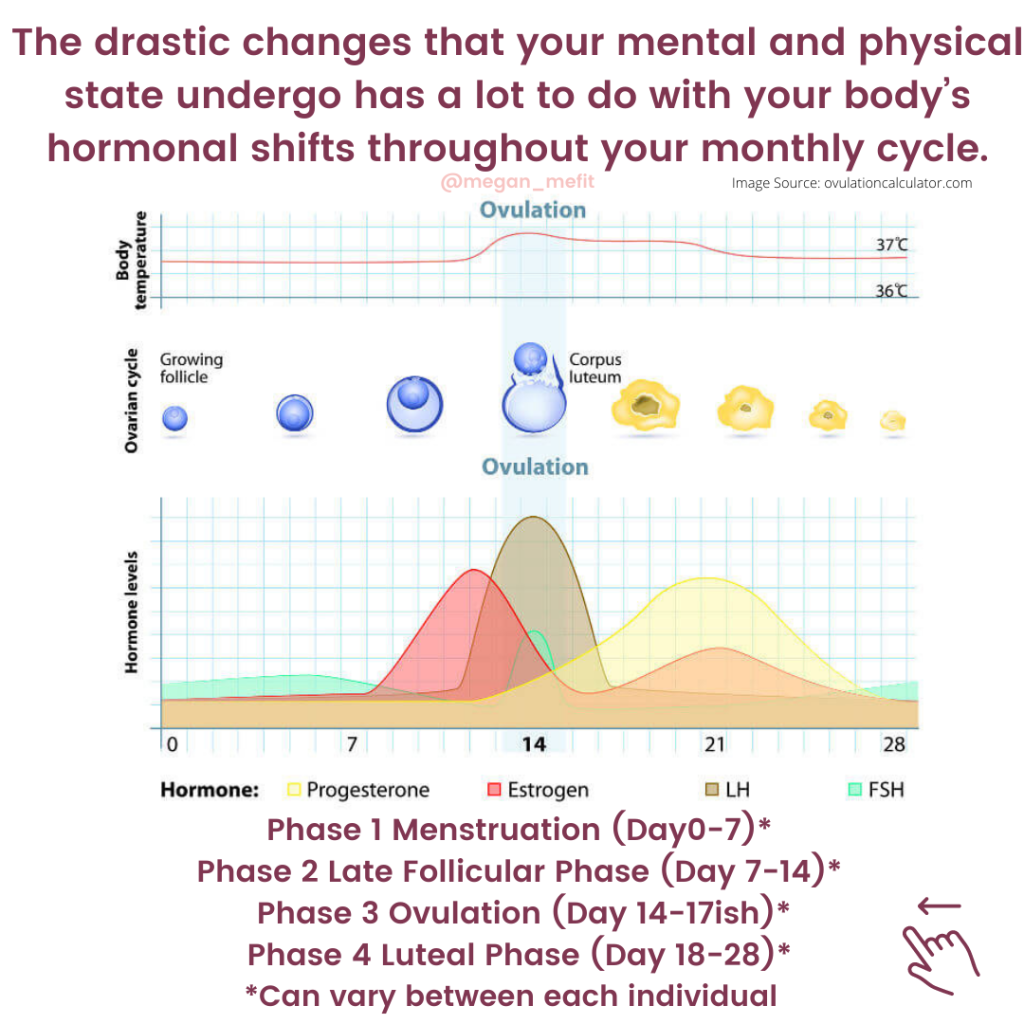
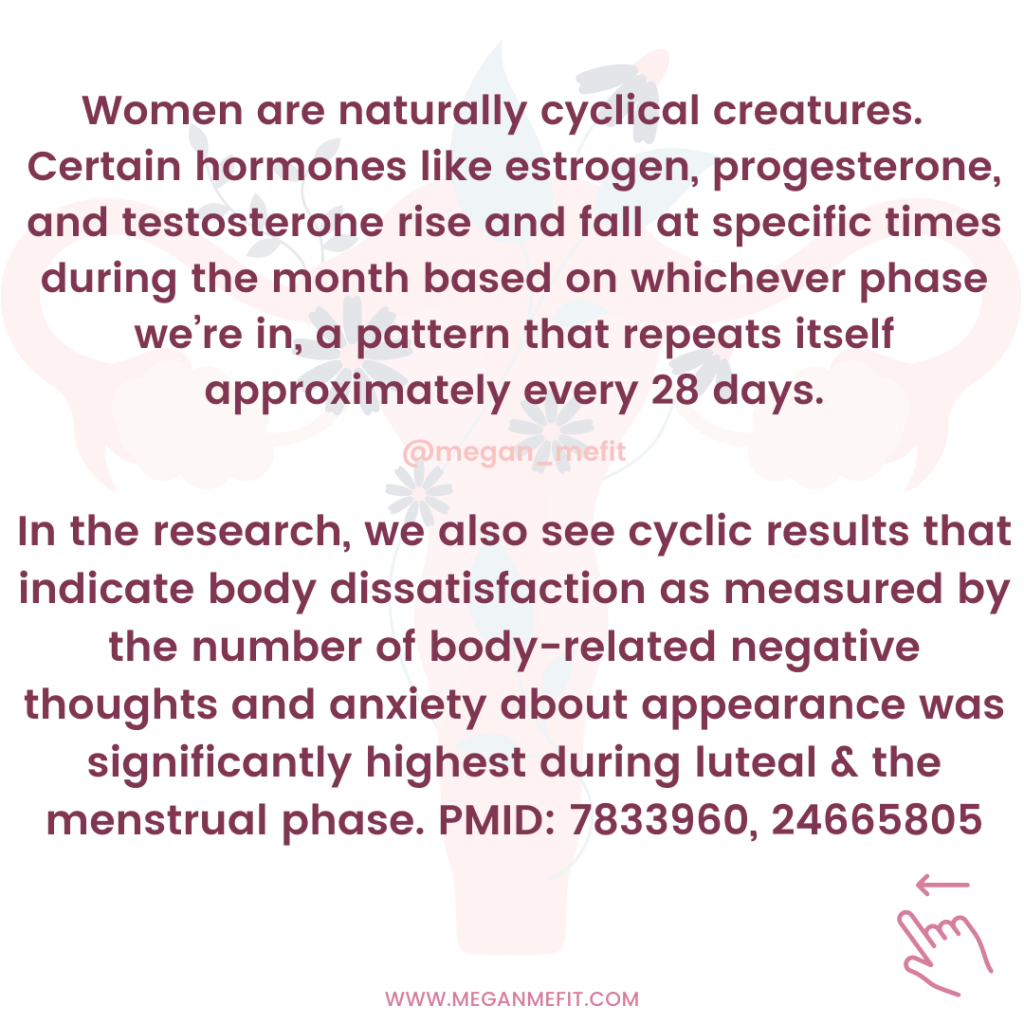
How your monthly cycle can impact body image.

🌀Body Image & your cycle🌀

Something I’ve noticed with myself & with clients is fluctuating body image days. 🎢

The more we understand about our monthly cycles, the hormonal fluctuations & how they impact everything from our brain chemistry, energy levels and metabolic function, the better we can support our physiology during these more challenging times.

👉🏻Swipe through to learn what the research says, and my tips for working through this!

Have you ever heard of the term & concept cycle syncing? It was created by @alisa.vitti the founder of @floliving and it’s a practice of planning your life according to the phases of your monthly cycle. Like the foods you prioritize. The movement you focus on, the work project you take on, the social activities you commit to & so forth. It’s more intuitive than you may think!

❤️

Listening to @hormonehealingrd Are you Menstrual podcast 🔊 is informative as well!

✌🏼Looking for more support navigating your cycle with fitness & nutrition? Check out my FREE guide & pro-metabolic strength training guide available for purchase!

LINK to apply for 1:1 coaching ❤️

#bodyimage#bodyimagemovement#bodyimageissues#bodyimagehealing#onlinepersonaltrainer#onlinepersonaltraining#onlinenutritioncoach#nutritioncoach#pms#pmsproblems#womenshealth#womenshormones#womenshormonalhealth#fitnessjourney#dietculturedropout#period#periodproblems#periodtalk#cyclesyncing#womensupportingwomen#women

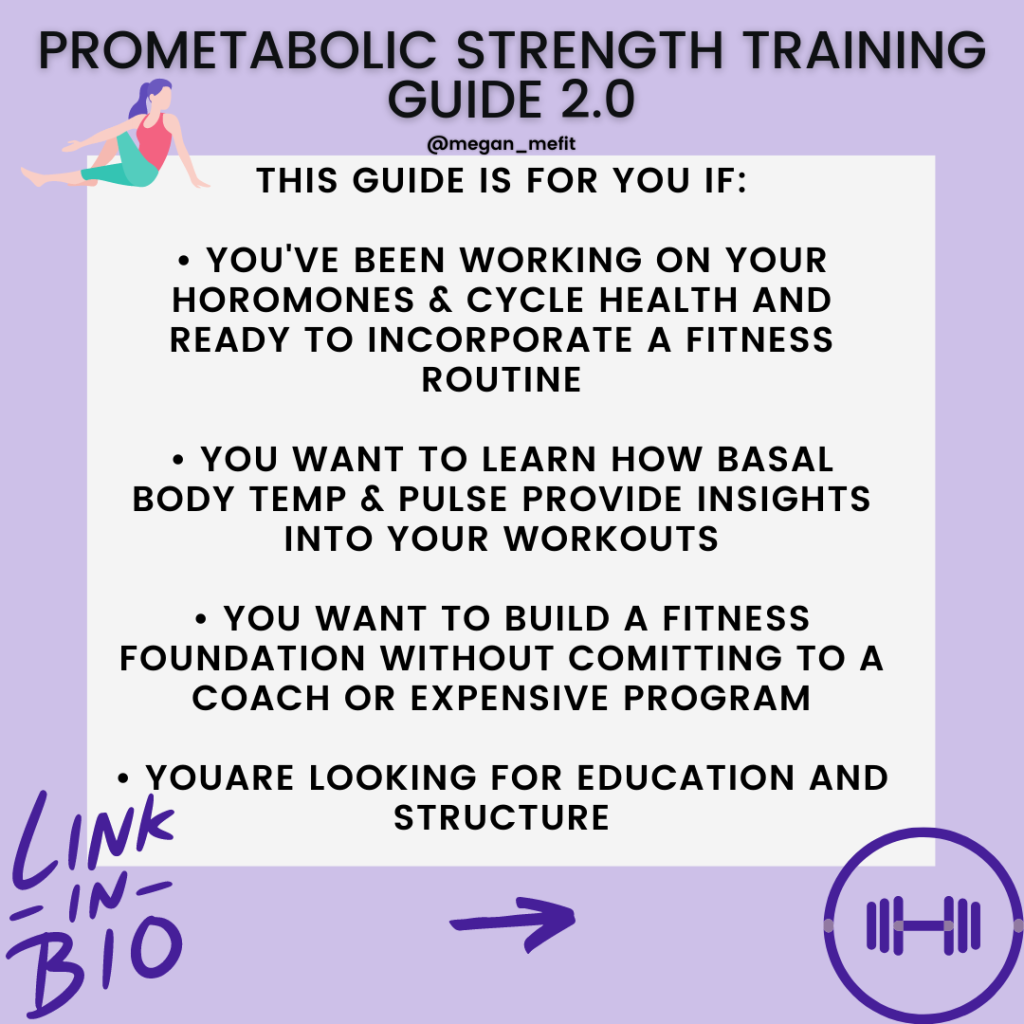
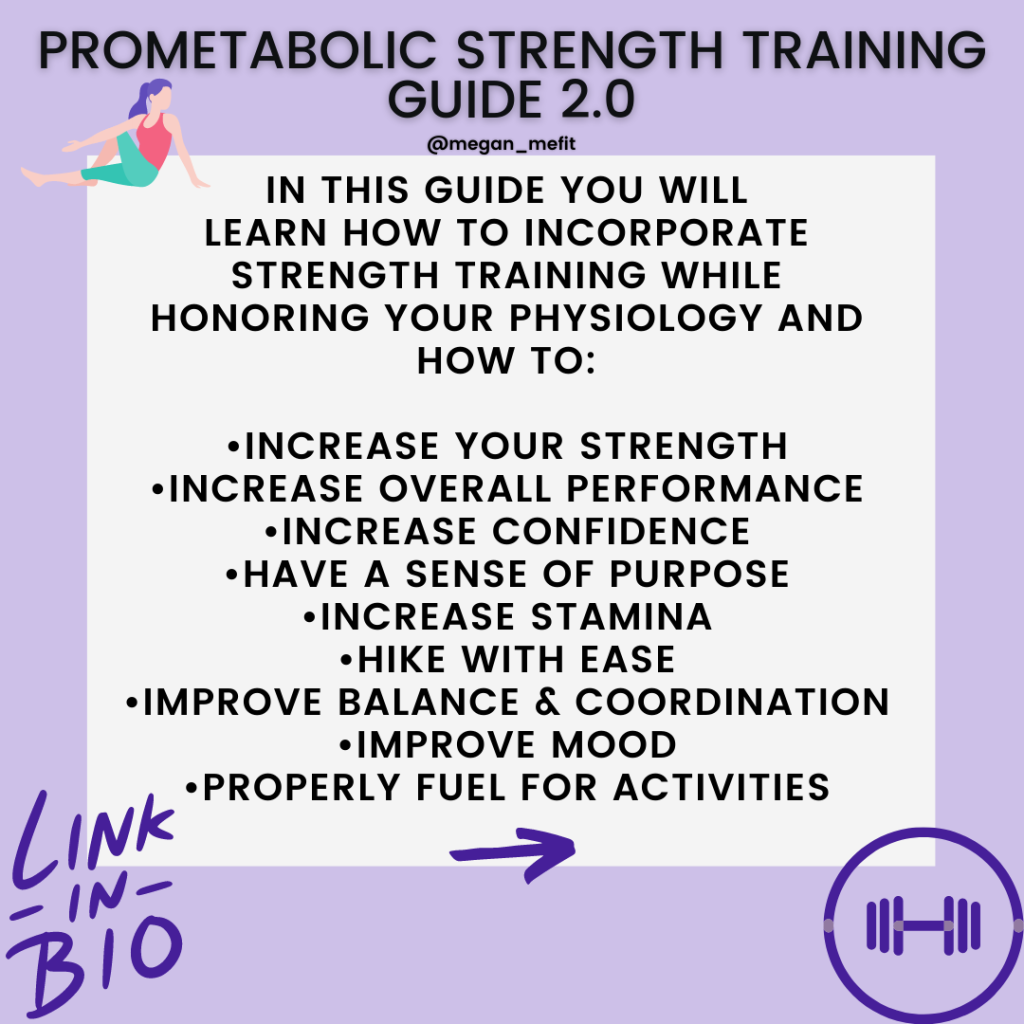
Pro-metabolic Strength Training Guide 2.0

🥁 Drumroll Please! 🥁I am so excited for this guide!

My intentions are to educate you on how to approach strength training while honoring your physiology.

When dealing with hormonal issues, PCOS, thyroid & adrenal issues, and autoimmune flare ups it’s important to be working WITH your physiology not against it.

👉🏻In these women, we typically see low thyroid hormone (either production, conversion or cellular uptake) and high cortisol. So, over-exercising or the KIND of exercise can potentially set you back, push you farther away from achieving hormone balance and reversing your symptoms. 🙅🏻‍♀️

As you know, my message centers on shifting away from the diet culture mentality, over exercising, and “earning” your food, and refocusing on learning to properly and intentionally nourish, appreciate & respect your body.

We can easily fall into the traps of the diet and fitness industry. We constantly chase perfection and the desire to alter our bodies because we live with the belief that we are not good enough. We want to be a smaller size, a smaller number on the scale. I’ve learned these lessons the hard way, as I’ve shared my fitness/health journey coming from a fitness/bodybuilding competition background & the health repercussions of competing.

Swipe through to learn more about it!
👉🏻slide 4 The Pro-metabolic Decision Tree: For clients and I, the top recommendations for non-negotiables prior to incorporating intentional exercise would be: close to ideal temps/pulses, adequate rest and nutritional intake. There is obvious nuance and context here, but this is a general guide.

If you’re low on rest, but really wanting to move your body more than walking/household chores, stick with the blue color-coded workouts which are more core & mobility focused, or a light yoga session. If you’re well rested and well fed, the purple color-coded Strength Training workouts are more appropriate.

LINK TO GUIDES HERE! Check out my FREE guide & pro-metabolic strength training guide available for purchase!

LINK to apply for 1:1 coaching 

#onlinepersonaltrainer #personaltrainer #prometabolic #fitnesscoach #onlinefitnesscoach #onlinefitnesscoaching #fitnessprogram #pcosfitness #womenshealth #womensfitness #strengthtrainingforwomen #strengthtraining #fitfam #womensfitness #thyroidhealing

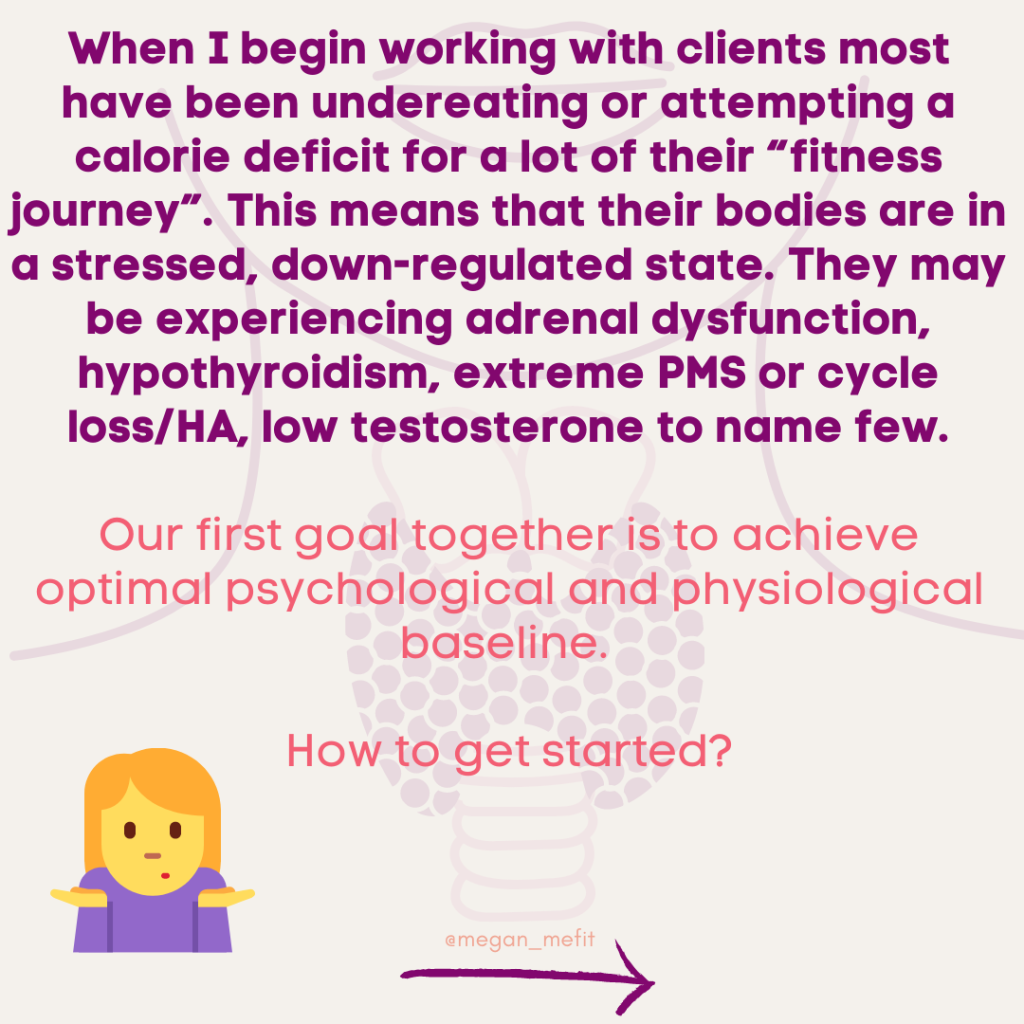
How restrictive dieting (low calories) negatively impacts your thyroid

Your thyroid is a 🦋-shaped gland that powers every cell in your body. It sets the pace for your body to function and operate.

Thyroid health can be so confusing, especially because you don’t need to be diagnosed with a thyroid disorder to suffer from thyroid issues. Hypothyroidism or sluggish thyroid is much more common in women than hyperthyroidism—see symptoms on slide 6.

Swipe👉🏻 to learn how chronic dieting, under-eating, under-nourishing can lead to impaired thyroid function.

It’s important to understand that the years of stressors (Like: undernourishment, overexercising, lack of rest, sunlight, constant stimulation, trauma, halogen exposure, etc.) will not disappear overnight.

Here are some areas to focus on to bring back balance:

Managing STRESS — Developing positive stress coping mechanisms like: journaling, getting outside, asking for help, breath work, taking a bath, therapy, &hanging with pets. Be sure to prioritize morning and bedtime routines, quality sleep, gentle exercise, and support your circadian rhythm by getting enough natural light (and less blue light exposure).⠀⠀⠀⠀⠀⠀⠀⠀⠀
⠀⠀⠀⠀⠀⠀⠀⠀⠀
NUTRIENTS — Our thyroid requires specific minerals, like Vit. A, iodine, zinc, copper, selenium, etc. to properly function. Focus on nutrient-dense foods like shrimp, organ meats, bone broth, quality dairy, &fresh fruits.⠀⠀⠀⠀⠀⠀⠀⠀⠀
⠀⠀⠀⠀⠀⠀⠀⠀⠀
DIGESTION — We need to properly break down and absorb our food to get the nutrients our thyroid requires. We also need enough stomach acid for a healthy digestive process. Try adding in digestive bitters if you suffer from digestive issues.⠀⠀⠀⠀⠀⠀⠀⠀⠀
⠀⠀⠀⠀⠀⠀⠀⠀⠀
TOXINS — Specific chemicals called halogens (bromine, chlorine, and fluorine) compete with iodine and bind to thyroid receptors, preventing thyroid hormones from working properly. Filtering fluoride and chloride out of your drinking and bath/shower water helps those with thyroid dysfunction.⠀⠀⠀

Looking for more support navigating your cycle with fitness & nutrition? Check out my FREE guide & pro-metabolic strength training guide available for purchase!

LINK to apply for 1:1 coaching 🫶🏻

#onlinepersonaltrainer#onlinefitnesscoach#chronicdieting#hormoneimbalance#womenshealth#strengthtrainingforwomen
#thyroid#thyroidhealth#fitnessjourney