Category Archives: hydration

How Clean Eating can be Damaging to Your Mindset and Health

One of the most common phrases I hear clients use when explaining their day-to-day food intake is “I eat clean.”

This phrase brings up may feelings for me. So, be prepared for a lengthy post.

The first is confusion, because what does it even mean to eat clean? and What foods are dirty? Also, the meaning varies from person to person. The second feeling is dismissal, because “clean” eating is a flawed trend of diet culture. I believe that as health and wellness professionals our nutritional guidance should be inclusive, keeping in mind cultural background, socioeconomic status, and psychological impacts of our recommendations and programming. Here, I will unpack the key flaws that I have encountered with the “clean” eating trend.

Socioeconomic Status

A recent study by Nutrition Today identified factors associated with low fruit and vegetable intake among low income families and individuals. The most common barriers were: lack of knowledge about healthy foods, lack of availability and access to fruits and vegetables, poor produce quality, and budget constraints. Health and fitness professionals likely mean well when recommending “clean” eating in their individual nutrition protocols or incorporating “clean” eating challenges into their group training programs. The barriers listed above, which are closely correlated with socioeconomic status and geographic location, may make “clean” eating an unrealistic or unachievable goal for the client.

“Cost of fruits and vegetables and income level are particularly influential on fruit and vegetable purchases, even more so than educational level, emphasizing the importance of budget when making fruit and vegetable purchases.”

Key Take Away: BUDGET MATTERS when making fruit and Veggie purchases.

With this new found understanding, I have completely changed how I communicate produce recommendations with my clients and in my social media content. I now understand that only a small fraction of the population can afford or even access organic foods. This is an example of socioeconomic privilege, so keep these barriers in mind when creating your programs or social media content.

I personally do care deeply about organic gardening and farming practices, and choose to buy organic when it is available, but I curate my nutrition recommendations through the lens of my clients.

White-Washing of Nutrition

Cultural foods should be considered when planning a nutrition protocol. “Clean” or “Healthy” Eating trends often demonize culturally significant foods by labelling them as “unhealthy.” An example I saw recently on in Instagram post instructed readers to “Eat less rice.” Further down the caption it classified Mexican food as “a cheat meal.” Nutrition advice should never criticize a client’s identity or culture. As coaches, we should be helping our clients understand nutrition while also making room to embrace their heritage. A sound nutrition program can be applied to family meal time, and should be all-inclusive. The meals will be good for the whole family*, and will result in a higher adherence rate by the client. (*Any specific and medically indicated meal plans that may not be suitable for the entire family should be started after consultation with an appropriate medical provider.)
⠀ ⠀⠀⠀⠀⠀⠀⁠⠀
All foods can fit a meal plan, and all cultures must fit; not as “cheat meals,”⁠ but as weekly staples that provide nourishment and connection.
⠀⠀⠀ ⠀⠀⠀⠀⠀⠀⁠⠀

Orthorexia: Obsession with Eating Foods Considered “Healthy”

Eating nutritious food is good, but if you have orthorexia, you obsess about it to a degree that can damage your overall well-being. Orthorexia is not an official diagnosis, but the basic idea is that it includes eating habits that reject a variety of foods for not being “pure” enough. Eventually, people with orthorexia begin to avoid whole meals that don’t meet their standards or that they don’t make themselves.

Signs You may Have Orthorexia

  • Worry about food quality. High levels of concern about the quality and source of foods you eat could lead to anxiety.
  • Avoid going out to eat, or avoid eating food prepared by others out of fear that foods you don’t prepare yourself won’t meet your standards.
  • Fear sickness — worry about how “clean” food is, or if it’s “bad” for your health.
  • Show physical signs of malnutrition. When you limit the variety of foods you eat, you may not get all the nourishment you need. You could lose weight as a result.
  • Bury yourself in food research. It’s one thing to spend a few minutes scanning a product label or surfing the web for more information on ingredients. But with orthorexia, you may spend hours thinking about food and planning meals.
  • Refuse to eat a broad range of foods. It’s normal to pass on some foods because you don’t like the way they taste or the way they make you feel. But with orthorexia, you might decide to drop whole categories of foods from your diet — grains, for example; or any foods with preservatives, gluten, or sugar; or all foods that just don’t seem “healthy”; or all of the above.
  • Fear losing control. You feel that you’re doing the right thing by eating healthy. But you may also be afraid that eating even one meal you didn’t prepare — including dinner at a restaurant — can be disastrous.
  • Be overly critical of your friends’ food choices. At the same time, you may have no rational explanation for your own.
  • Find yourself in a vicious circle. Your preoccupation with food causes you to bounce between self-love and guilt as you change and restrict your diet.

How Clean Eating is Damaging to Female Physiology

“Clean Eating” can mean different things to different people, but here are some of the most common “Clean” eating behaviors I see among women:⠀⠀⠀⠀

1. Avoiding red meat and eating mostly chicken.⠀⠀⠀⠀⠀⠀⠀⠀⠀
2. Subscribing to a low-carb or plant-based diet.⠀⠀⠀⠀⠀⠀⠀⠀⠀
3. Prioritizing raw veggies and salads.⠀⠀⠀⠀⠀⠀⠀⠀⠀
4. Snacking on nuts in excess.⠀⠀⠀⠀⠀⠀⠀⠀
5. Eliminating dairy, gluten, or sugar.⠀⠀⠀⠀⠀⠀⠀⠀⠀
⠀⠀⠀⠀⠀⠀⠀⠀⠀
Before you feel attacked, I have done ALL of these things. My goal is not to hurt feelings, but to convey the fallacy of “clean” eating-it is just another scam perpetuated by diet culture, and WILL wreak havoc on your hormones. Here’s why:⠀⠀⠀⠀⠀⠀⠀⠀⠀
⠀⠀⠀⠀⠀⠀⠀⠀⠀
👉Poultry does not contain the same density and multitude of nutrients found in red meat (i.e., B vitamins, iron, and zinc). Moreover, eating the same food on repeat can cause food sensitivity. Variety is always better!⠀⠀⠀⠀⠀⠀⠀⠀⠀
👉 Excessive raw vegetables in the diet can negatively impact thyroid function, causing suboptimal metabolism and slowed digestion.⠀⠀⠀⠀⠀⠀⠀⠀⠀
👉 Thyroid hormone conversion requires glucose, and low-carb diets take away the body’s preferred source of energy.⠀⠀⠀⠀⠀⠀⠀⠀⠀
👉 A plant-based diet lacks bioavailable vitamins, minerals, and protein; all are required to support healthy hormones. Sorry, don’t hate the messenger!⠀⠀⠀⠀⠀⠀⠀⠀⠀
👉 Nuts and seeds are difficult to digest and can irritate the gut. Polyunsaturated Fatty Acids (PUFAs) in general are anti-metabolic and can contribute to inflammation when eaten in excess.⠀⠀⠀⠀⠀⠀⠀⠀⠀
👉 Eliminating whole food groups = less nutrient variety and less food options that can result in food sensitivities! It can also lead to issues with food restriction behaviors that are stressful on the body. (Extra stress is never good!)

I believe using the phrase “clean eating” is a damaging part of diet culture influence and as health and wellness professionals, we can and should be providing sustainable nutrition protocols that are curated to the needs of each client and are culturally inclusive, and rooted in evidence-based science.

SOURCES:

Huang, Yancui MS; Edirisinghe, Indika PhD; Burton-Freeman, Britt M. PhD, MS Low-Income Shoppers and Fruit and Vegetables, Nutrition Today: 9/10 2016 – Volume 51 – Issue 5 – p 242-250
doi: 10.1097/NT.0000000000000176

Low-Income Shoppers and Fruit and Vegetables: What Do They T… : Nutrition Today (lww.com)

Orthorexia Nervosa: Signs & Treatment (webmd.com)

How clean eating is hurting your hormones-Women’s Health Dietitian Nutritionist Amanda Montalvo, RD, FDN-P
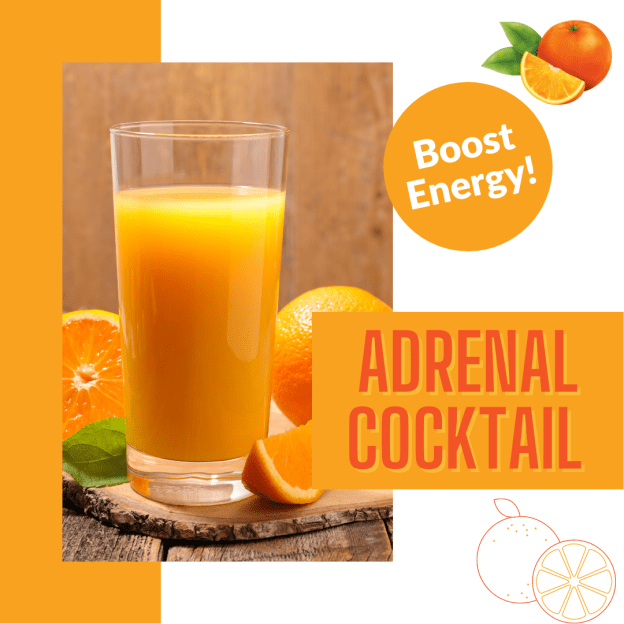
Adrenal Elixir Recipes

The idea of the adrenal elixirs is that it takes stress off the adrenals by providing sugar + replaces vital nutrients that have been lost while under stress.⁠

When our bodies react to stress and make cortisol, magnesium is also released to help the body cope and make more energy. ⠀⠀⠀⠀⠀⠀⠀⠀⠀

Along with magnesium, sodium and potassium are also used up during this process to alter our blood pressure, build alertness, and help our bodies make more energy to respond to stress. ⠀⠀⠀⠀⠀⠀⠀

These elixirs can be used as a tool to sip on between meals and should instantly calm you down, make you feel more relaxed and grounded. It can be used as needed, usually 1-3x per day.⁠ Particularly good for those with poor blood-sugar handling, compromised liver function, low thyroid, and prone to hypoglycemia. Prevent a blood-sugar crash (and the damaging adrenalin rush that comes with it) by slowly sipping on this mix between meals, during exercise or as a complete and highly replenishing snack. A balanced mix of protein, carbohydrates, fat, electrolytes and other minerals.

Recipes:

There are two main options for adrenal cocktails, first is with electrolyte powders which involves less ingredients and good for those with blood sugar concerns/insulin resistance.

  1. Rayvi makes mineral intake easy. Support energy and vitality by properly hydrating your cells and providing an antioxidant boost. CLICK HERE TO SHOP! Rayvi also has a free guide with more recipes you can download off their site!
  2. Another option available off Amazon is Jigsaw Health Adrenal Cocktail with Whole-Food Vitamin C! Click here to shop!!

The other option is making your own beverage at home.

A good adrenal cocktail usually contains the following:⁠

☀️ 4 oz. Pure Juice (orange juice/lime juice)

☀️ 2 oz coconut water ⁠
☀️ 2 tbsp of A saturated fat (cream or kefir)⁠

☀️ A little bit of protein (2 tbsp collagen)⁠

☀️ Pinch of sea salt⁠

If you can’t do collagen, a clean casein powder or goat’s milk whey pairs nicely. Or omit the fat and protein and opt for a piece of parmesan cheese on the side of your salted juice.⁠

If you can’t do dairy, replace the cream for an additive free coconut cream.⁠

If you can’t do OJ, you can use guava juice, mango juice or papaya juice. 

#vitaminclub#orangejuicebrand#potassium#foodideas#nourishment#nourishnotpunish#complexcarbs#nourishyourself#functionalmedicine#nutritionist#holisticnutrition#pcosfood#pcosweightloss#carbscarbscarbs#carbsaregood#hormonebalance#hormoneimbalance#hormonebalancing#bedtimesnack#stressrelief#stressedout#periods#pms

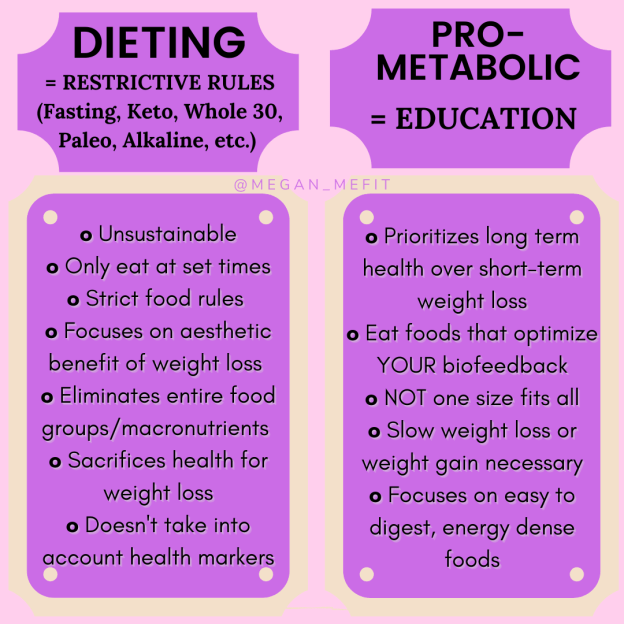
Diets vs Pro-metabolic Nutrition

Throughout my career, I’ve seen clients who have tried it all.  Weight Watchers, Fad diets, yo-yo diets resulting in irrational fears around foods, and not learning much in the process.

In the pro-metabolic community, we eat to nourish our bodies. By prioritizing your health as a means of losing weight, because a body in balance can do amazing things.  
When on-boarding new clients, a lot say:

•”What foods should I avoid? Is this food ok?”

•”I’ll do whatever you say, I’m so frustrated with how I look in the mirror” 

I get it, we all seek certainty & clarity. “Tell me the rules, I’ll be good and follow! Sell me that product- I’ll do anything BUT trust in my self and the process so I can put the work in.” 

You see, this is why diet culture fails you, These diets/approaches including harsh rules. restriction, avoiding certain foods . Not how to support and to nourish YOUR body.

Pro-metabolic community flipped my world upside down. Rather than excluding foods, it’s all about inclusion, nose-to-tail animal consumption, broths, more nutrient-dense sugars, and eating saturated fats – foods that have either been neglected or demonized by mainstream health and fitness. 

These foods have more bioavailable nutrients. They are easier to digest. And they don’t contain anti-nutrients that inhibit the processes within the body. This is how to support your metabolism. (Your metabolism is all the chemical processes that occur within your body.) And these foods enable all these processes to happen easier with less inflammation and fewer issues. They improve pulses, body temperature and biofeedback like digestion, sleep, stress, energy, mood, etc. This means your body is functioning in the best way possible 

🙌

An emphasis is placed on grass-fed, humane certified protein sources, root veggies, quality dairy, ripe fruits, and all-natural sweeteners (like raw honey).  Please, do what you can afford.

You are eating to nourish. Providing for your body out of self-respect. Pro-metabolic eating may combat the reason you may be experiencing the binge-restrict cycle. When your body gets what it needs, you don’t experience cravings anymore. 

 When working with clients, they create their own nutrition plans based on my guidance and week to week We adjust it, to improve their symptoms, ultimately to reach their goals and find their OPTIMAL – that will look different for everyone. This is why education, monitoring biofeedback and intentionally nourishing our bodies are game changer. 

Is fruit bad for you?

The answer is: NO!
I feel bad for fruit, it’s gotten such a bad reputation over the years! 🤪 It is nature’s candy after all 🍬😁

🍉Evidence suggests that fructose can cause harm when consumed in excess. However, there is not enough fructose in fruit to cause concern.

🍎Whole fruits take time to chew and digest. Because of this, you feel fuller and your body can easily tolerate the small amounts of fructose.

🍉When you’re craving sugar- it’s likely your body needs it. Try incorporating fruits, root veggies and other healthy sugars like raw honey, coconut sugar and maple syrup in your diet.

🍊Ripe, seasonal fruits, tropical fruits, stewed and cooked fruits, jams and jellies are packed full of bioavailable goodness.

🍐Consumption of carbs is essential for a robust hormonal function.

Fruit is:
•Rich in minerals
•Superior Hydration
•Vitamin C-very important for immune function
•High in Fiber: Fiber, especially soluble fiber, has many benefits, including reduced cholesterol levels, slowed absorption of carbs and increased satiety. Plus, studies have shown that soluble fiber can help you lose weight 🙌🏼

•Antioxidants: Various vitamins and minerals are called antioxidants, which help protect cells from damage caused by free radicals. ✨

•Nutrients. fruits tend to be high in several vitamins and minerals that many people don’t get enough of, including vitamin C, potassium and folate.

🍍Fructose stimulates only modest insulin secretion and does not require the presence of insulin to enter cells. And Can help the body use glucose better.

🍒In closing, there is plenty of evidence that shows that a high fruit intake is associated with a lower risk of serious diseases like heart disease, stroke and type 2 diabetes.

#eatyourfruit#fruitislife#fruit#healthylifestyle#nutritionist#nutrition#onlinepersonaltrainer#onlinetraining#onlinenutritioncoach

Importance of Hydration in Sports Performance and Health

How much water do you consume a day? Water is the most vital nutrient to human existence. We can survive far longer without food than without water.
Sedentary women should be consuming at least 74 oz of water a day and men should be consuming 101 oz.
The body’s requirement for water varies in accordance with several factors: environment, activity level, functional losses, metabolic needs, age and other dietary factors.

Paul Chek provides a reliable calculation for meeting our body’s needs. For your minimum daily intake, one should base the calculation on one’s body weight in in kilograms, (lbs divided by 2.2) and then divide that by 0.024. This level of water intake works out at 1 liter plus 1 cup (1250ml) for each 30 kg of body weight.

Example

  • An 80 kg person would require 3 1/3 liters per day = 80 kg divided by 0.024 = 3.3 liters per day.

Drink your way to better health- Hydration changes everything!

  • Protects organs and tissues
  • Lubricates joints
  • Regulates body temperature
  • Carries nutrients and oxygen to cells
  • Helps dissolve vitamins and increases bio-availability
  • Reduces the burden on kidneys and liver
  • Moistens tissues of mouth, eyes and nose
  • Helps prevent constipation
  • Increases muscle tone
  • Reduces risk of disease-Studies have shown that an increase in daily water decreases the risk of colon cancer  up to 45%, reduces the risk of bladder cancer by 50%, and potentially reduce the risk of breast cancer. It is also believed that water may prevent kidney stones and urinary tract infection

Stay hydrated with fruits and veggies!

Cucumber, Iceberg lettuce, spinach, celery(96%), raw radish, zucchini (95%) , Watermelon, strawberries, sweet peppers, green tomato (92%) , Cauliflower, orange, raspberries, peach(87%)

Signs of Dehydration

  • Increased thirst
  • Dry mouth
  • Weakness
  • Tired or sleepy
  • Decreased urine output
  • Urine is low volume and more yellowish than normal
  • Headache
  • Dry skin-skin will “tent” when pinched
  • Dizziness

If you are thirsty, then your levels are already low. Consume small sips during physical activity to not overload the body systems. Ideally you should sip every 15 minutes.

Dehydration’s effect on Athletic Performance

  • Reduction in blood volume
  • Decreased skin blood flow
  • Decreased sweat rate
  • Decreased heat dissipation
  • Increased core temperature
  • Increased rate of muscle glycogen use

Hydration Before, During and After Exercise

Before Exercise

  • It is recommended that individuals drink about 17-22 oz. of fluid ~2 hours before exercise to promote adequate hydration and allow time for excretion of excess ingested water

During Exercise

  • Athletes should start drinking early and at regular intervals in an attempt to consume fluids at a rate sufficient to replace all the water lost through sweating (i.e. body weight loss), or consume the maximal amount that can be tolerated
  • During exercise lasting less than 1 hour, there is little evidence of physiological or physical performance differences between consuming a carbohydrate-electrolyte drink and plain water

After Exercise

  • Drink 600 ml of water for every pound of body weight lost through sweat during exercise with a natural recovery aid or suitable protein shake
  • If training for a prolonged period of time (+60 min), it is essential to have a carbohydrate intake to prevent blood glucose drops and increase glycogen stores in muscles.

Hydration in Sports Performance

Sweat losses of as little as 2% of body weight (less than 3 pounds in a 150-pound athlete) can impair performance by accelerating the onset of fatigue. This is important because some athletes can lose 5 to 8 pounds of sweat or more during practice or competition. So it’s easy for athletes to become dehydrated if they don’t drink enough to replace what is lost in sweat.

There is clear research to show that working at different intensity levels and duration will decrease blood plasma volume, but as long as you have been maintaining hydration throughout the day you will be fine to train. If you have not been drinking during the day to maintain your hydration, your body will be fighting for the use of water.

  • 15-20% decrease in 1 min bouts of exhaustive exercise
  • 7.7% decrease when training at 40% of 1 rep max
  • 13.9% decrease when training at 70% of 1 rep max
  • Sweating causes additional plasma loss
  • Reduced plasma volume will increase blood viscosity which has been linked to impeded blood flow thus limiting oxygen transport

What is Blood Plasma? Plasma is made up of water, plasma proteins, and cellular nutrients (such as electrolytes, enzymes, hormones, antibodies and waste products). Its primary role is to aid transport of the red blood cells (erythrocytes), white blood cells (leukocytes) and platelets (thrombocytes) in and around the body at rest or during exercise.

Electrolytes are minerals (calcium, chloride, magnesium, potassium, sodium ions) in your blood and other body fluids that carry an electric charge. Electrolytes  affect the amount of water in your body, the acidity of your blood (pH), your muscle function, and other important processes. The body loses electrolytes as it sweats.

SODIUM: Maintains water balance, activates thirst response, prevents water intoxication & hyponatremia, prevents cramps by enabling normal muscle contraction.  Influences performance of other minerals; enables nerve impulse transmission and maintains normal blood pressure

Potassium: Maintains water balance, stimulates metabolism of proteins & carbohydrates; helps muscles use glycogen and prevents muscle fatigue; enables normal muscle contraction.

Chloride: Maintains water balance; prevents dehydration, helps the body break down protein, absorb minerals & vitamin B12, enables normal muscle contraction, relaxation and nerve impulse transmission.

Magnesium: Participates in the conversion of ATP (adenosine triphosphate),  stimulates the metabolism of carbohydrates & fats; helps the body build proteins, decreases pain from sports-related injuries & excessive physical activity; enables normal muscle relaxation; prevents muscle cramps & spasms. Also, influences performance of other minerals; enables nerve impulse transmission; decreases vulnerability to disease; alleviates symptoms of numerous medical and psychiatric conditions

Sports Drinks are to be avoided

Do not count on sports drinks to provide you with the adequate amount of electrolytes, as most only include sodium and potassium.  Gatorade’s latest product introduction, Endurance, which claims to have five electrolytes and yet contains only a whopping 400 mg of sodium and 180 mg of potassium. What about the other electrolytes? Calcium and magnesium are mentioned; however, Endurance provides less than two percent of the Daily Value for these two critical electrolytes. A 2005 study published in General Dentistry reported that some popular sports and energy drinks destroyed tooth enamel more effectively than cola due to their high sugar content.

A balance of all electrolytes is necessary to maintain optimal hydration and endurance. Not only do you lose sodium in sweat, but you also lose other critical electrolytes like magnesium, and since most people don’t get enough magnesium, serious deficits can be occurring. The bottom line is to not count on plain water and sports drinks to meet your body’s hydration and electrolyte needs. Plain water (including bottled “mineral waters”) doesn’t contain a substantial quantity or balance of the essential electrolytes you require to stay adequately hydrated, replace electrolytes lost in sweat, and maintain optimum performance. As for sports drinks, the high-sugar content of most of these beverages often causes bloating, stomach cramps, and can impair your hard-fought training and performance at the moment when it may matter most.

  Adding electrolytes to water is a simple idea.  It provides pure electrolytes and nothing else. It powers rapid hydration and quickly replaces all lost electrolytes—not just sodium. It supports performance, stamina, and recovery, and delivers electrolytes evenly to ensure optimal hydration. And unlike sugar-loaded sports drinks, this metohd doesn’t involve calories, flavorings, sweeteners, colors or sugar, all of which hold the potential to hinder performance.  I use ConcenTrance Mineral drops in my water daily.  

Water is the most vital nutrient to human existence. Hydration is vital to any successful athlete. I hope this inspired you to tune into your daily water consumption and electrolyte balance. Cheers to H20!

References:

http://www.humankinetics.com/excerpts/excerpts/dehydration-and-its-effects-on-performance

http://www.acsm.org/

Click to access electrolytes_and_dehydration.pdf

http://www.bodybuilding.com/fun/behar12.htm

Click to access hydrationcriticaltoathleticperformance.pdf

http://www.kellygarsia.com/the-importance-of-hydration/