Category Archives: Exercise

What about milk alternatives ?

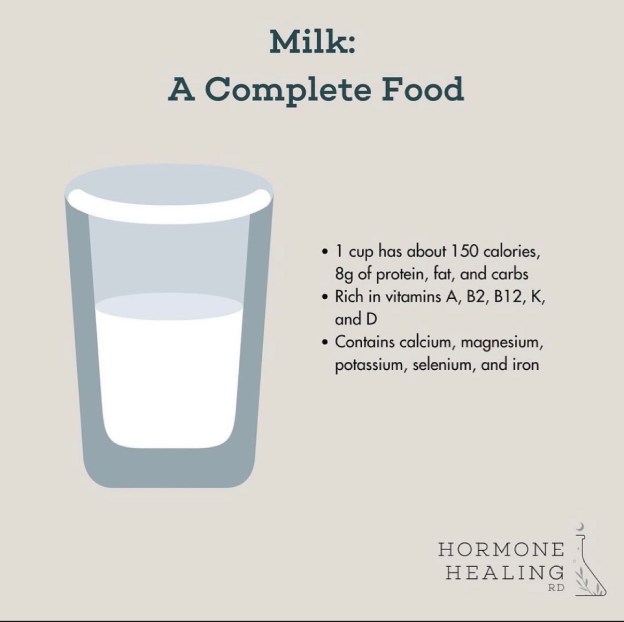
Today, I wanted to share @hormonehealingrd post on Milk alternatives.

Let’s start with comparing the top 4 most common milk alternatives to actual milk:⁣

1 cup of milk has about 150 calories and 8g of protein, fat, and carb. This makes it an extremely balanced food. ⁣


When replacing milk with something else, it is important to keep this in mind.⁣

If you swipe to the second image, you will see that none of the milk alternatives were as balanced in macros. ⁣

They also all lacked protein except for soy milk. Many people have soy allergies or health concerns when it comes to soy. It also often contains synthetic additives and isn’t the best flavor-wise, therefore, I don’t recommend it.


The other concern when it comes to these alternatives is that they all contain anti-nutrients called phytic acid. These bind to minerals and reduce absorption. ⁣

Lastly, almonds and soy both contain polyunsaturated fatty acids AKA PUFAs. ⁣
⁣These types of fat are less stable and can create more stress and inflammation in the body. ⁣

So what milk alternative do I recommend? ⁣

Hands down, coconut milk 🥥⁣

Coconut milk is much lower in phytic acid, it has saturated fats and medium chain triglycerides, which are both beneficial for hormone & metabolic health, AND it’s high in potassium (great for thyroid and overall health). ⁣

The biggest thing to remember is that there is very little protein in coconut milk. ⁣

If using it for a substitute for something like Greek yogurt, you’d want to make sure you add some protein in there (collagen or bone broth protein is a great option). ⁣

I hope this breakdown was helpful when considering a milk alternative. Please check out my dairy series for more info on successfully including dairy in a hormone friendly diet 🤓⁣ 🤍

Repost from @hormonehealingrd

#nutrition#controversialtopics#milkalternative#dairyfree#nutritionist#coconutmilk#milk
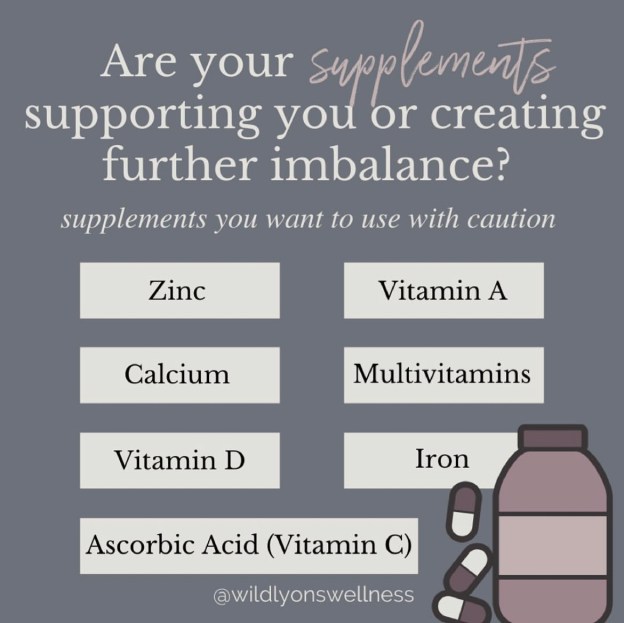
Supplements to be cautious with

How many times have you been told take these supplements? A multi or prenatal? Maybe you were told to consume foods enriched with vitamins A + D?

Or perhaps you were “influenced” by some random person to take said supplements promising to boost immunity, heal acne, or aid in weight loss.

I know girl, i’ve been there.

I get it. These nutrients are important but ONLY if they are in balance with one another.

Supplementing in isolation, in abundance, in the incorrect ratios will create an imbalanced mineral shit storm in your body.

Cough, cough, multivitamins + prenatals.

Minerals are a game of cofactors, they all work in relation to one another + need cofactors to be utilized. If one is deficient another will accumulate. This is our bodies defense mechanism.

Examples:

Zinc antagonizes copper as they compete for binding sites. If you are deficient in copper, iron accumulates.

Iron depletes vitamin E and we got enough of it floating around in our tissues, see previous posts.

Copper dysregulation is one of the most common things I see in my practice when hormone struggles are present.

Vitamin A in the form of beta carotene is not only hard to convert to retinol but it has an intimate relationship to vitamin D.

Calcium in excess to magnesium causes calcium to precipitate out of solution + contributes to calcium deposits, as well as magnesium deficiency.

Vitamin D in isolation causes issues with calcium metabolism (calcification), increases magnesium burn rate, decreases potassium, A + copper.

Vitamin C (ascorbic acid) is a derivative of vitamin C. This form depletes copper.

Multivitamins are never in the correct ratios, not nearly as bioavailable + typically synthetic.

Nature knows best + provides food in the perfect package with all the cofactors to support each nutrient, especially with the consumption of animal sourced foods. Bioavailability is 10 fold to supplements.

Foods to focus on: grass-fed meats + dairy, shellfish, eggs, roots, + fruits.

You want to be a nutrient-dense bitch, ditch the enriched. 💁🏻‍♀️👸🏻

For real tho, ditch the enriched foods, synthetic multi’s, + vitamins in isolation + work on getting your nutrients from food.

REPOST from @wildlyonswellness

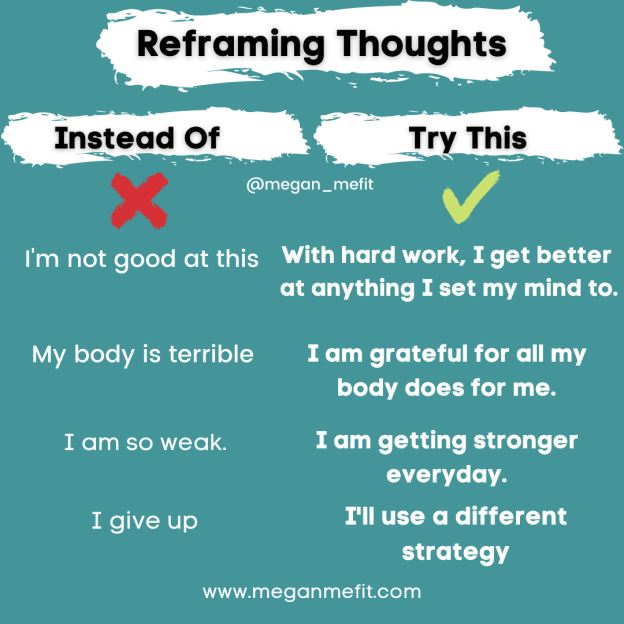
Reframing negative thoughts…

Many of us struggle with negative self-talk.⁠

We put ourselves down, criticize ourselves, and beat ourselves up… and some of us do it so much we don’t even realize we’re doing it!⁠

Negative self-talk can become a habit, and it’s an important habit to break because the thoughts and words we say and think shape our reality. 🙅🏾‍♀️🙅🏻‍♀️🙅🏿‍♀️🙅🏽‍♀️🙅🏼‍♀️ ⁠
Thankfully, studies have shown that using neutral or positive affirmations can help us rewire our brains and change our outlook! 🧠⁠

❓How❓⁠

By disrupting these negative thought patterns and reframing them into statements that serve you better. Basically, by being deliberate with your self-talk!⁠

Notice that these statements don’t have to be rah-rah positive if that doesn’t feel genuine to you. Neutral statements totally work in disrupting negative thought patterns. ⁠

(And once you’ve moved yourself securely into neutral statements, you can work on practicing turning neutral into positive.)⁠

Even if you have difficulty fully believing these affirmations right off the bat, the more you practice, the more you’ll be able to stop negative thoughts before they begin! ⁠

Let’s work together 🤗
Link in bio for coaching ✌🏼💜
🇺🇸 🎇 Use Discount code HOLIDAY to save 10% off first billing cycle!

#reframeyourthoughts
#cbttherapy#onlinenutritioncoach#nutriton#nutritionist#dietculturedropout#mindsetmatters#flipit#selfdevelopment#selfcompassion#awareness#awarenessiskey#explorepage
#onlinepersonaltrainer
#hudsonvalleyny#newwindsorny#newyorkfitness#healthylifestyle#whatyouthinkyoubecome

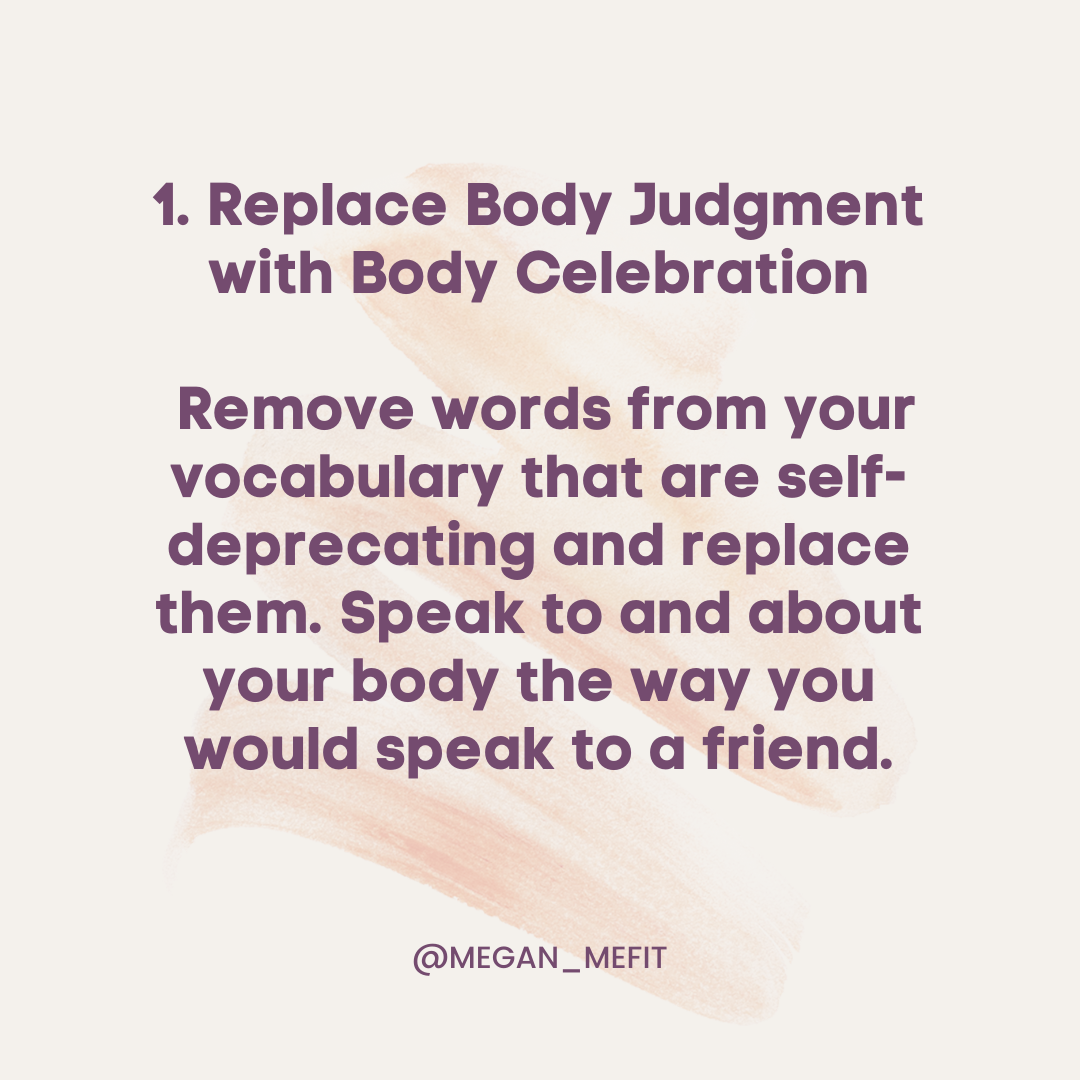
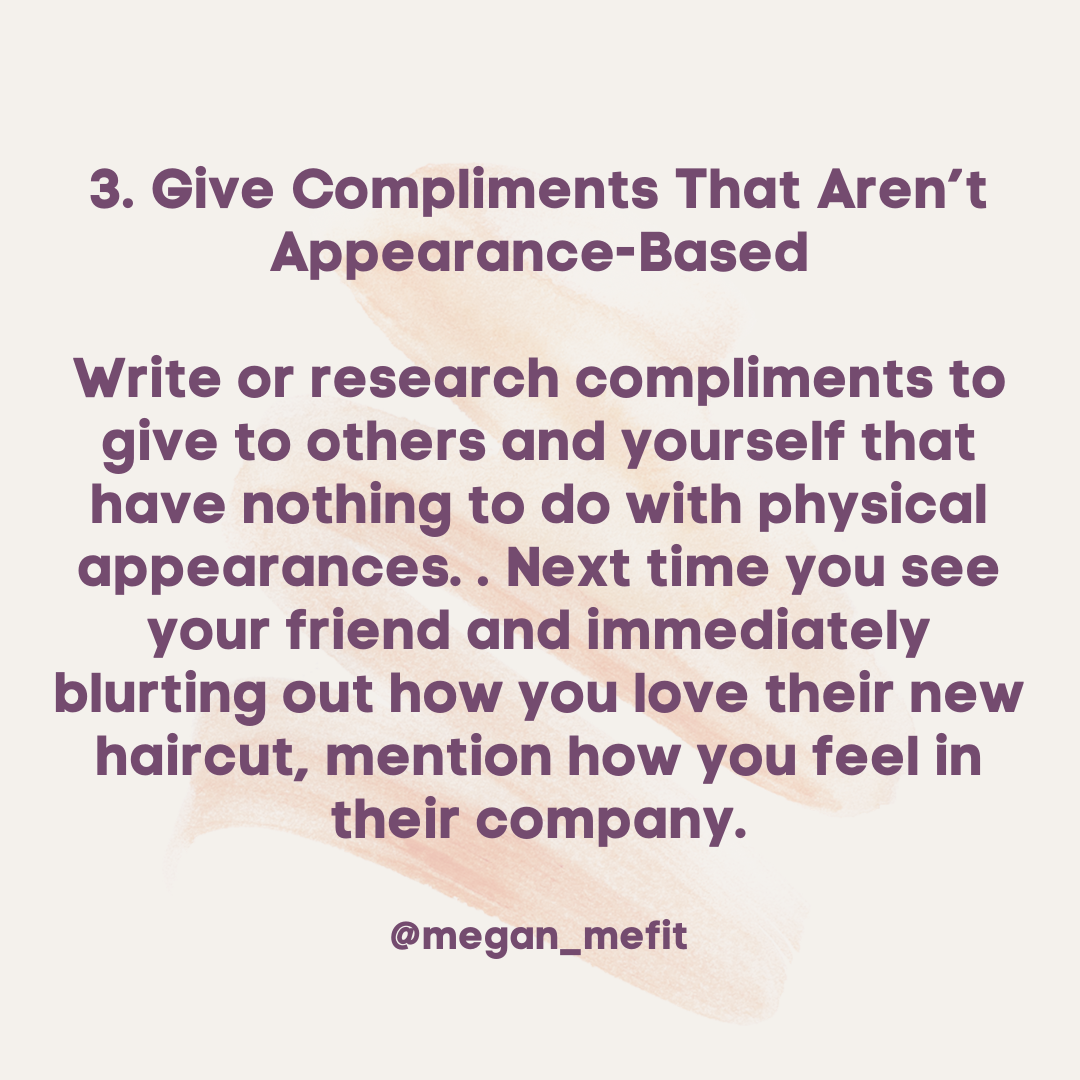
Words of advice that may help improve your body image….

Negative body image (or body dissatisfaction) involves feelings of shame, anxiety, and self-consciousness. People who experience high levels of body dissatisfaction feel their bodies are flawed in comparison to others, and these folks are more likely to suffer from feelings of depression, isolation, low self-esteem, and eating disorders.

•85% of women and 79% of girls skip important activities due to body dissatisfaction.

•Those who frequently look at “fitspiration” on Instagram are less likely to be satisfied with their bodies and more likely to want to be thinner.

•70% of girls with a poor view of their bodies won’t be as vocal about opinions

•54% of women say they’re their own worst critics While we all may have our days where we feel awkward or uncomfortable in our bodies, the key to developing a more positive body image is to recognize and respect our natural shape and learn to overpower those negative thoughts and feelings with positive, affirming, and accepting ones.

Accept yourself. 💕

Accept your body. 💕

🤍

SOURCES:2021 Body Image Facts, Figures, and Statistics | Beauty Schools Directory[26] Fardouly, J., Willburger, B. K., & Vartanian, L. R. (2017). Instagram use and young women’s body image concerns and self-objectification: Testing mediational pathways. New Media & Society, 20(4), 1380-1395. doi:10.1177/14614448176944992021 Body Image Statistics: 40 Shocking Body Image Facts (breakbingeeating.com)#bodyimage#eatingdisorderawareness#onlinepersonaltrainer#fitness

Positive Body Image

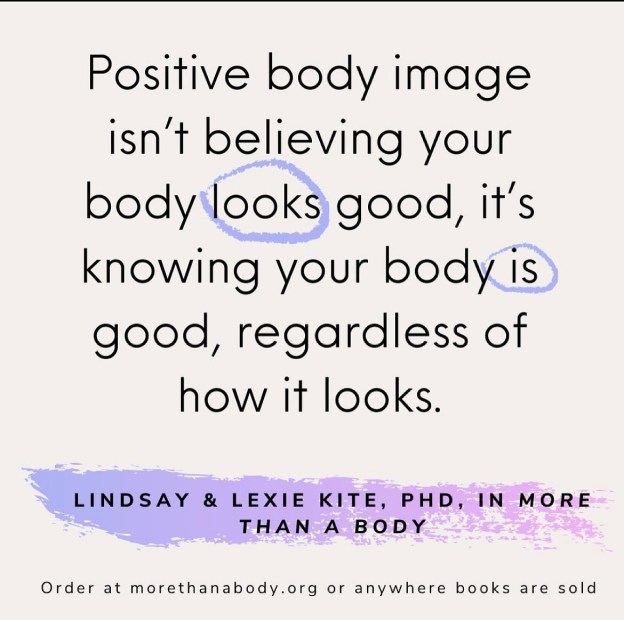
☝🏽This is THE definition of positive body image. If you haven’t read More than a Body 📖, you need to. 🤍

Let’s dig into this idea:

✖️“We are all at a severe disadvantage when our body image is so deeply tied to how we look (or how we think we look). Too many of us not only feel awful about our looks, since we can never achieve or maintain the aspirational beauty ideals presented to us, but also feel awful about our dynamic, adaptive bodies overall because all we care about is how they look. This is truly the root of negative body image.

✖️So how do we fix this? The most popular strategy for promoting positive body image relies on messaging such as “All bodies are beautiful” or “Our flaws make us beautiful.” Those ideas might provide a temporary mood boost and are catchy marketing slogans, but ultimately they don’t get to the root of the problem. Regardless of how the definition of beauty expands, it’s still being reinforced as the most important thing about us. A more effective approach to healing our body image issues needs to reflect the understanding that focusing on the appearance of our bodies is the *problem.*

✖️Each of us has grown up in and experienced every second of life inside our own incredible bodies, and yet we judge and define how we feel about our bodies by how we think they look to others? That thought would be laughable if it weren’t so cryable. When we can understand and relate directly to our bodies by experiencing our physical selves from the inside, we can see more in our bodies and ourselves. No more trying to squeeze ourselves into the narrow molds of our cultural beauty ideals, and no more trying to stretch our cultural beauty ideals to fit all of us. No more struggling to convince ourselves we are all beautiful since beauty is the greatest source of value and confidence we can imagine. Let’s imagine something better than beautiful for ourselves and everyone we love.”

Repost from @beauty_redefined

🚨 The hardcover book is on SALE for $11/each + free shipping when you order 3+ on Amazon! (Also at Target, but they sold out). And it’s on audiobook & Kindle – all linked in bio. #morethanabody

PSA: Your watch has no idea how many calories you burn

Your watch ⌚️ doesn’t have a clue how many calories you burn 🔥

•A study published in International Journal of Environmental Research and Public Health, Researchers have found that, five brands of commercially available fitness trackers on average, were reasonably accurate with measuring heart rate, but wildly ineffective at estimating calorie burn 🔥 for energy expenditure.

🤪The scientists found that the wearables overestimated calorie burn by 14 to 23%.

Those findings reinforce a 2017 study at the Stanford School of Medicine, in which researchers looked at seven popular fitness trackers:

•Apple Watch
•Basis Peak
•Fitbit Surge
•Microsoft Band
•Mio Alpha 2
•PulseOn
•Samsung Gear S2

All devices scored poorly, with a medium error range being from a dismal 27.4% for the Fitbit, to shockingly bad 96.2% for the PulseOn.

While these trackers can be useful, You can see if you upped your activity or intensity from the day or week before to gauge your own progress.

But please don’t go trusting these numbers as facts.

MDPI Source: ijerph16173037

#onlinepersonaltrainer#personaltrainer#fitness#smartwatch#calorieburn#psa#fitnesscoach#healthylifestyle#calories#cico#cardio#cardioworkout#heartratetraining#strengthtraining#orangetheoryfitness#orangetheory#hiitworkout#hiit#hiitcardio#hiitcardioworkout#stepgoal#getyourstepsin#neat#newyorkfitness#truthbomb#science#evidencebased#publicserviceannouncement#explorepage

Lack of willpower is actually NOT a thing…

“Lack of willpower” is actually NOT a thing. It’s typically a mindset issue.

Willpower/self-control is like a muscle, it can be trained to grow stronger and it gets fatigued. Under stress in particular, our self control is drastically reduced. Even though it gets “worn out”, we must understand our mindset limitations are a larger contributing factor.

Let’s start with How do you perceive self-control? Do you have it? Do you not? Can you change it? Are you aware of when your self control is compromised? And why? Awareness here is 🔑, then you can begin working backwards. Where is it stemming from? Like my most recent post, you can’t change what you don’t know needs changing.

Maybe where you need to start, is it with more self-control at all… But simply awareness.

1️⃣Begin with awareness, self-monitoring your behaviors to understanding your triggers.

2️⃣Stress reduction can also do wonders! Stress is an energy sucker! When you have less stress, you’ll have more energy available for alllllll the other things! More posts on this to come.

And maybe 🤔 you do need some tough love for more “willpower”, let me ask you this:

Is some discomfort now worth it, if you know it’s only temporary to make progress? How will you benefit from succeeding?

The stronger you are focused on the personal pay off, the more likely you are to follow through with desired behaviors. That’s you flexing your willpower muscle 🙌🏻💯 The deeper your why (the intrinsic drive) the stronger you’ll be!

Link in bio for coaching 🤍

#onlinepersonaltrainer#willpower#mindset#awareness#personaltrainer#fitnessmotivation#nutriton#strengthtraining#mindsetmatters#dietculturedropout#icaniwill#trainertips#newwindsorny#hudsonvalleyny#newyorkfitness

What is the FIRST and MOST IMPORTANT step in changing your behaviors?

Step ☝🏼 in cultivating change is awareness.

Awareness doesn’t equate to change though.

Cultivating self awareness around triggers, emotions, and self-limiting thoughts that lead to our behaviors is a very important part of the process. 🌀

🎯 Over time the target is to self manage the point of trigger before the behavior itself, “head off” our emotional chain reaction that leads to the unwanted behavior.

Awareness is the 🔑 that begins the ability to implement your intentions.

You have goals and desires, now you must bridge the gap to behaviors and actions.

Awareness is part of how you get there 💕

Link in bio to apply for coaching 🤍

#fitnesscoach#nutritioncoach#onlinepersonaltrainer#personaltrainer#mindsetiseverything#mindsetmatters#mindset#awareness#goals#newyorkfitness#hudsonvalleyny#westpointny#fitnessmotivation#awarenessiskey#awarenessispower
#behaviorchange#mindset#selfcompassion#healthylifestyle#healthyeating#health#healthiswealth#sustainablefitness#sustainablenutrition#trainertips

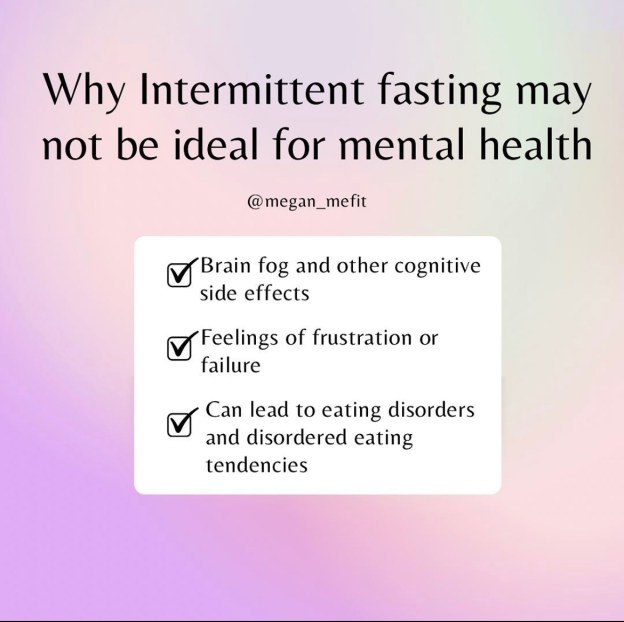
Why Intermittent fasting may not be ideal for Mental Health:

🙅🏻‍♀️ #unpopularfact
Intermittent fasting is certainly not for everyone; individuals who are pregnant, have diabetes, or have struggled with disordered eating should not follow any intermittent fasting lifestyle.

Here are my top 3️⃣ possible side effects of intermittent fasting and how they impact mental health….
👇🏻
1️⃣ Brain Fog and other cognitive side effects 🧠 The brain and body have to adjust to not getting consistent fuel every couple hours, this can lead to blood sugar swings, mood changes, headaches and even fuzzy thinking.

2️⃣Feelings of frustration or failure 😣
For most people it’s not natural to go 5+ daytime hours without eating, feeling frustrated by the demanding structure of IF could lead to eating between meals, or binge eating, followed by feelings of guilt and disappointment.

3️⃣ Can lead to eating disorders and disordered eating tendencies 🍽
Only eating between certain time windows may limit many opportunities for eating, and therefore lead to the under consumption of food and calories.

Some people may develop eating disorders or disorder eating tendencies due to the stress and hyperfocus on food, calories and the time.

Furthermore, following this structure may lead to ignoring of bodily cues of hunger and fullness.

Food may be viewed less important as following the structure is, and may consciously or unconsciously under eat for their body‘s needs, leading to physical, emotional, and hormonal side effects, such as loss of menstruation, hair loss, and dis regulated blood sugars.

💯 Keeping up with ANY strict way of eating is difficult.

🎯 To build a better relationship with food, you might consider trying mindful eating practice or intuitive eating.

#intermittentfasting#mayismentalhealthawarenessmonth#mentalhealthawareness#eatingdisorderawareness#disorderedeating#eatingdisorderrecovery#if#nutritioncoach#onlinepersonaltrainer#unpopularopinions#unpopularopinion#newwindsorny#fitnessjourney#diet#dietplan#dietrules#dietculturedropout#dietculture#intuitiveeating#mindfulness#mindfuleating

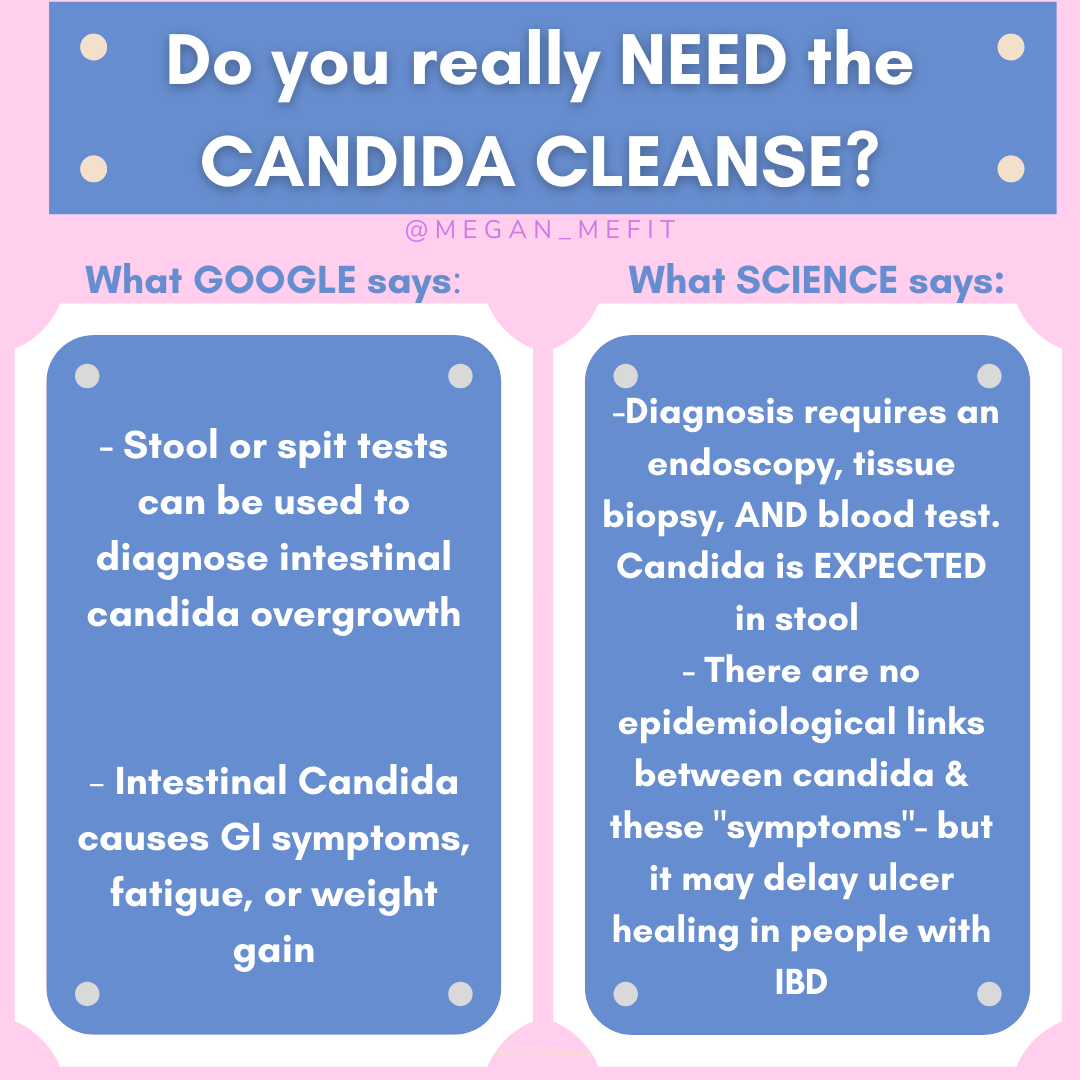
Do you REALLY need the candida cleanse?

  1. Is #candida overgrowth plaguing the population? 😲 👉🏼👉🏼
    I went to the experts @vitaminphd & @andreahardyrd to bring YOU the facts!🤝

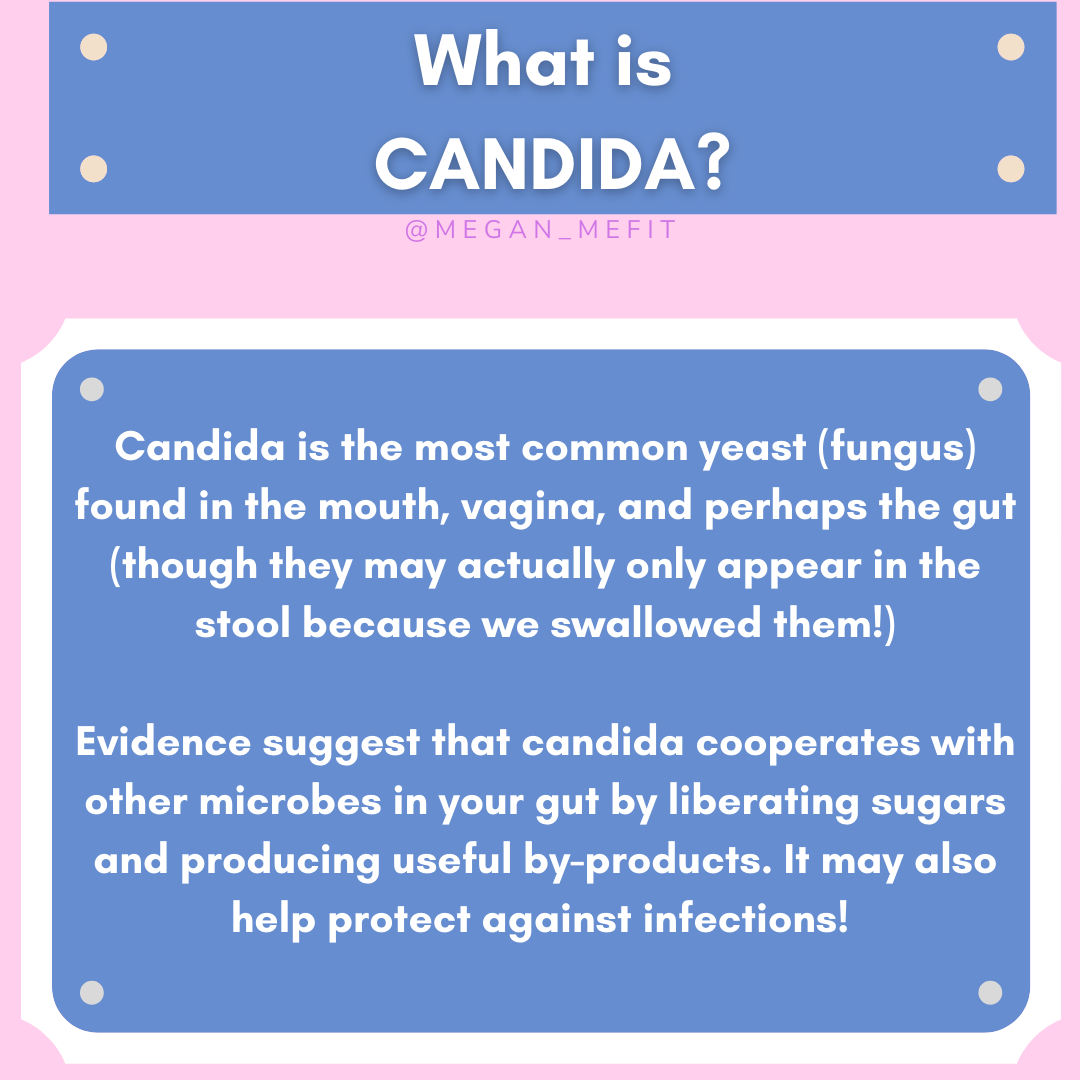
    Candida, or yeast is a fungus that naturally occurs all over our bodies – in our mouths, rectums, vaginas, and on our skin. It’s part of our ‘mycobome’ – (think microbiome but for fungus!)

    While candida can be opportunistic, most of the time it exists in harmony with the rest of our microbes. However, there are practitioners quick to blame ‘candida overgrowth’ in anyone with gut symptoms, fatigue, and weight gain as the culprit. Followed by the prescription of dietary restrictions and a pile of supplements. But what are the facts?

    a spit test or stool test CANNOT diagnose candida – we would expect to find yeast there! Researchers are looking at small bowel cultures to diagnose fungal overgrowth in the gut, but so far, a higher level of yeast hasn’t always correlated with symptoms.

    dietary patterns do not appear to ‘cause’ candida! In fact, one well designed study found no association between refined carbohydrate intake and presence of candida.

    diet cannot ‘treat’ candida! While you might feel better on a diet lower in refined carbs, we need to ask ourselves, did improving diet quality account for symptom improvement?

    candidiasis can occur in the gut – but is typically seen in someone severely immunocompromised – for example undergoing cancer treatments or with HIV. Candidiasis needs to be treated with anti-fungals – not diet!

    many times, there are evidence based explanations for your symptoms – and ones that don’t require crazy restrictive diets. (hello – so many patients get ‘blamed’ for not following dietary protocols strictly enough and that’s why they’re not getting better? A more likely answer is, they didn’t have candida in the first place.)

    Bottom line: fungi makes up a normal part of your guts ecosystem. While it can be opportunistic, there has to be significant compromises to your gut and immune system to make space for yeast to grow. If anyone wants to do a spit or stool test to ‘diagnose’ candida or *gasp* does it based off a constellation of symptoms – you may want to question their approach. #onlinepersonaltrainer #personaltrainer #nutrition #nutritioncoach #cleanse #dietplan #diet #candida #candidadiet #detox #science #trainertips #explorepage #explore #evidencebased