Category Archives: trainer

Carbs Are Life, Ladies! Why Women Need Them More Than You Think 🍞🍝✨

Carbs have been unfairly villainized for decades, but for women, they’re not just a food group—they’re vital for health, hormones, and happiness. Here’s why carbohydrates deserve a place on every woman’s plate:

1️⃣ Carbs for Peak Performance

Carbs are your workout BFF, powering your body to:

  • 💪 Train harder and reach higher intensities.
  • 🔄 Recover faster between sets and workouts.
  • 🚫 Preserve muscle (anti-catabolic) and even support muscle building (anabolic).

Without enough carbs, your body might start breaking down muscle for energy, sabotaging your fitness and strength goals.


2️⃣ Brain Power & Mood Boost

🧠 Your brain runs exclusively on glucose, the simplest form of carbohydrates. Without it, brain fog and fatigue are almost inevitable.

But carbs do more than fuel your brain—they help regulate your mood. Eating carbs signals serotonin production, the neurotransmitter responsible for happiness, calmness, and restful sleep. If you’re feeling irritable or out of balance, a lack of carbs could be the culprit.


3️⃣ Gut Health & Fiber Benefits

Fiber-rich carbs are essential for:

  • 🌱 Feeding your gut microbiome, promoting a healthy balance of good bacteria.
  • 🧬 Supporting gut health by forming short-chain fatty acids (SCFAs) that nourish your colon.
  • 🥣 Enhancing satiety, stabilizing blood sugar, and even reducing cholesterol levels.

A thriving gut contributes to better digestion, stronger immunity, and improved overall well-being.


4️⃣ Thyroid & Hormonal Health

Your thyroid, the master regulator of your metabolism, relies on glucose for optimal function. Carbs support:

  • ✅ The conversion of T4 (inactive thyroid hormone) to T3 (active hormone).
  • 🌿 Balanced cortisol levels, preventing stress overload.
  • 🔋 Steady liver glycogen stores, which fuel your body between meals.

Low-carb diets can disrupt these processes, causing hormonal imbalances, sluggish metabolism, and blood sugar crashes.


5️⃣ Sleep & Recovery 💤

Pairing carbs with tryptophan-rich foods (like fatty fish or dairy) helps your body produce serotonin and melatonin, the hormones responsible for deep, restorative sleep. Even simple changes—like adding kiwi or cherries to your evening meal—can significantly improve sleep quality.


6️⃣ Hormonal Harmony & Women’s Health

Here’s where carbs really shine for women:

  • 🍓 Low-carb diets can disrupt serotonin, progesterone, and insulin levels, which may worsen conditions like acne, PCOS, or endometriosis.
  • 🌸 During perimenopause and menopause, insufficient carbs can exacerbate cortisol spikes and hormonal fluctuations, intensifying symptoms like mood swings and hot flashes.

Women’s physiology is especially sensitive to restrictive diets, and carbs are key to maintaining hormonal balance.


7️⃣ Gender-Specific Research Gaps

Much of the research on low-carb diets and intermittent fasting has been conducted on men, leaving women’s unique needs underexplored. This is significant because:

  • Women’s metabolic and hormonal responses differ due to natural variations in estrogen, progesterone, and cortisol.
  • Studies show that over 30% of women are energy-deficient due to chronic dieting or under-eating, which can impair physical performance, reproductive health, and mental well-being.
  • Restrictive diets like keto or intermittent fasting may disrupt kisspeptin, a neuropeptide essential for reproductive health, potentially leading to menstrual irregularities, increased abdominal fat, and higher depression risk.

A Smarter Approach for Women

Instead of restrictive diets, prioritize balance and nourishment:
1️⃣ Fuel Your Body: Eat every 3-4 hours, incorporating complex carbs, quality proteins, and healthy fats like ghee, tallow, or coconut oil.
2️⃣ Support Nutrient Intake: Avoid nutrient deficiencies by choosing whole, unprocessed foods and limiting refined grains.
3️⃣ Balance Hormones Naturally: Keep carbs in your diet to support serotonin, progesterone, and insulin metabolism.
4️⃣ Exercise Over Extremes: Skip extreme fasting and focus on movement that supports autophagy, like strength training or yoga.


The Bottom Line

Carbs aren’t your enemy—they’re a critical ally for women’s health. From fueling your brain to balancing your hormones and improving gut health, carbohydrates are a key ingredient for living your best life. So, go ahead—enjoy that sourdough or bowl of oatmeal guilt-free. Your body will thank you!

Sources:

Popular trends VS Effective approach in Strength Training

It can feel overwhelming trying to navigate between the popular fitness trends and what is an effective approach—am I right? 😲

@estellecfitness and I notice there seem to be massive gaps in knowledge of how the process of getting stronger (building muscle) works, how does “toning up” work, the importance of following a program etc. With a lack of understanding, it can be easier for diet culture & gimmick tactics to pull one over on you!

That’s one of the main reasons we have teamed up to host our masterclass called Mastering Fitness & Mindset for the Pro Metabolic lifestyle which teaches you to feel empowered by your body, improve your metabolic health with weightlifting, and make exercise a natural part of your life!

𝗧𝗼𝗽𝗶𝗰𝘀 𝘄𝗲 𝗰𝗼𝘃𝗲𝗿
▪️Common things that dictate mindset⁣
▪️How you can make long-term changes⁣
▪️Priorities vs. Excuses⁣
▪️General guidelines for selecting workouts⁣
▪️Red flags in workouts⁣
▪️How to make-over a workout⁣
▪️How is put on muscle and tone up⁣
▪️What a healthy nervous system can do⁣
▪️Myths & truths about muscle growth⁣
▪️Effective reps vs. junk volume (aka effective exercise vs. being exhausted with no results)⁣
▪️How 𝗣𝗥𝗢𝗣𝗘𝗥 strength training is pro-metabolic⁣
▪️Fitness trends vs. effective fitness ⁣

⬆️ Start working SMARTER, not HARDER. You’ve put yourself through enough!⁣

⚡️ Link to grab your ticket to the replay!!

Looking for more support navigating your cycle with fitness & nutrition? Check out my FREE guide & pro-metabolic strength training guide available for purchase!

❤️

TAGS: #strengthtraining#strengthtrainingforwomen#prometabolic#prometabolicfitness#masterclass#dietculturedropout#personaltrainer#onlinefitnesscoach

Understanding Metabolic Health: The Role of Temperature and Pulse

How to use Temps & Pulses for metabolic health insights

In the summer of 2020, my health hit a major low. Years of chronic dieting, over-exercising, relentless negative self-talk, and hormonal birth control had taken their toll. I was living on the edge—eating almost no carbs, avoiding sugar, dairy, and fats, relying only on lean protein, and pushing my body through six days a week of workouts filled with hours of cardio. The result? I felt terrible physically, mentally, and emotionally.

Symptoms of hypothyroidism and adrenal dysfunction were creeping in. My metabolism seemed “broken” or “slow,” but the truth was simpler: I was undernourished and over-stressed.

My Wake-Up Call

I began tracking my basal body temperature but didn’t initially include resting pulse rates. My average waking temps hovered around 96.5°F, and my pulse was a mere 44 beats per minute. Then I discovered the work of Dr. Ray Peat and Dr. Broda Barnes through the pro-metabolic community. Their research flipped everything I thought I knew on its head.

According to Dr. Peat, a well-nourished, healthy individual should have a resting pulse of 85+ beats per minute. A high resting pulse (in the absence of stress) signals good metabolic health and strong repair capacity. This was a stark contrast to mainstream narratives touting a low heart rate as the gold standard of cardiovascular fitness.

Questioning the Mainstream Narrative

The Mayo Clinic states: “Generally, a lower heart rate at rest implies more efficient heart function and better cardiovascular fitness. For example, a well-trained athlete might have a normal resting heart rate closer to 40 beats per minute.”

But is a low resting heart rate truly beneficial? Evidence suggests otherwise. Thyroid health—the thermostat of the body—plays a crucial role in metabolism. A sluggish thyroid often correlates with lower body temperatures and slower heart rates, indicators of reduced metabolic function.

Why Temperature and Pulse Matter

Metabolism refers to the sum of all biochemical reactions in the body. It’s essentially the rate of energy production at the cellular level—the speed at which your body processes and utilizes energy. Your body temperature is a reflection of this activity. People with under-functioning thyroids tend to exhibit low basal body temperatures and slower pulses, which can indicate:

  • Low thyroid function
  • Inflammation
  • Suppressed immune function
  • High stress
  • Estrogen dominance

In contrast, a warm body is linked to better immune function, efficient digestion, reduced inflammation, and overall metabolic health.

How to Track Temperature and Pulse

Tracking these metrics throughout the day provides invaluable insights into your metabolic health:

  • Upon Waking:
    • Follicular Phase: 97.2-97.8°F
    • Luteal Phase: 98.6°F
    • Resting pulse: 75-90 bpm
  • After Breakfast:
    • Temperatures and pulse should gently rise after meals. Food lowers stress and generates heat. If your numbers drop, it may indicate falsely elevated waking temps due to stress hormones like cortisol.
  • Afternoon:
    • Temperatures should peak between 1-3 PM.

What Your Numbers Reveal

  • Higher temp and pulse (in the absence of stress): Optimal metabolic function
  • Normal temp and higher pulse: Active stress response
  • Lower temp and lower pulse: Chronic stress and metabolic suppression
  • Normal temp and lower pulse: Chronic stress or low thyroid function

How to Optimize Your Numbers

If your temperature and pulse rates aren’t within optimal ranges, consider the following steps:

  1. Prioritize bioavailable protein: Aim for at least 100 grams per day.
  2. Eat enough calories: 1,800-2,000+ per day, depending on individual needs.
  3. Include digestible carbs: At least 150 grams daily (e.g., honey, maple syrup, fruit, root vegetables).
  4. Pair carbs with protein: Avoid “naked carbs” to stabilize blood sugar.
  5. Focus on anabolic exercise: Build muscle with strength training to boost metabolism.

Why This Matters

Using temperature and pulse as tools, you can:

  • Monitor how well your body utilizes energy.
  • Evaluate recovery from exercise.
  • Gain insights into hormonal balance (e.g., progesterone production and ovulation).
  • Identify the impacts of stress on your physiology.

Final Thoughts

Conventional health wisdom often ignores the nuances of metabolism and thyroid health. As Dr. Ray Peat emphasizes, chronic stress and low thyroid function can have far-reaching impacts on overall health, including heart disease and hormonal imbalance. By focusing on temperature and pulse, you’re not just gathering data—you’re unlocking insights into your body’s unique metabolic story.

To read more about the doctor that pioneered these tests grab the book called Hypothyroidism: The unsuspected illness by Dr. Broda Barnes

✌🏼Looking for more support navigating your cycle with fitness & nutrition? Check out my FREE guide & pro-metabolic strength training guide available for purchase!

LINK to apply for 1:1 coaching ❤️

Sources 👇🏻

Special shoutout to the mentors that introduced me on to this amazing research, go give them a follow!

@fundamental.nourishment
@hormonehealingRD
@Jessicaashwellness
@kasey.goins

PMID: 28740582
PMID: 26792255
Dr. Ray Peat


#thyroid
 #thyroidhealing #thyroidhealth #tempsandpulses #prometabolic #prometabolicnutrition #prometabolicfitness #hypothyroidism #adrenalsupport #adrenals #exercise #fitnessjourney #onlinepersonaltrainer #onlinefitnesscoach

REMINDER: If you’re a woman adding intermittent fasting on top of exercise, can be harmful to both your performance and health!

⚠️If you’re adding intermittent fasting on top of exercise, you aren’t gaining any extra benefits.

Low energy availability is extremely common in females.

A 2019 survey of 1,000 female athletes across more than 40 sports published in the British Journal of Sports Medicine estimated the risk of low energy availability in women athletes at more than 47%.

Nearly half the performance-minded women may not be eating enough for their body to perform basic functions like creating muscle, regulating metabolism, and maintaining homeostasis after accounting for the energy they use for training.

💥 Diets such as intermittent fasting and keto disrupt kisspeptin production. Women are more sensitive to kisspeptin, neuropeptide that’s responsible for sex hormones and endocrine and reproductive function.

💥 Adding exercise to the equation just adds to the stress of denying our bodies important fuel sources. Our thyroid activity is depressed as a result, which messes with your menstrual cycle.

💥 The long-term effects of intermittent fasting with exercise for women athletes is endocrine dysfunction, increases in abdominal fat, more prone to depression, and subsequent fat gain.

Pretty much the opposite direction of your goals.

I think back on before I truly grasped this concept, not only was practicing intermittent fasting days, fasted workouts/cardio, I was also chronically under-eating and over-training in general. 😟 Never again!

👇🏻LMK What’s your experience with IF?

I’m excited to expand more on this topic for Wild + Well Fed wellness Collective in July! @iamannikanicole@wildlyonswellness

Looking for more support navigating your cycle with fitness & nutrition? Check out my FREE guide & pro-metabolic strength training guide available for purchase!

LINK to apply for 1:1 coaching 💜

Sources:
PMID: 29860237
PMCID: PMC4818825
PMID: 27046965
Front. Endocrinol., 28 March 2018 | https://doi.org/10.3389/fendo.2018.00123
https://doi.org/10.1038/s41574-020-0363-7
Dr. Stacy Sims
#intermittentfasting#intermittentfastingforwomen#womenshealth#womensfitness#onlinepersonaltrainer#personaltrainer#onlinefitnesscoach#fitnesscoach#fitnessmotivation#strengthtrainingforwomen#nutritionist#womenarenotsmallmen#womensfitness#fitnessforwomen#dietculturedropout#bodyneutrality#intermittentfastingdiet

Movement creates HOPE! Let’s talk myokines aka ‘hope molecules’!

❔Did you know your body can help your brain feel more hopeful through movement?
“Every time we move our muscles, we are giving ourselves an intravenous dose of hope.”— Kelly McGonigal, PhD

💥 Let’s talk The Power of Hope Molecules 💥 Swipe 👉🏻 to learn.

Exercise & movement are about much more than weight loss.

People who are active are:
-Happier & have more life satisfaction
-At a lower risk for things like depression & loneliness
-Better able to cope with stress & anxiety
-Feel more of a sense of purpose & social connection

Among its many life-altering rewards: the generation of hope, happiness, a sense of purpose, greater life satisfaction and rewarding connections with others, are benefits of exercise that go under appreciated.

Emerging research suggests that when exercised, your muscles become “basically a pharmacy for your physical and mental health.”

If you are willing to move, your muscles will give you hope. Your brain will orchestrate pleasure. And your entire physiology will adjust to help you find the energy, purpose and courage you need to keep going.

Recreating the relationship that we may have with exercise and why we do it is one of the most important aspects of shifting from disordered and restrictive-driven behaviors & cultivating a happy and lasting lifestyle that is pleasant to keep up 🤍

Looking for more support navigating your cycle with fitness & nutrition? Check out my FREE guide & pro-metabolic strength training guide available for purchase!

✌🏼💯LINK to apply for 1:1 coaching

SOURCES:
Psychosomatic Medicine 62:633–638 (2000
PMID: 31142190
PMID: 30627775
Dr. Kelly McGonigal

#mentalhealth #myokines #muscles #moveyourbody #bodyneutral #dietculturedropout #onlinepersonaltrainer #personaltrainer #personaltraining #fitnesscoach #hopemolecules #fitness #hope #antidepressant #strengthtrainingforwomen #prometabolic #exercisemotivation #fitnessmotivation #womenshealth #resilience #trauma #mentalhealthawarenessmonth #explorepage #movementismedicine

Ever felt “low on motivation”? This post is for you.

💡 If you’re frustrated about not being motivated, this SHOWS that you do actually have some motivation.

Because if you’re truly not motivated, you don’t give a 💩 that you’re not motivated. 🤣

We are complex beings who are rarely driven by only one type of motivation.

There are many qualities of motivation, and when people say they “lost motivation”, they usually mean they lost intrinsic motivation.
👉🏻(Intrinsic motivation refers to behavior that is driven by internal rewards. In other words, the motivation to engage in a behavior arises from within the individual because it is naturally satisfying to you.)

But that’s fine, we aren’t always going to feel intrinsically joyful to meal prep our food for the week, or to get in the 12-15 workouts on our program each month. 🤷🏻‍♀️

Taking motivational inventory is the ability to search for and leverage other reasons.

Maybe you:
-want to feel less aches & pains
-want to sleep better
-want to be a good role model for your kids
-want to have energy to play with your kids
-want to improve your performance & physique

ALL of those are motives, some are for external rewards for an outcome that feels rewarding.

Others are when you identify the outcome is meaningful to your current values, you may not want to exercise for FUN, or focus on your protein intake but you will do it because you want the outcome in the end.

You’re not always going to be motivated to workout.

Out of 12 workouts in a month:

Two workouts you might feel JAZZED and PUMPED

Seven workouts are like meh….

and three workouts you may have to force yourself to get it done. (Those are the ones that matter the most).

MOTIVATION

Simply put: Motive + Action

is the driving force behind your actions. It isn’t something you simply have and keep forever; motivation is like campfire that you must keep stoking to benefit from the warmth.

Because: 💯 Truth be told, you’re not always going to be motivated. It’s normal. Motivation itself is unreliable!

Looking for more support navigating your cycle with fitness & nutrition? Check out my FREE guide & pro-metabolic strength training guide available for purchase!

LINK to apply for 1:1 coaching 💛

#onlinepersonaltrainer#personaltrainer#onlinenutritioncoach#motivation#motivationtips#trainertips#trainertiptuesday#trainertip#originalaudio#fitnessmotivation

Unhealthy relationship with exercise VS a healthy one👇🏻

Exercise addiction is a state characterized by a compulsive engagement in any form of physical exercise, despite negative consequences.

While regular exercise is generally a healthy activity, exercise addiction generally involves performing excessive amounts of exercise to the detriment of physical health.

It may also involve a state of dependence upon regular exercise, which involves the occurrence of severe withdrawal symptoms when the individual is unable to exercise.

Exercise addiction shows a high comorbidity with eating disorders with approximately 39-48% of people that have an eating disorder being addicted to exercise.

TLDR: An unhealthy relationship with exercise tends to involve rules and rigidity, be joyless, shame-based, and shame inducing.

A healthy relationship with exercise tends to be flexible and fulfilling. It varies in the type of movement we are doing and the amount of time we are devoting to that activity.

Over a year ago when the gyms shut down, it illuminated that I had obsessive compulsive exercise behaviors. I NEEDED the gym. It was my therapy. Now I know, therapy is therapy. And while exercise can enhance our mental state, for me how I was doing it, was destroying my mental & physical health.

🙌🏼Freedom is exactly what I wanted, I wanted to live my life full of joy and experiences, outside of obsessing about my food and workouts.

🙌🏼And now I am doing just that.

💯 I choose every day to nourish my body, to eat enough food, I give myself plenty of permission for rest days, I strength training 4 times a week max. My health is improving, my soul is thriving! Patience is 🔑

Looking for more support navigating your cycle with fitness & nutrition? Check out my FREE guide & pro-metabolic strength training guide available for purchase!

LINK to apply for 1:1 coaching 💛

#onlinepersonaltrainer#personaltrainer#healthylifestyle#relationshipwithexercise#fitnessmotivation#dietculturedropout#dietculture#onlinefitnesscoach#fitnesscoach#disorderedeatingrecovery#disorderedeating#nourishyourbody#movementismedicine

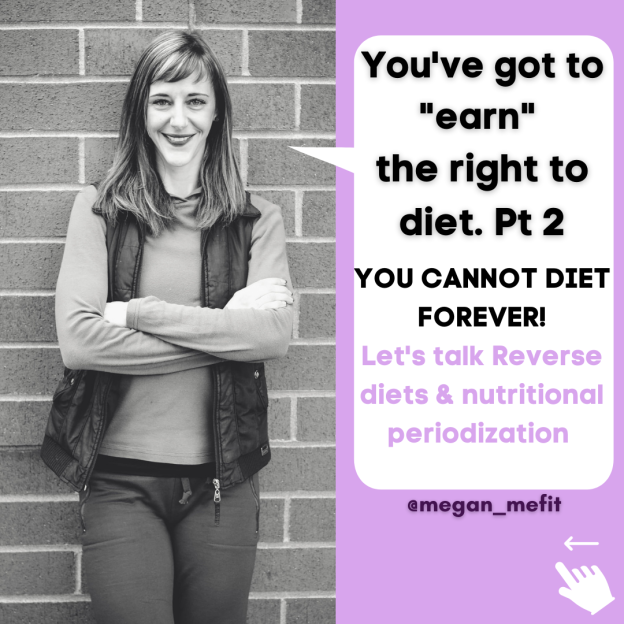
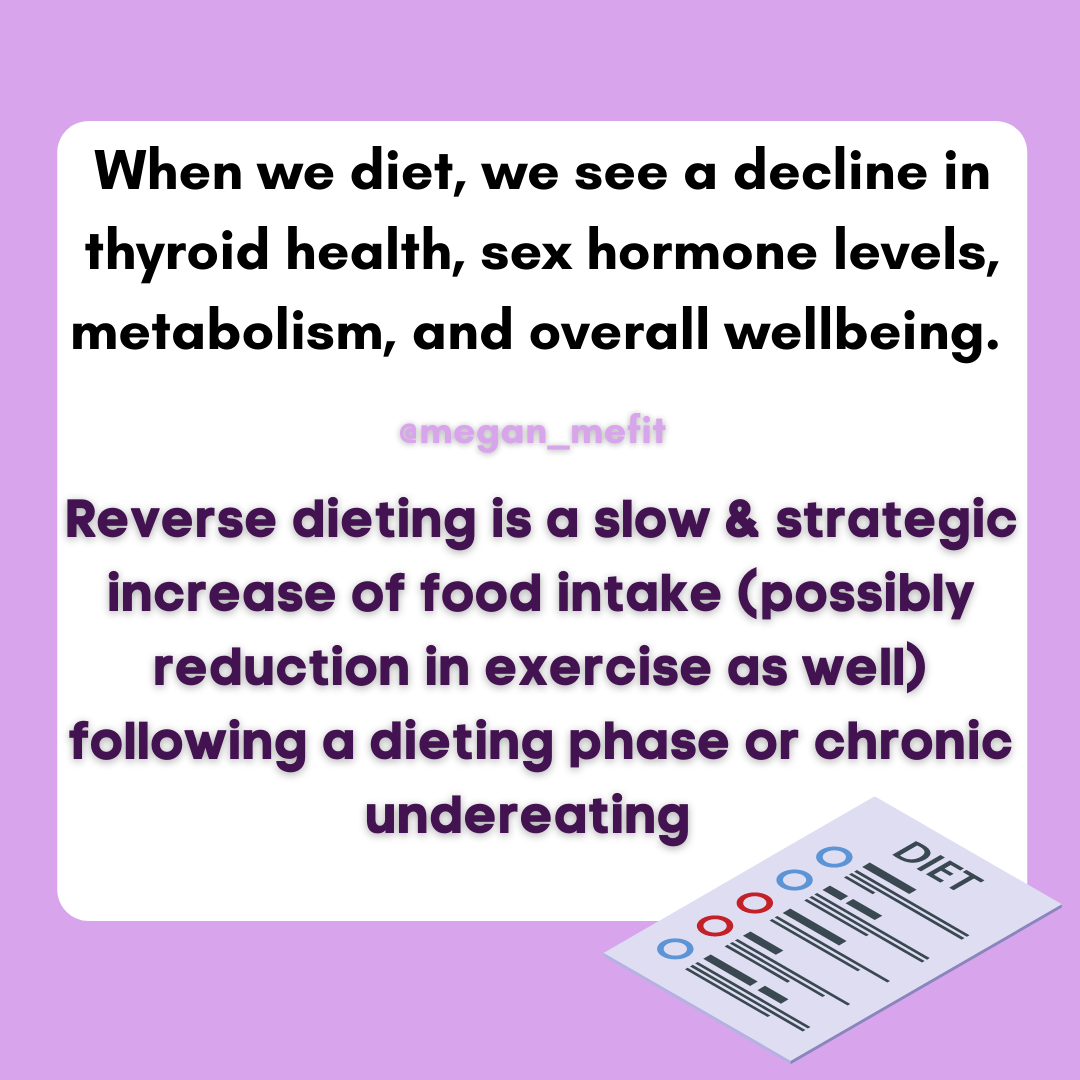
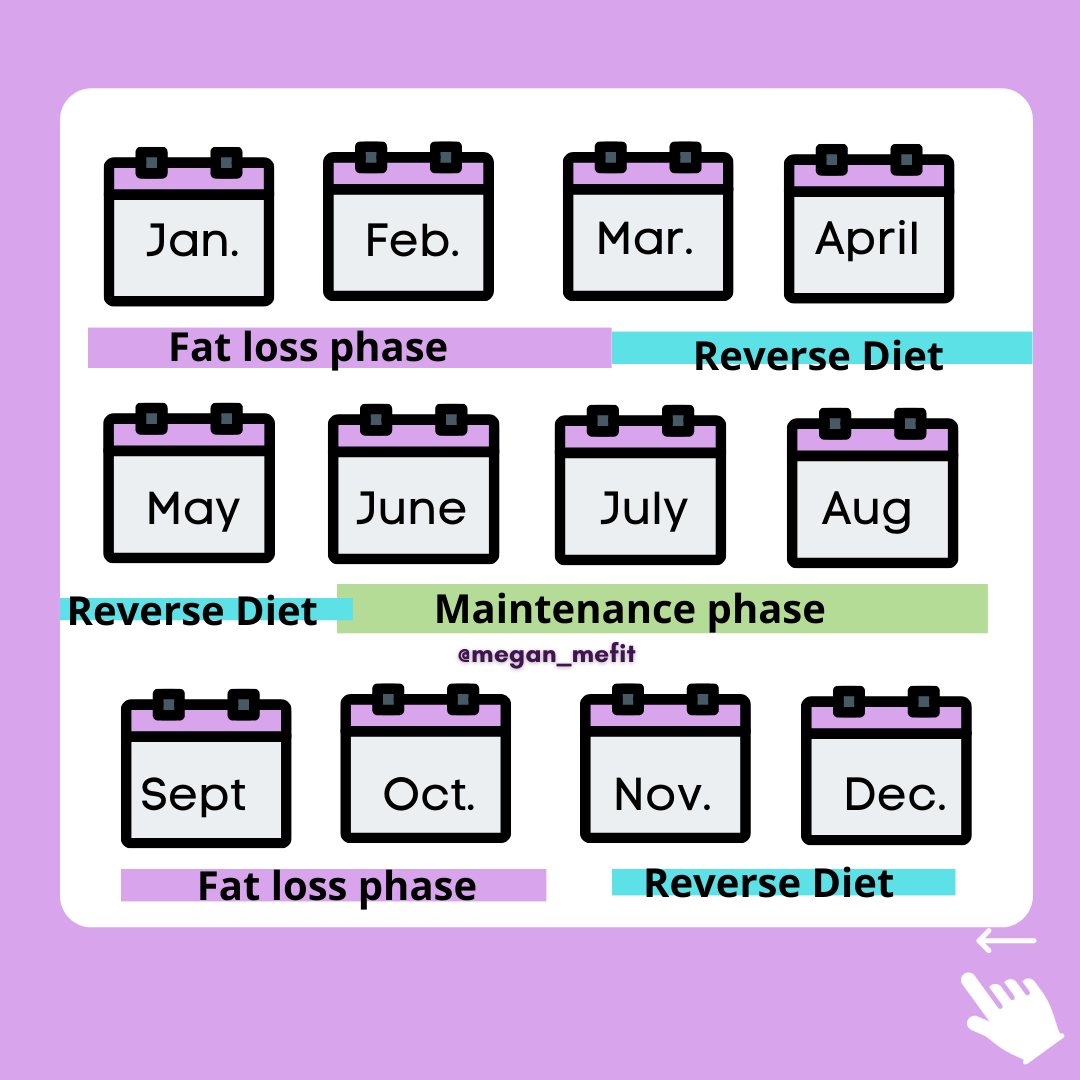
You’ve got to earn your right to diet PART 2 Reverse dieting & Nutrition periodization

It’s common for new clients to hire a personal trainer wanting to lose weight (fat loss). While I understand the desire to do this, we can and will get there..

We usually have to enter a different kind of approach before we can actually “diet” for fat loss because ⁣our first intention must be to achieve optimal psychological & physiological baselines.⁣

Most clients have struggled with yo-yo dieting, binge eating, poor relationship with food, negative body image and sporadic consistency with their workouts.
When we first discuss the concept of dieting in reverse, they are naturally hesitant because it’s quite different than what they are used to. 😲

The amazing part throughout this process they realize that achieving maintenance is a massive progress flex! 💪🏻 It still requires lots of effort and consistency.

In maintenance phase you experience:

🔘Better sleep
🔘Improved performance
🔘More muscle
🔘Not 🤔 about 🥘 all the time
🔘Stable energy
🔘Less mood swings😃
🔘Ability to be social🥂
🔘Restore hormone balance
🔘Increased libido😈

It’s important to spend enough time optimizing your metabolism, building muscle, and enjoying your life, so that when & if the time does come to enter a diet phase, things will be easier, an the progress will be sustainable.

Curious to see what this process looks like for you? Apply for coaching here ✌🏼

#onlinepersonaltrainer#personaltrainer#onlinenutritioncoach#nutritioncoach#nutritionist#nutritionperiodization#reversedieting#reversediet#maintenancephase#chronicdieting#dietculturedropout#sustainablenutrition#eattonourish#nourishyourbody#fitnesscoach#newyorkfitness#hudsonvallyny#newyorkpersonaltrainer

Don’t skip your PRE and POST WORKOUT nutrition!

Your workout may be where you “feel” like you’re getting results, but it’s actually proper nutrition + your workouts that plays a larger role in the results factor.

🍌Nutrient timing is purposely choosing foods around your workouts that will nourish and support your cells for the upcoming physical activity.

It was found that the net protein balance was greater when consuming the protein + carbs before exercise rather than post exercise.⁣

What does this mean?⁣

You get a greater anabolic response (protein synthesis= growth) when consuming pre-workout nutrition compared to post workout nutrition. You get more amino acids into your muscles both during and after exercise when consuming pre-workout nutrition.⁣

💥 PRE-WORKOUT NUTRITION💥:

•Ideal pre-work meal is mostly carbohydrate based.

•20 minutes to 1 hour before exercise:

Simple carbohydrates from fruit like dates, raisins or banana, or a coconut water can give you quick energy. Or a small serving of yogurt with fresh fruit. My favorite is the adrenal elixir with some collagen. AIM for: 6 G protein & 35 g carbs minimum

1 hour (or more) before exercise:

Complex carbs & simple carbs larger meal size & some fiber okay!

Examples: Oatmeal+ collagen with fresh fruit or greek yogurt, rice cake with jelly and dates, sweet potatoes and eggs with fruit.

What about protein before workouts? There is evidence that consuming protein before a workout is beneficial, and while these recommendations include protein, you could increase the amount in your pre-workout meal–experiment with anywhere between 6-20 g and see what works for you!

What about eating a high fat meal before a workout? Fat is the most complex fuel for your body to break down and absorb, and while it’s important for overall health, I recommend consuming low-to moderate fat intake with your pre & post workout meals.

💪POST WORKOUT NUTRITION 💪

 Eating post workout within the right time frame following your workout plays a huge role in your recovery and training progress. And when it comes to fueling after exercise, I bet there’s little surprise that women are different than men. Here are a few things to keep in mind if you’re trying to maximize your recovery: 👇
.
💪 Women’s metabolism comes back down to baseline within 90 minutes after exercise whereas men might take 3-18 hours, depending on the exercise.

💪 We need to eat protein (aim for 25-30 grams with 5-7 grams BCAAs) with a bit of carbohydrate as soon as possible after exercise – especially if you’re doing a depleting exercise like cardio. Ideally, aim to eat within 30-45 minutes after finishing your workout.

💪 If you delay calorie intake, you stay in a breakdown state. In short, your body won’t start repairing until you take in some food.

💪 Even if you eat enough in the rest of your day to meet what your body needs, not eating post-workout acts the same as not eating enough.

Fuel for what you’re doing, and fuel for the recovery that your body needs afterwards!

Now enrolling clients! Apply for coaching here!

Not medical advice.

Sources:
PMID: 11440894, 16896166,


Doi: 10.37527.2020.70.3.005

#preworkout#nutritioncoach#nutrition#snacks#fuelyourbody#carbs#carbsarelife#sugar#coconutwater#fruit#carbscarbscarbs#sportsnutrition#onlinepersonaltrainer#personaltrainer#fitness#fitfam#nasmcpt#nasmcertified#nutritionist#nourishyourbody#explorepage#explore#onlinecoach

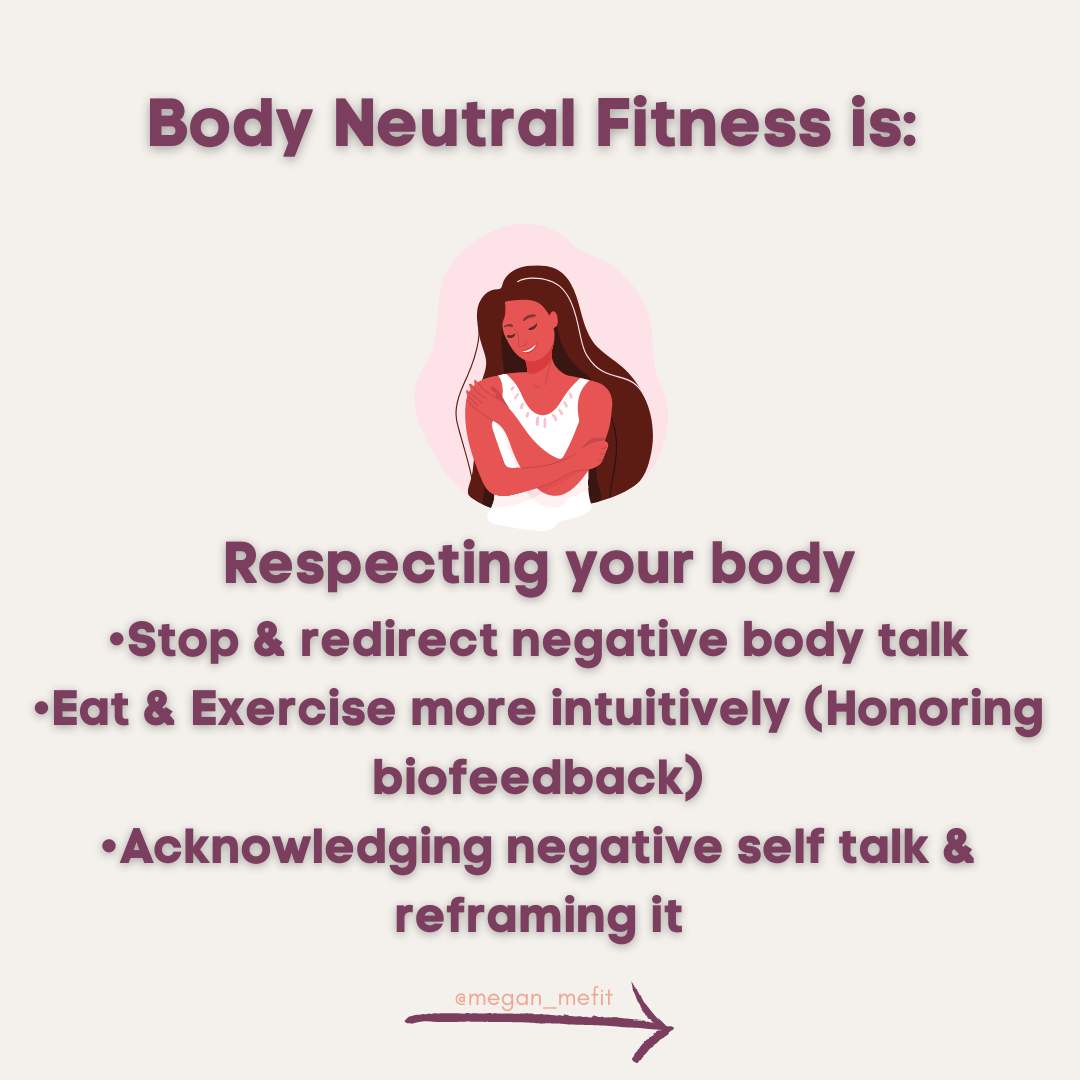
What is body neutral fitness?

Have you ever thought about WHY you are engaging in your fitness & nutrition routine?

🧠Intention is is a mental state that represents a commitment to carrying out an action or actions in the future. Intention involves mental activities such as planning and forethought.

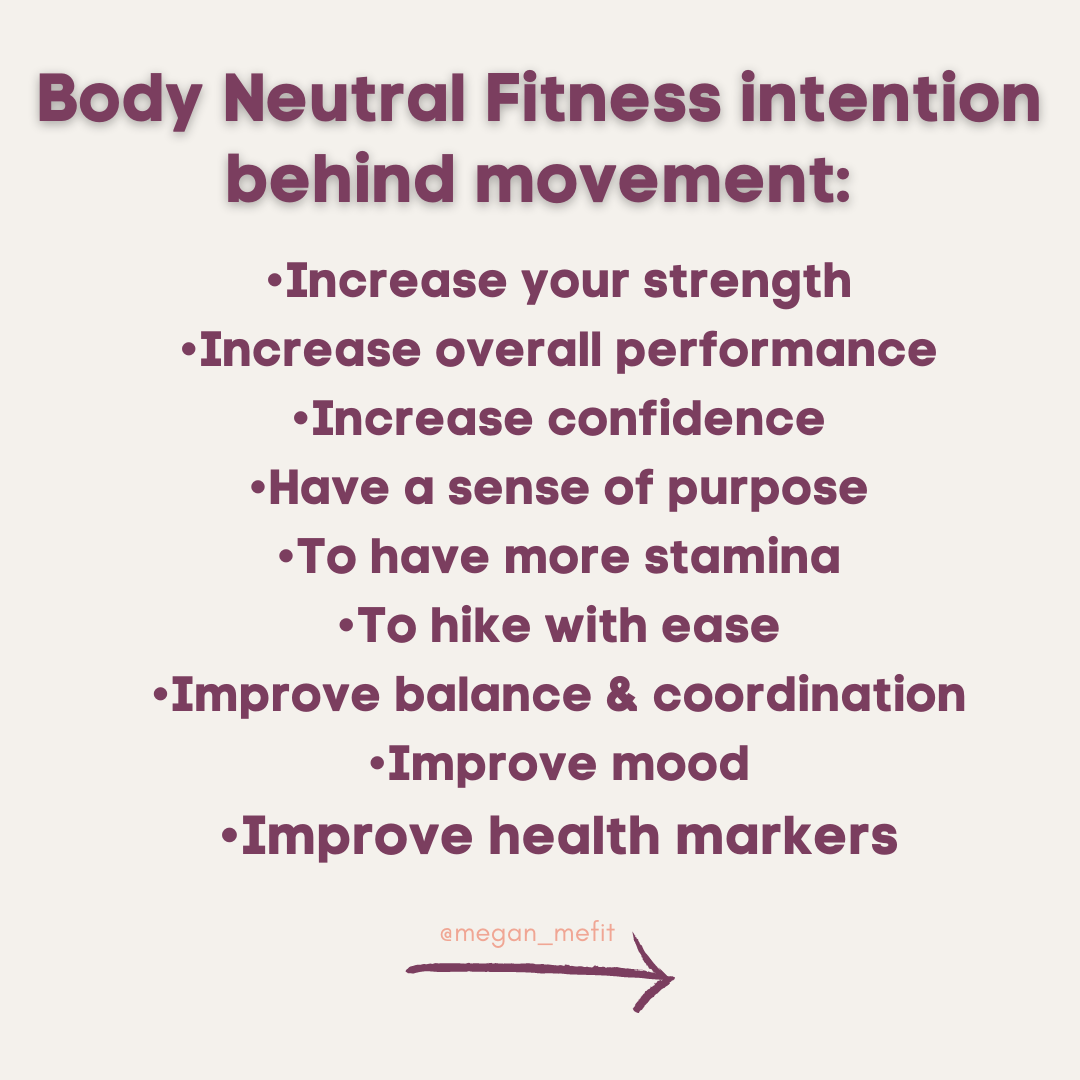
Body Neutral Fitness is shifting the intention behind WHY you want to workout.

Instead of aesthetics being the main intention, the focus is more on how you want to FEEL and cultivating a more positive body image through developing body appreciation

It can be easy to fall into the trap of pointing out what you are insecure about, or hearing someone else do the same. But try to avoid this, or at least notice when you are doing it and how it makes you feel. Redirect the conversation to another topic

Body neutral fitness is about nourishing our bodies with foods full of vitamins and nutrients that you need, but also not depriving ourselves of delicious treats. We do not engaging in restrictive dieting behaviors.

Exercise is not meant to be a punishment. If your body needs a rest day, then give it a rest day. I work closely with my clients to build their programming with activities that they enjoy. More recreation, more walks and MORE FUN!

For me, I’ve spent years dieting and exercising to change my body and make her look a certain way. To be accepted. To be seen as worthy. 

I’ve torn down my old identity and entire sense of self and rebuilt a new version from the ashes of who I once was.

I’ve shared a bit about this process, how a lot of it revolved around SELF-ESTEEM and improving my concept of self.

Contrast can be an amazing teacher. When we experience things we do NOT want or like, it provides clarity and insight into what we DO want.

🌱You’ve got to CHOOSE growth 🔝
We can either go through life, or GROW through it. 🌱

Growth hurts. & it’s always worth it. It’s also never ending. 📈

Health is not a destination that you “arrive” to and stay. 📍

It’s a flowing, growing, shifting, seasonal journey. 🗺

This past year I’ve done some deep soul digging to rebuild my identity around fitness to be coming from a place of excitement and joy !

“The deeper your why, the higher you fly” 🦋

Ready to make the shift into Body neutral fitness? Apply for coaching HERE