Category Archives: education

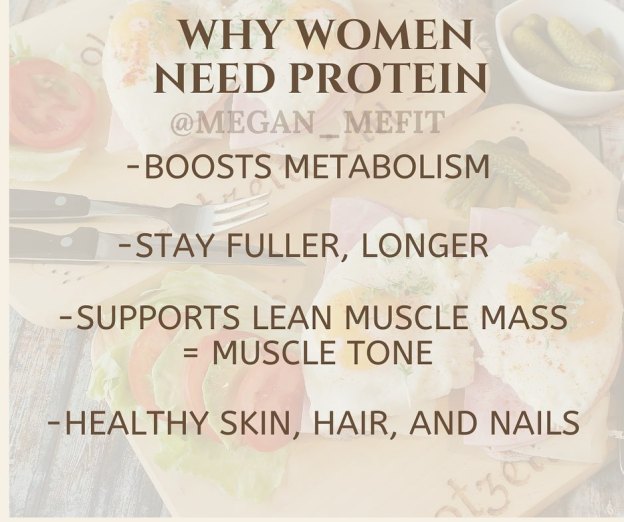
Why women need ample protein intake

When on-boarding new clients, one of the first things we focus on is daily protein intake.

  1. It boots metabolism- protein has a thermic effect upward of five times greater than carbohydrates or fat.
  2. Stay Fuller, longer- A growing body of research suggests that dietary protein specifically, can help promote satiety, facilitating weight loss when consuming as a part of a reduced energy diet.
  3. Supports lean muscle mass- Studies show that protein before and after a workout increases protein synthesis=muscle growth. It also preserves current muscle mass, which is part of a healthy aging process.
  4. Healthy skin, hair and nails- protein supplies the body with the amino acids it requires to make keratin-one of the structural proteins in our skin, hair and nails. To boost your body’s natural keratin production, you need to consume an adequate amount of protein, as well as specific vitamins and minerals that support this process.

,

What is Fasted Cardio and Does it work?

What is Fasted Cardio and Does it work?

Simply put, this involves getting your heart rate up without eating anything prior. A true fasted state starts at about 8-12 hours after your last meal. However it can happen for some people if its been 3-6 hours, but most people do fasted cardio in the morning to ensure their body is in a completely fasted state.

According to science, there can be some benefits! You can burn up to 20% more body fat by exercising in the morning on an empty stomach according to one study published in British Journal of Nutrition. Another study from University of Scranton revealed it may lead to a reduced calorie consumption in the next 24 hours that follow the fasted workout.

The idea that exercising in a fasted state burns stored energy (fat and glycogen) versus energy that you have just consumed.

What’s important to keep in mind, the intensity of the exercise should be low. Think jogging instead of a hard run or a sprint. Or slow climbing on the stair master, not attempting your Orange theory workouts.

Fasted cardio not only burns stored fat and carbs but it can also burn stored protein in the form of lean muscle–which is NOT desirable. Sipping on our amazing Recover BCAA product can alleviate some of this breakdown.

BOTTOM LINE: Fasting primes your body to take in nutrients once the effort is over, which means you should look for protein and carbohydrates to help refuel your muscles. The International Society of Sports Medicine recommends consuming .14-.23g of protein per pound of body weight very soon after a workout. That’s 20 g of protein for a 140 woman.

GOOD NEWS: There is room to experiment, feel out the right approach for you, whether or not fasting is pat of the equation.

IMG_1150

How to cut calories without starving yourself👇

Your best bet for fat-loss success is to create a modest caloric deficit and make smart food choices so you feel satisfied — not starved. One of the most common mistakes I see is athletes that are under-eating. If they aren’t seeing results, they think it means eat less. Instead of MORE! If you are wondering how much you should be eating for your goals–REACH OUT TO ME!

Cutting a ton of calories at once actually slows the metabolism and can cause the body to not want to let go of the fat stores because it believes to be in a ‘starvation state’.

Plus, it’s hard to maintain a severe caloric deficit, if you aren’t getting the energy needed to function, your body spikes your hunger hormones, causing you to seek food.

This is why fad diets and uneducated diet approaches don’t work. You are underfed and undernourished.

Three Tips for cutting calories without starving:

1) CUT GARBAGE CALORIES
A lot of today’s grab-n-go convenience foods provide very little to NO nutritional value and a ton of calories. Cut out the Alcohol, candy, soda, junk food and baked goods. Once a month, sure have an indulgence, but daily consumption is not recommended.

2)USE VEGGIES TO FILL YOU UP
“Volume foods” are a saving grace for those folks in a calorie deficit. Veggies like kale, spinach, bok choy, zucchini, cabbage, onions can help you feel full, your plate look full and provide lots of nourishment without the calories.

3)SWAP LOW-FIBER FOODS for HIGH-FIBER FOODS
If you have had a hard time adhering to more complicated diet regimens, research shows that boosting your daily fiber intake may be an effective weight-loss strategy. Foods high in fiber (apples, oats, green beans, cauliflower) tend to be fewer calories for the same volume of food and digest more slowly than low-fiber foods.

fiber

Does Sugar Belong in a Healthy Diet?

healthycooking

Short answer: in controlled amounts, yes. When many people think of “sugar,” they often think of added sugar found in processed junk foods and desserts. However, simple sugars and other carbohydrates are naturally found in many nourishing foods that are important to a healthy diet like fruits, vegetables, dairy, legumes, and whole grains.

Working to reduce the amount of added sugar you consume each day is a worthy goal, especially because many common foods and beverages provide extra sugar and calories but very little of the quality nutrition our bodies need.

On its own, sugar isn’t necessarily good or bad. It becomes a concern when you consume foods that are high in calories and added sugar but low in essential nutrients like protein, fiber, vitamins, and minerals. Many everyday foods, beverages, and condiments contain a surprising amount of added sugar without contributing much nutritional value. Cutting back on these sources of excess sugar is a good idea for both your well-being and your waistline.

But, there is no need to eliminate sugar completely, especially if you want to eat in a way that supports your health and wellness goals. Sugar and other carbohydrates are essential nutrients that play a vital role in many bodily functions, including in the nervous system and immune system. Not to mention that naturally occurring sugar is present in many of the delicious, nourishing foods we should enjoy every day.


SOURCE:

How Much Sugar Is in the Food We Eat?

Do you struggle with cravings?

😨🙅🏻‍♀️Cravings 😬😳
We all have them-its normal.

mindfuleating


My top tip?!
Outsmart your Cravings🤓

Some research suggests that trying to eliminate favorite foods from your diet can lead to increased cravings, particularly cravings for the foods you are trying to avoid. But other studies demonstrate that with sensible portions, commonly craved foods can be part of a healthful diet to support weight loss.

Based on the research, a trick to outsmarting cravings may be to enjoy your favorite indulgent foods in a way that is consistent with your health and weight loss goals. The following tips can help you create your own plan to outsmart cravings and enjoy your favorite foods in moderation.

1. Make it an occasion. 15% FUN 🎉

Save your favorite indulgent treats for a special occasion. For example, if you crave ice cream, go out with friends for an ice cream cone instead of keeping a gallon of ice cream in your freezer. When you decide to indulge, you’ll be sure to enjoy your craved foods to the fullest while avoiding constant temptation of these foods in your home.

2. Plan for a smart portion.

One concern with craving is that they often lead us to eat more than intended. Outsmart your cravings by planning for portion control. Whether you are craving something savory and crunchy or something decadently sweet, choosing an individually packaged, portion-controlled option can help you satisfy cravings without the guilt.

3. Balance indulgent foods with healthful options.

Including your favorite, most craved foods in a way that still supports your health and weight loss goals means making balanced choices. One way you can find balance is to include a sensible portion of craved foods as part of a healthful meal. Imagine you are craving pizza. Instead of eating only pizza, plan a more balanced meal that includes one or two slices of your favorite pie along with a large, crisp salad. Balancing indulgent foods with healthful options is likely to leave you feeling more satisfied and can help you consume fewer calories overall.

Choosing a more balanced, sensible approach to indulgent foods can help you conquer your cravings for weight loss success. Remember, attempting to cut out your favorite foods from your diet is not only unnecessary, but might be counterproductive for achieving your health and weight loss goals.

Second tip: Identifying WHY you have these cravings, is another strategy-maybe your body communicating with you and could be indicating you need a specific nutrient.

🍪 🍰Cookies,Cake 🍭
Needing quick calories, energy boost, minerals
Try to eat an Isalean Shake, rice, sweet potatoes, potassium packed produce like bananas and avocados.

Chocolate 🍫 often indicate that your body is deficient in magnesium, which is a common deficiency. Dark green leafy veggies are a great source!

Read more: https://www.isagenixhealth.net/conquer-cravings-weight-loss/

Addressing Visceral Fat

9516E825-425E-4C0A-A72A-909FED0648E6.jpegUnderstanding body composition-lean body mass, skeletal mass, body fat percentage and how it relates to optimal health and disease prevention is a fresh outlook in regards to weight wellness instead of strictly weight loss.

I believe in the importance of having body competition data to be sure we are losing body fat and gaining muscle when we see the scale shifting in either direction.

Let’s talk visceral fat:
First off there are Two types of Abdominal Fat-
Subcutaneous- the fat that is outside of your organs, can pinch with fingers
Visceral- Surrounding the organs, deadly in high amounts

What causes high visceral fat? Poor diet, lack of exercise, stress, aging, hormones and genetics.

When it comes to health, there is so much more to the picture than weight loss. Creating long term habits that build the foundation of wellness will make weight loss more sustainable and achievable.

Stress Management:
There are many easy activities you can incorporate into your daily life to help shift your focus and your mindset when you begin to feel stress. First, focus on what can you take direct control of: this may be incorporating the use of stress-modulating herbs called adaptogens into your diet, participating in an exercise program you enjoy, a spa treatment, cooking a meal you love, or simply turning off your phone for an hour.

Whatever your stress relieving activity is, schedule it into your calendar at least once a week. It is crucial to make room in your routine for important self-care tasks, like you would with a doctor or dentist appointment. Dedicating time throughout your week to self-care routines will improve the consistency of your actions.

Mindful Eating Practices:
Paying attention to the physical feelings of hunger. Are you physiologically hungry and actually in need of nutrition? How does this meal have you feeling? are you excited to prepare it? Excited to eat it? 

Identifying cravings: This is your body communicating with you and could be indicating you need a specific nutrient. Example: Craving salty foods like pickles or chips could mean you need to replenish sodium and/or electrolytes. Try adding ConcenTrace Mineral drops to your water, or make your own kale chips for a healthy snack. Craving onions could mean you need more sulfur in your diet for liver function. Chocolate cravings often indicate that your body is deficient in magnesium, which is a common deficiency. You can try adding mineral drops to your water and if you’re going to eat chocolate try adding cocoa powder to you smoothie, or dark chocolate.

Sensation of fullness: Also known as satiety. Having fiber, balanced protein and healthy fats as part of your meals and snacks will help you feel full after eating.

Taste satisfaction: Enjoying the food you eat is important for your body to get the most nutrition for your cells.  “Healthy” eating doesn’t have to be boring! Explore new spices, fresh herbs and seasonings. New recipes will excite your meal planning.

Gratitude: Take a moment before you consume your meal to think what it took to get from farm to table. It is recommended we chew our food 20-30 times before swallowing. Focus on feeling satisfied about how you have chosen to fuel your body.

New findings published in the Journal of Obesity suggest that combining a technique called mindful eating with stress management can help reduce cortisol levels and the resulting belly fat. The most effective mindful eating practices are paying attention to the physical feelings of hunger, identifying cravings, sensation of fullness, and taste satisfaction so you fully enjoy your eating experience and feel satisfied about how you have fueled your body.

Link to the Journal of obesity study: https://www.hindawi.com/journals/jobe/2011/651936/

TO Read more about stress management: https://bridgecitywellness.wordpress.com/2017/06/07/is-stress-making-us-fat/

To read more about mindful eating and quality foods over quantity: https://bridgecitywellness.wordpress.com/2017/02/13/stop-counting-calories/

The POWER of having Belief in one’s self

Monochromatic Quinceañera Facebook Event Cover (1)

There are many reasons clients hire personal trainers. Individualized program design, accountability, to gain knowledge about specific equipment, effective workouts, injury rehabilitation or prevention are all superb reasons. But to learn how to believe in themselves is a skill that flies under the radar.

The concept of self-efficacy is central to psychologist Albert Bandura’s social cognitive theory, which emphasizes the role of observational learning, social experience, and reciprocal determinism in the development of personality. According to Bandura, a person’s attitudes, abilities, and cognitive skills comprise what is known as the self-system. This system plays a major role in how we perceive situations and how we behave in response to different situations. Self-efficacy is an essential part of this self-system.

People with a strong sense of self-efficacy:

  • View challenging problems as tasks to be mastered
  • Develop deeper interest in the activities in which they participate
  • Form a stronger sense of commitment to their interests and activities
  • Recover quickly from setbacks and disappointments

People with a weak sense of self-efficacy:

  • Avoid challenging tasks
  • Believe that difficult tasks and situations are beyond their capabilities
  • Focus on personal failings and negative outcomes
  • Quickly lose confidence in personal abilities

Self-efficacy is a concept I’ve been working on personally and with my clients for the last year. It seems to be a common theme amongst clients to want to avoid discussing nutrition or regular workout routines because it’s viewed as challenging and difficult.  The level of self efficacy reflects the confidence in the ability to exert control over one’s own motivation, behavior, and social environment.

As fitness professionals, imagine the possibilities for our clients when we focus on increasing their self confidence and improving mental attitudes! It could impact every aspect of their lives, not just fitness related goals.

So, where does self-efficacy come from?  According to Bandura, there are four major sources of self-efficacy.

1. Mastery Experiences

“The most effective way of developing a strong sense of efficacy is through mastery experiences,” Bandura explained. Performing a task successfully strengthens our sense of self-efficacy. However, failing to adequately deal with a task or challenge can undermine and weaken it.

As personal trainers, effective goal setting is a great way to

-build self-efficacy; effective meaning measurable and realistic

-carefully select short and long term goals to help establish a set path to achieve even the smallest accomplishments.

2. Social Modeling

Witnessing other people successfully completing a task is another important source of self-efficacy. According to Bandura, “Seeing people similar to oneself succeed by sustained effort raises observers’ beliefs that they too possess the capabilities to master comparable activities to succeed.”

As a personal trainer, you may help your clients select role models. Professional athletes, support groups, introducing them to past or current clients, friends and/or family that have had success in similar goals. Creative ideas like making a collage of activities and role models to put on the fridge or in their home gym. Keep in mind what works for others may not work for your client. The concept behind this is “If he/she can do it, I can do it!”

3. Social Persuasion

Bandura also asserted that people could be persuaded to believe they have the skills and capabilities to succeed. Consider a time when someone said something positive and encouraging that helped you achieve a goal. Getting verbal encouragement from others helps people overcome self-doubt and instead focus on giving their best effort to the task at hand.

As personal trainers, I believe this is the most important aspect of our interactions with our clients. Together you have set realistic and measurable goals and it’s part of our job to keep them motivated.  Increasing the awareness to their “self-talk” is key. While in session you can reinforce these beliefs by using their name and their goals while performing difficult exercises or tasks. You could try introducing the tools of positive affirmations and positive self-talk.

Examples:

“You’re doing great, Sandra! This exercise is strengthening your core and getting you in shape this upcoming summer adventures! I know it’s challenging and you’re doing it!”

I really appreciate your honesty in your food journal, Sandra. It’s important that I’m fully aware of what you’re doing on your own time so we can accomplish your goal of decreasing body fat percentage by 2% in the next 6-8 weeks. You are doing great!”

4. Psychological Responses

Our own responses and emotional reactions to situations also play an important role in self-efficacy. Moods, emotional states, physical reactions and stress levels can all impact how a person feels about their personal abilities in a particular situation. A person who becomes extremely nervous before speaking in public may develop a weak sense of self-efficacy in these situations. However, Bandura also notes “it is not the sheer intensity of emotional and physical reactions that is important but rather how they are perceived and interpreted.” By learning how to minimize stress and elevate mood when facing difficult or challenging tasks, people can improve their sense of self-efficacy.

This aspect may be the most difficult to monitor. Personal trainers face the challenge of meeting with their clients only several hours a week. This might not allow us to be aware of the situations causing our clients stress, as well as their reaction to it.

What we can do is listen carefully when we are with them. Taking notes, remembering annoying co-workers and specific situations causing stress all go a long way with clients. By offering any self-care advice that you believe to be appropriate, your client can build upon physical fitness by improving his or her mental attitude.

Self-Efficacy-Fotolia_16051214_S-570x494

Sources:

References: Bandura, A. (1977). Self-efficacy: Toward a unifying theory of behavioral change. Psychological Review, 84, 191-215.

http://psychology.about.com/od/theoriesofpersonality/a/self_efficacy.htm

https://www.acefitness.org/updateable/update_display.aspx?pageID=575

http://www.learning-theories.com/

The Importance of Pre and Post Workout Nutrition

Your workout may be where you “feel” like you’re getting results, but it’s actually proper nutrition + your workouts that plays a larger role in the results factor.

🍌Nutrient timing is purposely choosing foods around your workouts that will nourish and support your cells for the upcoming physical activity. It was found that the net protein balance was greater when consuming the protein + carbs before exercise rather than post exercise.⁣ What does this mean?⁣ ⁣ You get a greater anabolic response (protein synthesis= growth) when consuming pre-workout nutrition compared to post workout nutrition. You get more amino acids into your muscles both during and after exercise when consuming pre-workout nutrition.⁣

💥 PRE-WORKOUT NUTRITION💥:

•Ideal pre-work meal is mostly carbohydrate based. •20 minutes to 1 hour before exercise: Simple carbohydrates from fruit like dates, raisins or banana, or a coconut water can give you quick energy. Or a small serving of yogurt with fresh fruit. My favorite is the adrenal elixir with some collagen. AIM for: 6 G protein & 35 g carbs minimum •1 hour (or more) before exercise: Complex carbs & simple carbs larger meal size & some fiber okay! Examples: Oatmeal+ collagen with fresh fruit or greek yogurt, rice cake with jelly and dates, sweet potatoes and eggs with fruit. ⁣ ❓What about protein before workouts? There is evidence that consuming protein before a workout is beneficial, and while these recommendations include protein, you could increase the amount in your pre-workout meal–experiment with anywhere between 6-20 g and see what works for you! ❓What about eating a high fat meal before a workout? Fat is the most complex fuel for your body to break down and absorb, and while it’s important for overall health, I recommend consuming low-to moderate fat intake with your pre & post workout meals.
pre workout snacks
1

💪POST WORKOUT NUTRITION 💪

HYDRATION: The first nutritional priority after exercise is to replace any fluid lost during exercise. Consume 16-24 oz. of water post workout.

Eating post workout within the right time frame following your workout plays a huge role in your recovery and training progress. And when it comes to fueling after exercise, I bet there’s little surprise that women are different than men. Here are a few things to keep in mind if you’re trying to maximize your recovery: 👇 . 💪 Women’s metabolism comes back down to baseline within 90 minutes after exercise whereas men might take 3-18 hours, depending on the exercise.

💪 We need to eat protein (aim for 25-30 grams with 5-7 grams BCAAs) with a bit of carbohydrate as soon as possible after exercise – especially if you’re doing a depleting exercise like cardio. Ideally, aim to eat within 30-45 minutes after finishing your workout.

💪 If you delay calorie intake, you stay in a breakdown state. In short, your body won’t start repairing until you take in some food.

💪 Even if you eat enough in the rest of your day to meet what your body needs, not eating post-workout acts the same as not eating enough.

Benefit of protein shakes/post workout liquid meals: Liquid form of nutrition that contains rapidly digesting carbohydrates (e.g., maltodextrin, dextrose, glucose, etc) and proteins can accelerate recovery by utilizing insulin for nutrient transport into cells, can result in rapid digestion and absorption. Also, these products are often better tolerated during and after workouts. Whole food meals aren’t always practical for a few reasons. Some find they aren’t hungry immediately after exercise, and the process of digestion may take 1-3 hours before its absorbed into blood stream and your body needs replenishing within the hour. Protein and Carbohydrates: Research shows that combining protein with carbohydrate within thirty minutes of exercise nearly doubles the insulin response, which results in more stored glycogen.   This is essential to building adequate glycogen stores for continued endurance training.  Endurance exercise is defined as repetitive prolonged exercise of sub maximal intensity greater than 45 minutes. Protein Data indicates a minimum of 18-20 g of protein after a workout to maximally stimulate muscle protein synthesis. This number will vary depending on lean body mass and your goals. Eating more protein than that, however, has a negative impact because it slows re-hydration and glycogen replenishment. Fuel for what you’re doing, and fuel for the recovery that your body needs afterwards! Now enrolling clients! Apply for coaching here! Not medical advice. Sources: PMID: 11440894, 16896166,
Doi: 10.37527.2020.70.3.005 #preworkout#nutritioncoach#nutrition#snacks#fuelyourbody#carbs#carbsarelife#sugar#coconutwater#fruit#carbscarbscarbs#sportsnutrition#onlinepersonaltrainer#personaltrainer#fitness#fitfam#nasmcpt#nasmcertified#nutritionist#nourishyourbody#explorepage#explore#onlinecoach http://www.ncbi.nlm.nih.gov/pubmed/12235033?dopt=Abstract http://www.ncbi.nlm.nih.gov/pubmed/1601794?dopt=Abstract http://www.cdc.gov/obesity/data/trends.HTML