Tag Archives: carbohydrates

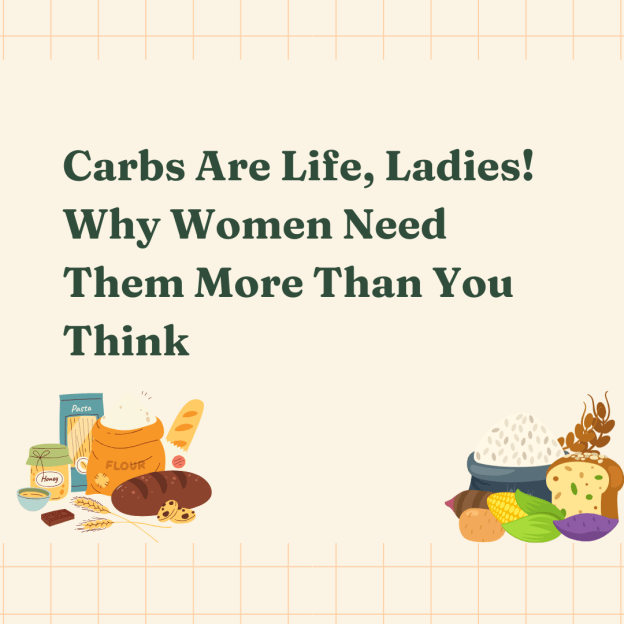
Carbs Are Life, Ladies! Why Women Need Them More Than You Think 🍞🍝✨

Carbs have been unfairly villainized for decades, but for women, they’re not just a food group—they’re vital for health, hormones, and happiness. Here’s why carbohydrates deserve a place on every woman’s plate:

1️⃣ Carbs for Peak Performance

Carbs are your workout BFF, powering your body to:

  • 💪 Train harder and reach higher intensities.
  • 🔄 Recover faster between sets and workouts.
  • 🚫 Preserve muscle (anti-catabolic) and even support muscle building (anabolic).

Without enough carbs, your body might start breaking down muscle for energy, sabotaging your fitness and strength goals.


2️⃣ Brain Power & Mood Boost

🧠 Your brain runs exclusively on glucose, the simplest form of carbohydrates. Without it, brain fog and fatigue are almost inevitable.

But carbs do more than fuel your brain—they help regulate your mood. Eating carbs signals serotonin production, the neurotransmitter responsible for happiness, calmness, and restful sleep. If you’re feeling irritable or out of balance, a lack of carbs could be the culprit.


3️⃣ Gut Health & Fiber Benefits

Fiber-rich carbs are essential for:

  • 🌱 Feeding your gut microbiome, promoting a healthy balance of good bacteria.
  • 🧬 Supporting gut health by forming short-chain fatty acids (SCFAs) that nourish your colon.
  • 🥣 Enhancing satiety, stabilizing blood sugar, and even reducing cholesterol levels.

A thriving gut contributes to better digestion, stronger immunity, and improved overall well-being.


4️⃣ Thyroid & Hormonal Health

Your thyroid, the master regulator of your metabolism, relies on glucose for optimal function. Carbs support:

  • ✅ The conversion of T4 (inactive thyroid hormone) to T3 (active hormone).
  • 🌿 Balanced cortisol levels, preventing stress overload.
  • 🔋 Steady liver glycogen stores, which fuel your body between meals.

Low-carb diets can disrupt these processes, causing hormonal imbalances, sluggish metabolism, and blood sugar crashes.


5️⃣ Sleep & Recovery 💤

Pairing carbs with tryptophan-rich foods (like fatty fish or dairy) helps your body produce serotonin and melatonin, the hormones responsible for deep, restorative sleep. Even simple changes—like adding kiwi or cherries to your evening meal—can significantly improve sleep quality.


6️⃣ Hormonal Harmony & Women’s Health

Here’s where carbs really shine for women:

  • 🍓 Low-carb diets can disrupt serotonin, progesterone, and insulin levels, which may worsen conditions like acne, PCOS, or endometriosis.
  • 🌸 During perimenopause and menopause, insufficient carbs can exacerbate cortisol spikes and hormonal fluctuations, intensifying symptoms like mood swings and hot flashes.

Women’s physiology is especially sensitive to restrictive diets, and carbs are key to maintaining hormonal balance.


7️⃣ Gender-Specific Research Gaps

Much of the research on low-carb diets and intermittent fasting has been conducted on men, leaving women’s unique needs underexplored. This is significant because:

  • Women’s metabolic and hormonal responses differ due to natural variations in estrogen, progesterone, and cortisol.
  • Studies show that over 30% of women are energy-deficient due to chronic dieting or under-eating, which can impair physical performance, reproductive health, and mental well-being.
  • Restrictive diets like keto or intermittent fasting may disrupt kisspeptin, a neuropeptide essential for reproductive health, potentially leading to menstrual irregularities, increased abdominal fat, and higher depression risk.

A Smarter Approach for Women

Instead of restrictive diets, prioritize balance and nourishment:
1️⃣ Fuel Your Body: Eat every 3-4 hours, incorporating complex carbs, quality proteins, and healthy fats like ghee, tallow, or coconut oil.
2️⃣ Support Nutrient Intake: Avoid nutrient deficiencies by choosing whole, unprocessed foods and limiting refined grains.
3️⃣ Balance Hormones Naturally: Keep carbs in your diet to support serotonin, progesterone, and insulin metabolism.
4️⃣ Exercise Over Extremes: Skip extreme fasting and focus on movement that supports autophagy, like strength training or yoga.


The Bottom Line

Carbs aren’t your enemy—they’re a critical ally for women’s health. From fueling your brain to balancing your hormones and improving gut health, carbohydrates are a key ingredient for living your best life. So, go ahead—enjoy that sourdough or bowl of oatmeal guilt-free. Your body will thank you!

Sources:

The Importance of Pre and Post Workout Nutrition

Your workout may be where you “feel” like you’re getting results, but it’s actually proper nutrition + your workouts that plays a larger role in the results factor.

🍌Nutrient timing is purposely choosing foods around your workouts that will nourish and support your cells for the upcoming physical activity. It was found that the net protein balance was greater when consuming the protein + carbs before exercise rather than post exercise.⁣ What does this mean?⁣ ⁣ You get a greater anabolic response (protein synthesis= growth) when consuming pre-workout nutrition compared to post workout nutrition. You get more amino acids into your muscles both during and after exercise when consuming pre-workout nutrition.⁣

💥 PRE-WORKOUT NUTRITION💥:

•Ideal pre-work meal is mostly carbohydrate based. •20 minutes to 1 hour before exercise: Simple carbohydrates from fruit like dates, raisins or banana, or a coconut water can give you quick energy. Or a small serving of yogurt with fresh fruit. My favorite is the adrenal elixir with some collagen. AIM for: 6 G protein & 35 g carbs minimum •1 hour (or more) before exercise: Complex carbs & simple carbs larger meal size & some fiber okay! Examples: Oatmeal+ collagen with fresh fruit or greek yogurt, rice cake with jelly and dates, sweet potatoes and eggs with fruit. ⁣ ❓What about protein before workouts? There is evidence that consuming protein before a workout is beneficial, and while these recommendations include protein, you could increase the amount in your pre-workout meal–experiment with anywhere between 6-20 g and see what works for you! ❓What about eating a high fat meal before a workout? Fat is the most complex fuel for your body to break down and absorb, and while it’s important for overall health, I recommend consuming low-to moderate fat intake with your pre & post workout meals.
pre workout snacks
1

💪POST WORKOUT NUTRITION 💪

HYDRATION: The first nutritional priority after exercise is to replace any fluid lost during exercise. Consume 16-24 oz. of water post workout.

Eating post workout within the right time frame following your workout plays a huge role in your recovery and training progress. And when it comes to fueling after exercise, I bet there’s little surprise that women are different than men. Here are a few things to keep in mind if you’re trying to maximize your recovery: 👇 . 💪 Women’s metabolism comes back down to baseline within 90 minutes after exercise whereas men might take 3-18 hours, depending on the exercise.

💪 We need to eat protein (aim for 25-30 grams with 5-7 grams BCAAs) with a bit of carbohydrate as soon as possible after exercise – especially if you’re doing a depleting exercise like cardio. Ideally, aim to eat within 30-45 minutes after finishing your workout.

💪 If you delay calorie intake, you stay in a breakdown state. In short, your body won’t start repairing until you take in some food.

💪 Even if you eat enough in the rest of your day to meet what your body needs, not eating post-workout acts the same as not eating enough.

Benefit of protein shakes/post workout liquid meals: Liquid form of nutrition that contains rapidly digesting carbohydrates (e.g., maltodextrin, dextrose, glucose, etc) and proteins can accelerate recovery by utilizing insulin for nutrient transport into cells, can result in rapid digestion and absorption. Also, these products are often better tolerated during and after workouts. Whole food meals aren’t always practical for a few reasons. Some find they aren’t hungry immediately after exercise, and the process of digestion may take 1-3 hours before its absorbed into blood stream and your body needs replenishing within the hour. Protein and Carbohydrates: Research shows that combining protein with carbohydrate within thirty minutes of exercise nearly doubles the insulin response, which results in more stored glycogen.   This is essential to building adequate glycogen stores for continued endurance training.  Endurance exercise is defined as repetitive prolonged exercise of sub maximal intensity greater than 45 minutes. Protein Data indicates a minimum of 18-20 g of protein after a workout to maximally stimulate muscle protein synthesis. This number will vary depending on lean body mass and your goals. Eating more protein than that, however, has a negative impact because it slows re-hydration and glycogen replenishment. Fuel for what you’re doing, and fuel for the recovery that your body needs afterwards! Now enrolling clients! Apply for coaching here! Not medical advice. Sources: PMID: 11440894, 16896166,
Doi: 10.37527.2020.70.3.005 #preworkout#nutritioncoach#nutrition#snacks#fuelyourbody#carbs#carbsarelife#sugar#coconutwater#fruit#carbscarbscarbs#sportsnutrition#onlinepersonaltrainer#personaltrainer#fitness#fitfam#nasmcpt#nasmcertified#nutritionist#nourishyourbody#explorepage#explore#onlinecoach http://www.ncbi.nlm.nih.gov/pubmed/12235033?dopt=Abstract http://www.ncbi.nlm.nih.gov/pubmed/1601794?dopt=Abstract http://www.cdc.gov/obesity/data/trends.HTML