Category Archives: mental health

Words of advice that may help improve your body image….

Negative body image (or body dissatisfaction) involves feelings of shame, anxiety, and self-consciousness. People who experience high levels of body dissatisfaction feel their bodies are flawed in comparison to others, and these folks are more likely to suffer from feelings of depression, isolation, low self-esteem, and eating disorders.

•85% of women and 79% of girls skip important activities due to body dissatisfaction.

•Those who frequently look at “fitspiration” on Instagram are less likely to be satisfied with their bodies and more likely to want to be thinner.

•70% of girls with a poor view of their bodies won’t be as vocal about opinions

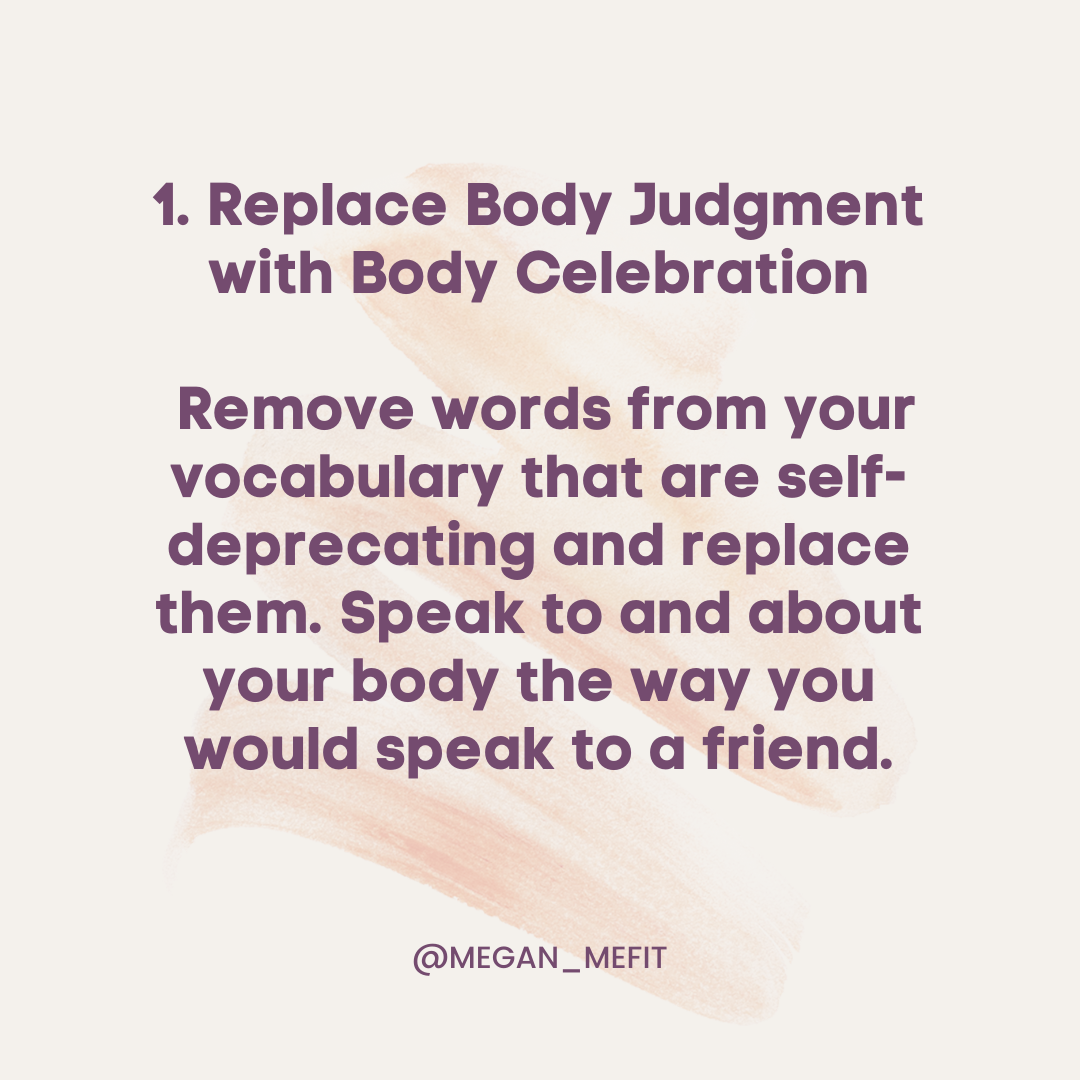
•54% of women say they’re their own worst critics While we all may have our days where we feel awkward or uncomfortable in our bodies, the key to developing a more positive body image is to recognize and respect our natural shape and learn to overpower those negative thoughts and feelings with positive, affirming, and accepting ones.

Accept yourself. 💕

Accept your body. 💕

🤍

SOURCES:2021 Body Image Facts, Figures, and Statistics | Beauty Schools Directory[26] Fardouly, J., Willburger, B. K., & Vartanian, L. R. (2017). Instagram use and young women’s body image concerns and self-objectification: Testing mediational pathways. New Media & Society, 20(4), 1380-1395. doi:10.1177/14614448176944992021 Body Image Statistics: 40 Shocking Body Image Facts (breakbingeeating.com)#bodyimage#eatingdisorderawareness#onlinepersonaltrainer#fitness
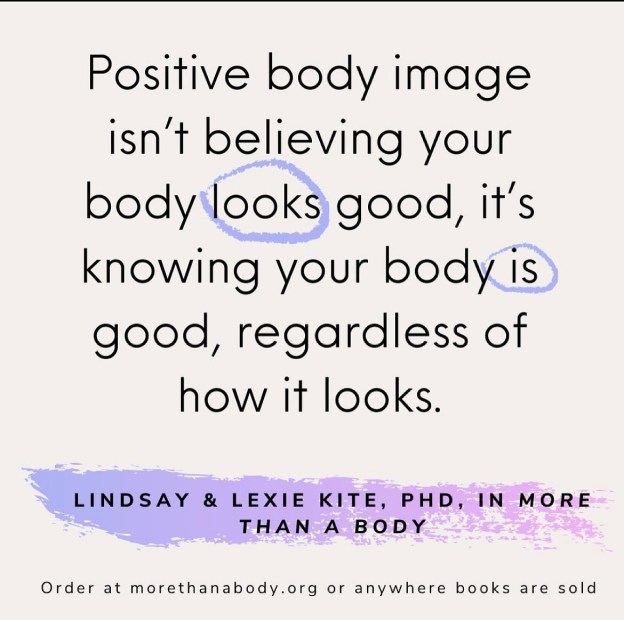
Positive Body Image

☝🏽This is THE definition of positive body image. If you haven’t read More than a Body 📖, you need to. 🤍

Let’s dig into this idea:

✖️“We are all at a severe disadvantage when our body image is so deeply tied to how we look (or how we think we look). Too many of us not only feel awful about our looks, since we can never achieve or maintain the aspirational beauty ideals presented to us, but also feel awful about our dynamic, adaptive bodies overall because all we care about is how they look. This is truly the root of negative body image.

✖️So how do we fix this? The most popular strategy for promoting positive body image relies on messaging such as “All bodies are beautiful” or “Our flaws make us beautiful.” Those ideas might provide a temporary mood boost and are catchy marketing slogans, but ultimately they don’t get to the root of the problem. Regardless of how the definition of beauty expands, it’s still being reinforced as the most important thing about us. A more effective approach to healing our body image issues needs to reflect the understanding that focusing on the appearance of our bodies is the *problem.*

✖️Each of us has grown up in and experienced every second of life inside our own incredible bodies, and yet we judge and define how we feel about our bodies by how we think they look to others? That thought would be laughable if it weren’t so cryable. When we can understand and relate directly to our bodies by experiencing our physical selves from the inside, we can see more in our bodies and ourselves. No more trying to squeeze ourselves into the narrow molds of our cultural beauty ideals, and no more trying to stretch our cultural beauty ideals to fit all of us. No more struggling to convince ourselves we are all beautiful since beauty is the greatest source of value and confidence we can imagine. Let’s imagine something better than beautiful for ourselves and everyone we love.”

Repost from @beauty_redefined

🚨 The hardcover book is on SALE for $11/each + free shipping when you order 3+ on Amazon! (Also at Target, but they sold out). And it’s on audiobook & Kindle – all linked in bio. #morethanabody

PSA: Your watch has no idea how many calories you burn

Your watch ⌚️ doesn’t have a clue how many calories you burn 🔥

•A study published in International Journal of Environmental Research and Public Health, Researchers have found that, five brands of commercially available fitness trackers on average, were reasonably accurate with measuring heart rate, but wildly ineffective at estimating calorie burn 🔥 for energy expenditure.

🤪The scientists found that the wearables overestimated calorie burn by 14 to 23%.

Those findings reinforce a 2017 study at the Stanford School of Medicine, in which researchers looked at seven popular fitness trackers:

•Apple Watch
•Basis Peak
•Fitbit Surge
•Microsoft Band
•Mio Alpha 2
•PulseOn
•Samsung Gear S2

All devices scored poorly, with a medium error range being from a dismal 27.4% for the Fitbit, to shockingly bad 96.2% for the PulseOn.

While these trackers can be useful, You can see if you upped your activity or intensity from the day or week before to gauge your own progress.

But please don’t go trusting these numbers as facts.

MDPI Source: ijerph16173037

#onlinepersonaltrainer#personaltrainer#fitness#smartwatch#calorieburn#psa#fitnesscoach#healthylifestyle#calories#cico#cardio#cardioworkout#heartratetraining#strengthtraining#orangetheoryfitness#orangetheory#hiitworkout#hiit#hiitcardio#hiitcardioworkout#stepgoal#getyourstepsin#neat#newyorkfitness#truthbomb#science#evidencebased#publicserviceannouncement#explorepage

Why you shouldn’t skip rest days…

PSA: Skipping rest days doesn’t make you a badass. 🙅🏻‍♀️

It does get you more tired, stressed, inflamed and farther from your goals though. #hardtruth

💤 What to do on rest days:
Hydrate 💦
Focus on your nutrition 🍴 (adequate carbs & protein)
Light movements like walking and stretching 🧘‍♀️

What NOT to do:
Drastically Reducing your calories or carb intake- I see this strategy often, which is based on the assumption you don’t need as much ⛽️ because of less activity. From my perspective, this can create unnecessary stress, potential disordered eating behaviors and it’s best to consume your usual amount of calories on rest days to ensure muscle growth and recovery.

Benefits 👇🏻

1. Allows time for recovery
•Contrary to popular belief, a rest day isn’t about being lazy on the couch. It’s during this time that the beneficial effects of exercise take place. Specifically, rest is essential for muscle growth.

2. Prevents muscle fatigue
•Remember, exercise depletes your muscles’ glycogen levels. If these stores aren’t replaced, you’ll experience muscle fatigue and soreness.
Plus, your muscles need glycogen to function, even when you’re not working out. By getting adequate rest, you’ll prevent fatigue by letting your glycogen stores refill.

3. Reduces risk of injury
•Overtraining also exposes your muscles to repetitive stress and strain. This increases the risk of overuse injuries, forcing you to take more rest days than planned.

4. Improves performance
•Rest has the opposite effect. It increases energy and prevents fatigue, which prepares your body for consistently successful workouts.

5. Supports healthy sleep
•While regular exercise can improve your sleep, taking rest days is also helpful. Rest can help you get better sleep by letting your hormones return to a normal, balanced state.

💞✌🏼Link in bio for coaching

#onlinepersonaltrainer#personaltrainer#onlinenutritioncoach#nutritioncoach#restdays#restday#restdaybenefits#dontskiprestday#disorderedeating#dietculturedropout#fitnesscoach#fitnesscoaching#education#newyorkfitness#hudsonvalleyny#explorepage#nourishyourbody#nourish#carbs#eatyourcarbs

Lack of willpower is actually NOT a thing…

“Lack of willpower” is actually NOT a thing. It’s typically a mindset issue.

Willpower/self-control is like a muscle, it can be trained to grow stronger and it gets fatigued. Under stress in particular, our self control is drastically reduced. Even though it gets “worn out”, we must understand our mindset limitations are a larger contributing factor.

Let’s start with How do you perceive self-control? Do you have it? Do you not? Can you change it? Are you aware of when your self control is compromised? And why? Awareness here is 🔑, then you can begin working backwards. Where is it stemming from? Like my most recent post, you can’t change what you don’t know needs changing.

Maybe where you need to start, is it with more self-control at all… But simply awareness.

1️⃣Begin with awareness, self-monitoring your behaviors to understanding your triggers.

2️⃣Stress reduction can also do wonders! Stress is an energy sucker! When you have less stress, you’ll have more energy available for alllllll the other things! More posts on this to come.

And maybe 🤔 you do need some tough love for more “willpower”, let me ask you this:

Is some discomfort now worth it, if you know it’s only temporary to make progress? How will you benefit from succeeding?

The stronger you are focused on the personal pay off, the more likely you are to follow through with desired behaviors. That’s you flexing your willpower muscle 🙌🏻💯 The deeper your why (the intrinsic drive) the stronger you’ll be!

Link in bio for coaching 🤍

#onlinepersonaltrainer#willpower#mindset#awareness#personaltrainer#fitnessmotivation#nutriton#strengthtraining#mindsetmatters#dietculturedropout#icaniwill#trainertips#newwindsorny#hudsonvalleyny#newyorkfitness

Discipline without self compassion turns to guilt…

Let’s dive deeper…..

While having discipline is an important aspect of behavior change, YES. But being too rigid, too strict, leaves you with little room for making mistakes, which are inventible. When you do slip up without having any self-compassion, you’ll feel guilt and shame. This down spiral will likely lead to you stopping all together.

Having self compassion can lead to great mindfulness, optimism, higher self-efficacy, and more enjoyment through the process. Too much self compassion, you’ll let yourself slide all the time, and eventually stop.

Too much of either of these, ends up in very little action.

True success is found in the middle!

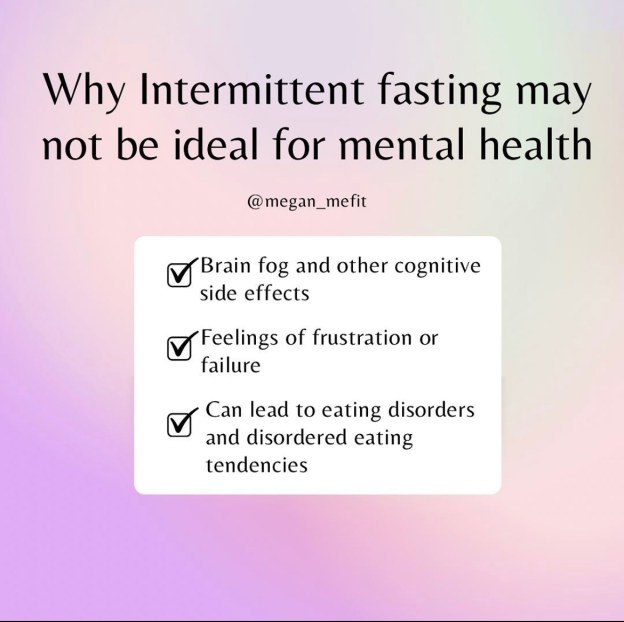
Why Intermittent fasting may not be ideal for Mental Health:

🙅🏻‍♀️ #unpopularfact
Intermittent fasting is certainly not for everyone; individuals who are pregnant, have diabetes, or have struggled with disordered eating should not follow any intermittent fasting lifestyle.

Here are my top 3️⃣ possible side effects of intermittent fasting and how they impact mental health….
👇🏻
1️⃣ Brain Fog and other cognitive side effects 🧠 The brain and body have to adjust to not getting consistent fuel every couple hours, this can lead to blood sugar swings, mood changes, headaches and even fuzzy thinking.

2️⃣Feelings of frustration or failure 😣
For most people it’s not natural to go 5+ daytime hours without eating, feeling frustrated by the demanding structure of IF could lead to eating between meals, or binge eating, followed by feelings of guilt and disappointment.

3️⃣ Can lead to eating disorders and disordered eating tendencies 🍽
Only eating between certain time windows may limit many opportunities for eating, and therefore lead to the under consumption of food and calories.

Some people may develop eating disorders or disorder eating tendencies due to the stress and hyperfocus on food, calories and the time.

Furthermore, following this structure may lead to ignoring of bodily cues of hunger and fullness.

Food may be viewed less important as following the structure is, and may consciously or unconsciously under eat for their body‘s needs, leading to physical, emotional, and hormonal side effects, such as loss of menstruation, hair loss, and dis regulated blood sugars.

💯 Keeping up with ANY strict way of eating is difficult.

🎯 To build a better relationship with food, you might consider trying mindful eating practice or intuitive eating.

#intermittentfasting#mayismentalhealthawarenessmonth#mentalhealthawareness#eatingdisorderawareness#disorderedeating#eatingdisorderrecovery#if#nutritioncoach#onlinepersonaltrainer#unpopularopinions#unpopularopinion#newwindsorny#fitnessjourney#diet#dietplan#dietrules#dietculturedropout#dietculture#intuitiveeating#mindfulness#mindfuleating